In this poetic exploration, David Hilowitz Music unveils the Cyma Forma ALT, a synthesizer sculpted from layers of light and glass. We drift through its nebular architecture, where oscillators shimmer beneath plexiglass and sonic ghosts flicker across transparent planes. David’s hands become cartographers of resonance, tracing new worlds through tactile design and glimmering sound. This is not simply a review—it’s an invitation to wander, to listen with your eyes, and to let the ALT’s magnetic fields pull you into uncharted territory.
12. July 2026
LUMINA
David Hilowitz Music Illuminates the Cyma Forma ALT: A Crystal Soundscape
Layers of Light: The ALT’s Shimmering Presence
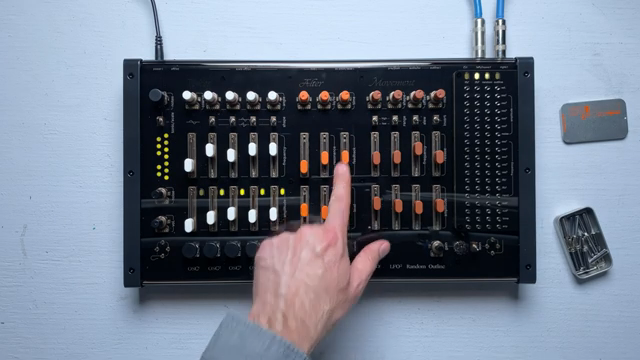
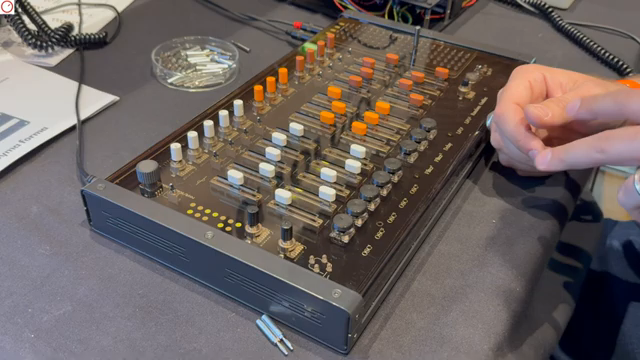
The Cyma Forma ALT emerges not merely as an instrument, but as a luminous artifact—its body composed of stratified plexiglass, each layer catching and refracting the studio’s ambient glow. David Hilowitz Music lingers on this design, marveling at the proportions, the interplay of color and transparency, and the tactile solidity beneath the fingertips. The instrument feels both futuristic and handcrafted, its visual architecture inviting touch and curiosity.
This transparent construction is more than a visual flourish; it creates an almost ritualistic context for sound-making. The reflections and depth make the ALT feel like a portal, blurring the boundaries between machine and environment. As David notes, even the act of filming it becomes a dance with light and reflection—a reminder that every interaction with this synth is mediated through layers of perception, both sonic and visual.
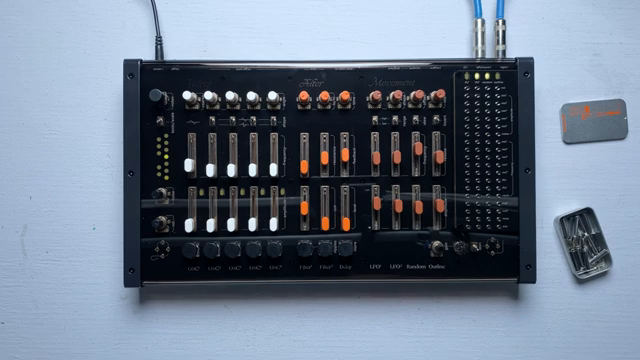
"It's constructed in several layers, the topmost of which is transparent plexiglass."
© Screenshot/Quote: Davidhilowitzmusic (YouTube)
Oscillators Breathing: Crafting Rich Soundfields
"The crunchy, lo-fi quality of this delay is a huge part of the sound of the instrument."
© Screenshot/Quote: Davidhilowitzmusic (YouTube)
Beneath the glass, the ALT houses a constellation of oscillators—each column a voice, each slider a current in an underwater bloom of tone. David guides us through this sonic territory, layering frequencies and shifting waveforms as if painting with resonance. The synth’s digital oscillators offer triangle and sawtooth varieties, while the analog heart—a lone sine wave—glides continuously, refusing to be tethered to any scale.
With each added voice, the sound deepens into a fogbank of harmony, shaped further by sculptural filters and a lo-fi delay that leaves trails of grainy light. Modes allow for chromatic freedom or strict, modal boundaries—even microtonal retuning—giving the artist the tools to bend familiar scales into new geometries. The ALT, in David’s hands, becomes an ecosystem: alive, mutable, and always on the edge of the next sonic continent.
Pin Matrix: Modulation as Magnetic Cartography
Here the ALT’s true magic reveals itself—a modulation system built on the tactile ritual of plugging shiny pins into a matrix. David demonstrates the power and immediacy of this interface: an LFO flickers to life, turning oscillators on and off, modulating pitch, and even modulating other modulators. Each pin is a vector, each connection a new gravitational pull in the instrument’s field.
This is not merely modulation—it’s a hands-on mapping of possibility. The interplay between scale, randomness, and movement produces evolving terrain: semi-random fluctuations, quantized pitches, and bursts of expressive unpredictability. For the viewer, the pin matrix is a reminder that sound-shaping can be as intuitive and exploratory as drawing lines in sand or connecting stars into constellations.
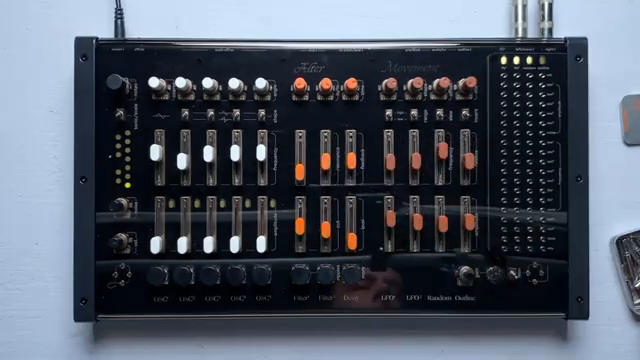
"If you want something to control something else, you just push a pin into this matrix."
© Screenshot/Quote: Davidhilowitzmusic (YouTube)
Connected Worlds: MIDI, CV, and the ALT’s Ecosystem
The ALT is not an island. David connects an Arturia Keystep, and instantly the synth’s landscape expands—MIDI and CV inputs allow the ALT to be played from any sequencer or keyboard, letting notes ripple through its oscillators with effortless control. Each mode unlocks distinct behaviors: chords bloom, arpeggios skitter across the glass, and every keystroke becomes a trigger for new patterns of resonance.
This seamless integration means the ALT can serve as both centerpiece and collaborator, thriving in solo ambient reveries or as part of a larger modular constellation. External effects add further dimension, but the ALT’s core character—its fog and fractured light—remains unmistakable. David’s exploration shows that this synth is an ecosystem, ready to fuse with the creative networks of any studio.
Open Horizons: The ALT as an Invitation to Drift
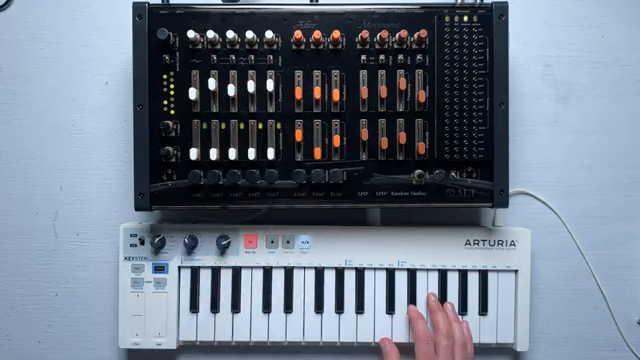
"You can make a little change and then suddenly you're in a completely different universe."
© Screenshot/Quote: Davidhilowitzmusic (YouTube)
As the video closes, David celebrates the ALT not just as a machine, but as a toolkit for sonic wandering. There are no fixed paths, only the invitation to enter with an open mind and let the instrument reshape your expectations. The ALT rewards the explorer who lets go of outcome, allowing new landscapes to emerge in each session.
Some experiences, David gently hints, are best felt rather than described—moments where time dissolves and the musician is swept into the instrument’s current. The ALT’s beauty, its capacity for surprise, and its role as both anchor and vehicle for discovery make it a rare artifact in the world of synthesis. To truly understand its promise, the video itself becomes essential viewing—a map to sonic territories that words can only sketch.
This article is also available in German. Read it here: https://synthmagazin.at/david-hilowitz-music-beleuchtet-den-cyma-forma-alt-eine-kristalline-klanglandschaft/
More articles about these products:
 Arturia’s Digital Palette: Kaitlyn Aurelia Smith Crafts with Rev OCEAN, MiniFreak & KeyStep
 The Unperson’s 40HP Granular Street Weapon: Small Case, Massive Sound
 Captain Pikant Breaks Down Gorillaz’s Drum Magic – No Ivy League Needed
 Metamyther’s Modular Mayhem: Live Rig Dissected and Deconstructed
 Captain Pikant Spins the Drum Machine Mystery: Dissecting ‘You Spin Me Round’
 Captain Pikant Dismantles Blue Monday: Drum Machine Mayhem and DMX Wizardry
 CaptainPikant Gets Nasty with Nine Inch Nails Beats
 CaptainPikant’s Beat Breakdown: Unraveling Eurythmics’ Drum Magic!
 CaptainPikant’s ‘Maniac’ Review: Drums Like a Kung-Fu Brawl
 Unveiling Cyma Forma ALT: A Journey with synthanatomy
Watch on YouTube:
Latest articles
Watch on YouTube:
Visit the channel:
https://www.youtube.com/DavidHilowitzMusic
https://www.youtube.com/DavidHilowitzMusic
Links from DavidHilowitzMusic:
David Hilowitz Web Site: https://davidhilowitz.com
Contact Form: https://davidhilowitz.com/contact
facebook: https://facebook.com/davidhilowitz
Sponsored links:
If you purchase via these links, we may earn a small commission – at no extra cost to you. The link opens an Amazon keyword search, and results may vary depending on availability.
Arturia Keystep
🔗 Check price on Amazon
🔗 Check price on Amazon
Cyma Forma ALT
🔗 Check price on Amazon
🔗 Check price on Amazon