If you think the Arturia KeyStep 37 is just another MIDI plank, XNB is here to slap you awake. In this marathon deep dive, XNB tears the lid off every sequencer, arp, and chord trick the KeyStep 37 can throw at your DAWless bunker or studio cave. Expect no-nonsense walkthroughs, clever hacks, and a few moments where even the manual gets nervous. If you want to push past vanilla MIDI and unleash the KeyStep’s full mutant potential, this is the video—and the guide—you need. Spoiler: this thing can mutate, strum, and chain patterns like a synth possessed. Grab a coffee, you’ll need it.

11. April 2026
SPARKY
XNB’s Arturia KeyStep 37 Deep Dive: From MIDI Minion to Sequencing Street Weapon
From MIDI Plank to Sonic Street Weapon
Forget everything you know about boring MIDI controllers—the Arturia KeyStep 37 is here to break the mould. XNB wastes no time showing how this plastic slab transforms into a creative powerhouse, not just a note-on, note-off robot. The KeyStep 37 doesn’t make its own sounds, but it’s the brains behind any synth, DAW, or modular rig you throw at it.
With 64 sequences of 64 steps each and up to eight notes per step, this thing is built for serious pattern abuse. Octave shifts, hold functions, and clever blue-labeled shift tricks mean you’re not just playing notes—you’re launching sonic attacks. XNB’s style is straight-up: no fluff, just the real features that matter when you want to get weird or get grooving.
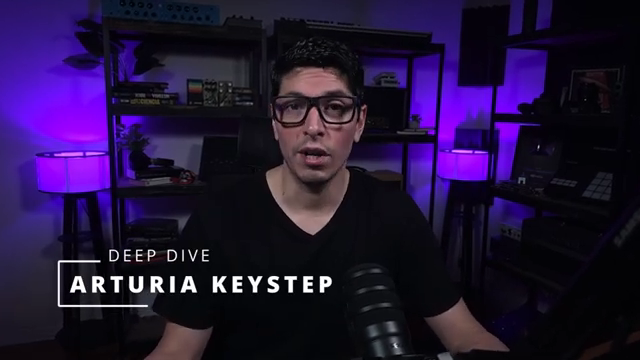
"This is not a review, it's a deep dive about this device."
© Screenshot/Quote: Xnbeatsmusic (YouTube)
Polyphonic Sequencer: Eight-Note Mayhem
"The sequencer is polyphonic, meaning that it can remember up to eight notes per step."
© Screenshot/Quote: Xnbeatsmusic (YouTube)
The KeyStep 37’s sequencer isn’t just polyphonic—it’s a full-on chord machine, letting you stack up to eight notes per step. XNB walks through how to wrangle banks, patterns, and step lengths, making it clear this isn’t your average stepper. You can transpose, overdub, and even nudge sequences around like a DJ shuffling decks.
Pattern chaining, tempo tweaks, and the ability to save and reload sequences on the fly mean you’re never stuck with a stale groove. The KeyStep’s memory might not be endless, but its sequencing logic is miles ahead of most budget controllers. If you want to build complex, evolving jams, this is the tool—and XNB shows exactly how to push it to the edge.
Arp and Chord Modes: Strum, Smart, and Savage
Arpeggiators are usually an afterthought, but not here. The KeyStep 37’s ARP mode is a playground of classic and mutant patterns, with 16 different modes—including a wild user mode that lets you turn your own sequence into an ARP. XNB demos everything from basic ups and downs to random, poly, and the infamous mode 16, where your last sequence becomes the ARP’s DNA.
Chord mode isn’t just a lazy stacker either. You get user chords, a pile of presets, and advanced features like Strum, Spread, and Smart Voicing. Want to strum your chords with velocity or aftertouch? Done. Need inversions and custom voicings? It’s all here. XNB’s walkthrough is dense—if you want to hear how these features actually sound, you’ll need to watch the video. Words don’t do the strum justice.
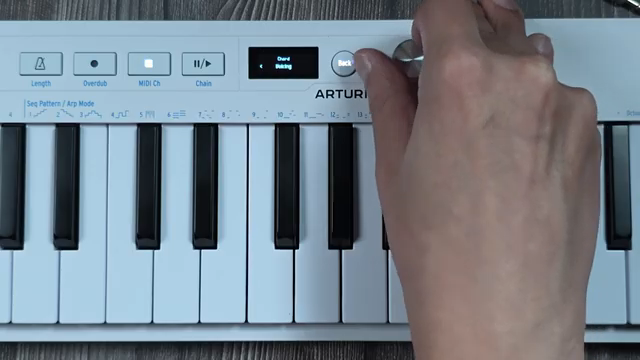
"It will create different inversions of the same idea."
© Screenshot/Quote: Xnbeatsmusic (YouTube)
Real-Time, Step, Spice: Sequencing Gets Mutated
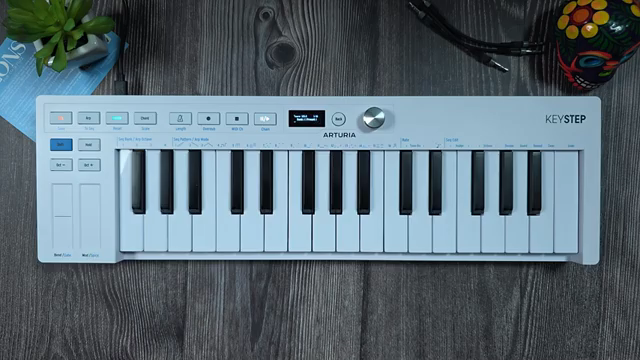
"You just need to press and hold and it will create some variations, simple as that."
© Screenshot/Quote: Xnbeatsmusic (YouTube)
Recording on the KeyStep 37 is a choose-your-own-adventure: real-time for jamming, step mode for precision, and overdub for stacking chords like a mad scientist. XNB breaks down how to clear, undo, and quantise your patterns, plus how to automate bends, mods, gates, and spice—all in the heat of the moment.
Then there’s the wild stuff: Spice adds randomness, Mutate rolls the dice on your patterns, and you can chain sequences for evolving live sets. Pattern tempo and scale settings mean you can get micro with your groove, or let chaos reign. The KeyStep’s workflow is deep but not daunting, especially with XNB’s clear, fast-paced demo. If you want to see how far you can push pattern mutation, this is your lab.
Settings, Customisation, and Studio Survival
The KeyStep 37 isn’t just about flashy features—it’s a studio chameleon. XNB dives into global menus, MIDI settings, CV outputs, and velocity/aftertouch curves, showing how you can tailor the controller to your rig, whether you’re DAWless or DAW-chained. Sensitivity tweaks, sync options, and user scales mean you can make this thing behave exactly how you want.
From pattern save/reload to global and per-pattern scales, everything is designed for fast, live tweaks and deep customisation. XNB’s approach is hands-on and practical—no menu-diving for the sake of it, just the settings that actually matter. If you want a controller that adapts to your workflow instead of fighting it, the KeyStep 37 (with XNB’s guidance) is a proper street weapon. Some of the menu magic is best seen in action, so don’t skip the video for the full effect.
This article is also available in German. Read it here: https://synthmagazin.at/xnbs-arturia-keystep-37-deep-dive-vom-midi-brett-zur-sequencer-strassenwaffe/
Watch on YouTube:
Latest articles
Watch on YouTube:
Visit the channel:
https://www.youtube.com/XNBeatsMusic
https://www.youtube.com/XNBeatsMusic
Links from XNBeatsMusic:
instagram: https://instagram.com/xnb.synths.music
Sponsored links:
If you purchase via these links, we may earn a small commission – at no extra cost to you. The link opens an Amazon keyword search, and results may vary depending on availability.
Arturia Keystep 37
🔗 Check price on Amazon
🔗 Check price on Amazon