Voltage Labs, ever the cartographer of electronic sound, invites us to drift through the magnetic resonance of Native Instruments’ legacy. This is not just a chronicle of software and circuits—it’s a meditation on how Berlin’s visionaries transformed the very fabric of music-making. Through poetic storytelling and tactile metaphors, we witness the shift from hardware-bound rituals to a universe where sound blooms from code. Prepare to feel the weightless gravity of Reaktor, the spectral touch of Kontakt, and the pulse of Maschine as Voltage Labs connects the dots between technology, culture, and the soul of creation.

From Iron to Ether: The Software Awakening
In the mid-1990s, the world of electronic music was a constellation of blinking hardware—synths, samplers, mixers, and tape, each a planet in its own orbit. Studios pulsed with the tactile ritual of patch cables and spinning reels, while computers hovered at the periphery, spectral and untrusted. Native Instruments emerged from Berlin like a comet, their founders envisioning a future where the computer would not merely imitate instruments, but become the instrument itself.
This was not a simple translation of hardware into digital shadow. Instead, Native Instruments proposed a new cosmology: sound as software, liberated from the gravity of physical form. Their early vision shimmered with possibility, inviting us to imagine music as something weightless, infinitely mutable, and woven from the logic of code rather than the constraints of circuitry.

"The computer could become the instrument."
© Screenshot/Quote: Voltage Labs (YouTube)
Reaktor and Kontakt: Sculpting Sonic Topographies
"Reaktor did not prescribe sound, it provided a framework for discovering it."
© Screenshot/Quote: Voltage Labs (YouTube)
Reaktor did not present us with fixed instruments, but with a modular landscape—oscillators, filters, envelopes, sequencers—each a building block in a universe of sound. To enter Reaktor was to step into a labyrinth, where structure mattered more than surface, and discovery was the only map. This was a space for those who wished to sculpt their own nebula drones, to chase the ghosts of analog quirks within digital architecture.
As Native Instruments’ ambitions grew, so did their palette. Battery offered precision and control for drum programming, but it was Kontakt that truly blurred the boundaries between recording and synthesis. Here, samples became living instruments, and the line between reality and invention dissolved. Suddenly, every timbre—be it orchestral, electronic, or imagined—was available to anyone with a computer, democratizing the act of creation and turning the personal studio into a boundless sonic archive.
Traktor: The DJ as Alchemist
With Traktor, Native Instruments entered the DJ booth not as imitators, but as architects of new possibility. The timing was electric—laptops had become powerful enough to host entire universes of sound, and DJing was shifting from the simple playback of records to the manipulation of audio as raw material. Traktor was more than a tool; it was a portal, allowing artists to sculpt and bend tracks in real time, to become alchemists rather than mere selectors.
For pioneers like Richie Hawtin, this was not a shortcut but an evolution. The dream was to connect the turntable to the computer, but Traktor asked: what if we could go further? What if the DJ could shape sound with the immediacy of thought, translating inspiration into vibration without friction? In this new paradigm, the DJ became a storyteller, weaving magnetic resonance from digital threads.
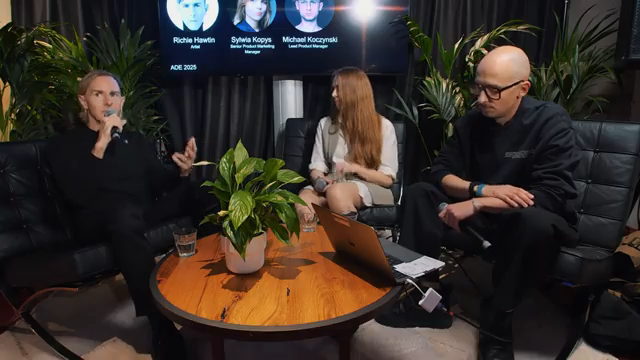
"How do we now control or how can we control these files that we're playing in different ways to make DJing a new style of DJing?"
© Screenshot/Quote: Voltage Labs (YouTube)
Maschine: The Pulse of Hybrid Creation
Maschine arrived as a bridge between worlds—a tactile surface in the age of abstraction. It merged the physicality of classic drum machines with the infinite depth of software, inviting hands and minds to collaborate in real time. The workflow echoed the beloved MPC, yet it was unmistakably of its era: production and performance collapsed into a single, luminous space.
This was not nostalgia, but renewal. Maschine made software feel corporeal, its pads and encoders a canvas for spontaneous creation. The result was a hybrid workflow where ideas could bloom and mutate at the speed of thought, each beat a brushstroke in a living mural of sound. To truly sense this fusion, one must witness the dance of fingers and code—an experience best felt in motion, as shown in Voltage Labs’ evocative video.
Software as Instrument: The Infinite Horizon
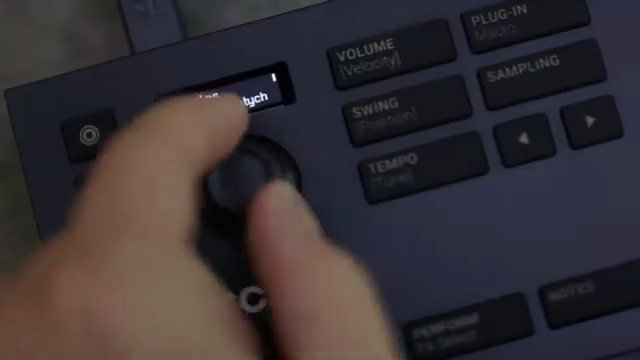
"Software is a serious musical instrument."
© Screenshot/Quote: Voltage Labs (YouTube)
Native Instruments never anchored themselves to a single genre, trend, or identity. Instead, they built infrastructures—ecosystems where tools did not dictate style, but enabled exploration. By lowering the barriers to complex sound design and performance, they opened the gates for countless voices to shape their own sonic narratives.
At the heart of it all remains a radical idea: software is not a mere utility, but a serious musical instrument. It is a vessel for imagination, a canvas for the future. As Voltage Labs reminds us, the story of Native Instruments is not just about technology, but about the ever-expanding horizon of what music can become.
This article is also available in German. Read it here: https://synthmagazin.at/voltage-labs-beleuchtet-native-instruments-und-der-aufbruch-ins-klangliche-unendliche/
Watch on YouTube:
Latest articles
Watch on YouTube:
Visit the channel:
https://www.youtube.com/voltage_labs
https://www.youtube.com/voltage_labs
Links from voltage_labs:
instagram: https://www.instagram.com/voltage.labs
Sponsored links:
If you purchase via these links, we may earn a small commission – at no extra cost to you. The link opens an Amazon keyword search, and results may vary depending on availability.
Battery
🔗 Check price on Amazon
🔗 Check price on Amazon
Kontakt
🔗 Check price on Amazon
🔗 Check price on Amazon
Maschine+
🔗 Check price on Amazon
🔗 Check price on Amazon
Reaktor
🔗 Check price on Amazon
🔗 Check price on Amazon
Traktor
🔗 Check price on Amazon
🔗 Check price on Amazon