Verbos Electronics, renowned for their West Coast–inspired Eurorack modules, returns with a deep dive into the Voltage Multistage 10—a sequencer that’s anything but conventional. In this official video, the team demonstrates how the VMS-10, paired with its larger sibling, the VMS-16, can be patched for sprawling melodic variation and evolving rhythmic interplay. The focus is on hands-on patching, leveraging new strobe mode features and transistor-based gate outputs to build complex, interwoven sequences. If you’re after melodic unpredictability and nuanced control in your rack, this walkthrough offers a patcher’s-eye view of what the VMS-10 brings to the table.
13. February 2026
MILES
Verbos Electronics and the Voltage Multistage 10: Sequencing Beyond the Grid
Meet the Voltage Multistage 10: A Sequencer for the Patch-Obsessed
The Voltage Multistage 10 is introduced as a sequencer designed for those who thrive on hands-on patching and melodic exploration. Verbos Electronics, true to their outside-in design philosophy, presents the module as a tool for building intricate patches rather than just programming static note patterns. The video sets out to demonstrate how the VMS-10, when combined with the VMS-16, can create up to 52 steps of melodic variation—a playground for anyone who enjoys sculpting evolving sequences.
From the outset, the focus is on interaction and flexibility. The presenter makes it clear that the VMS-10 is not just about linear step sequencing, but about encouraging experimentation with timing, modulation, and signal flow. The module’s spacious panel and robust controls invite users to get tactile, making it a natural fit for modular setups where patch cables are as important as the notes themselves.
Strobe Mode and Transistor Gates: New Tricks for Old Patchers
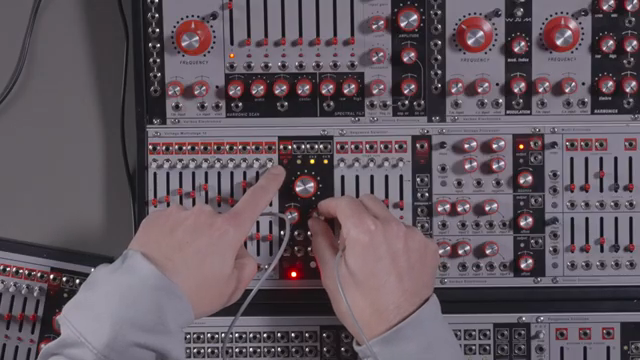
A standout addition to the VMS-10 is the strobe mode, activated at boot by holding the strobe button. This mode, described as a nod to Buchla’s approach, allows the playback head of the sequencer to be controlled by external voltage—essentially letting users scan through steps in both directions with an analog control. This opens up a world of real-time manipulation and non-linear sequencing.
What’s more, the VMS-10 and VMS-16 now feature gate outputs in strobe mode, thanks to a shift from CMOS to transistor-based circuitry. This technical change means that, unlike the original VMS, users can now generate gates while voltage-scanning the sequence—crucial for triggering envelopes and synchronizing events in complex patches. It’s a subtle but significant upgrade for anyone building interactive modular systems.
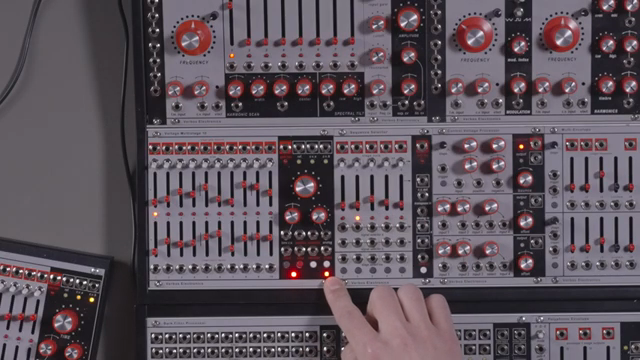
"We're now in the so-called strobe mode, which is Buchla-parlance for being able to use an external voltage to control the playback head."
© Screenshot/Quote: Verboselectronicsgmbh (YouTube)
Patch Examples: Gates, Envelopes, Pitch and Sequence Interplay
The video moves into practical territory, showing how the VMS-10’s gate outputs can be used to trigger envelopes and control volume within a patch. By programming melodic content into the sliders, the sequencer’s rows are set up to modulate the pitch of a harmonic oscillator, while the gates provide rhythmic triggers for amplitude shaping. The presenter uses mults to distribute signals, ensuring that both A and B rows from the VMS-10 and VMS-16 can be routed to different destinations.
A sequence selector module is brought into play, allowing the various CV rows to be switched and mixed, creating moments of silence and dynamic pitch changes. This approach highlights the VMS-10’s role as a central hub in a modular patch, where its outputs can be flexibly assigned to control oscillators, filters, and other modules. The demonstration underscores the importance of thoughtful signal routing and the creative potential unlocked by combining multiple sequencer rows.
The patch is further developed by connecting the harmonic oscillator’s output through an amp and tone module, into a multi-delay, and finally to a scan and pan for stereo output. The envelope, triggered by the VMS-10’s gates, shapes the dynamics, while the pitch CVs drive melodic movement. This section showcases how the VMS-10 integrates into a full voice chain, providing both structure and variation.
Sequencer Relationships: Evolving Patterns and Rhythmic Push-Pull
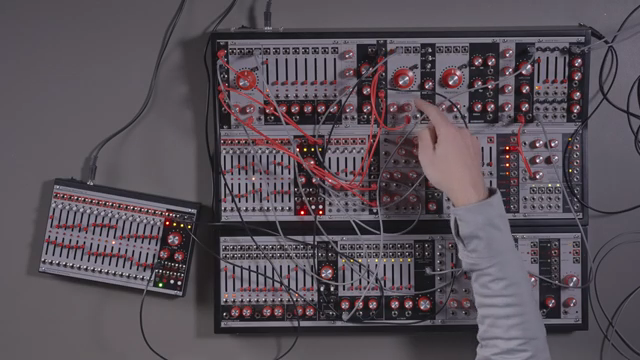
"Now we can begin to hear this push-pull relationship between the rates of the sequences and oscillator."
© Screenshot/Quote: Verboselectronicsgmbh (YouTube)
A key technique demonstrated is the creation of relationships between different sequence rates. By using the output of one sequencer row to modulate the rate of another, the patch achieves a trilling effect and introduces complex, evolving rhythms. The presenter explores both positive and negative modulation, showing how the interplay between rates can result in push-pull dynamics, sometimes even halting the sequence entirely before nudging it back into motion.
Further modulation is introduced by using random voltages to affect envelope attack and decay times, making the resulting notes less predictable and more organic. The B row of the VMS-10 is used to modulate harmonic content, while additional rows from the VMS-16 are patched to open filters and shape timbre. The video demonstrates how layering these modulations leads to intricate soundscapes, with sequences slowing down, speeding up, and interacting in musically interesting ways.
The presenter also patches a secondary voice using the saw output of the oscillator, filtering it through the Bach filter and modulating its parameters with sequencer rows. This multi-voice approach, combined with feedback and delay tricks, highlights the VMS-10’s capacity for generating evolving textures and polyrhythmic patterns within a modular setup.
Hands-On Sequencing: The Verbos Approach to Modular Sound Design
The final section of the video underscores the hands-on, exploratory nature of working with the Voltage Multistage 10. By feeding preset outputs from the multi-delay into the sequence selector and using them as feedback, the patch gains additional layers of rhythmic variation and atonal effects. The presenter demonstrates how modulating delay time can push the sound into more experimental territory, while still allowing for moments of melodic clarity.
Ultimately, the process is about interacting with the relationships between sequence rates, modulation sources, and audio paths. The VMS-10 is presented not as a rigid step sequencer, but as a performance tool for sculpting evolving patterns and textures. The video closes with a reminder that, in modular synthesis, the most interesting results often come from embracing unpredictability and letting the patch guide the music.
This article is also available in German. Read it here: https://synthmagazin.at/verbos-electronics-und-der-voltage-multistage-10-sequenzieren-jenseits-des-rasters/
Watch on YouTube:
Latest articles
Watch on YouTube:
Visit the channel:
https://www.youtube.com/VerbosElectronicsGmbH
https://www.youtube.com/VerbosElectronicsGmbH
Links from VerbosElectronicsGmbH:
website: https://www.verboselectronics.com
tech_cards: https://www.verboselectronics.com/tech-cards
instagram: https://www.instagram.com/verboselectronics
Sponsored links:
If you purchase via these links, we may earn a small commission – at no extra cost to you. The link opens an Amazon keyword search, and results may vary depending on availability.
Voltage Multistage 10
🔗 Check price on Amazon
🔗 Check price on Amazon
Voltage Multistage 16
🔗 Check price on Amazon
🔗 Check price on Amazon