Step into the shimmering world of cymbals, where metal breathes and every strike unfurls a new sonic landscape. Underdog Electronic Music School guides us through a poetic encounter with Mariano, a cymbalsmith whose hands coax nebula drones and magnetic resonance from raw bronze. This is not just a lesson in percussion—it’s a meditation on the textures, ghosts, and colors that cymbals bring to both traditional and electronic music. Prepare to drift inside the heart of resonance, where each sound blooms like fractured light and every detail is a story waiting to be heard.
16. December 2025
LUMINA
Underdog Electronic Music School: Cymbals as Sonic Storytellers—Inside the Cymbalsmith’s Workshop
Artifacts from Another Dimension
The video opens with a confession: cymbals have always been distant, almost spectral, for those who dwell in the world of electronic music. Their presence is felt through samples, recordings, and the filtered haze of white noise—never quite tangible, always a little out of reach. Here, cymbals are described as artifacts from another dimension, shimmering on the edge of perception, their true character obscured by layers of mediation.
Underdog Electronic Music School invites us to cross that threshold. The cymbal, often relegated to marking climaxes or transitions, is revealed as a vessel of energy—each crash a bloom of light, each splash a momentary explosion. The language of cymbals, shaped by marketing and tradition, belies their modernity and their power to punctuate, to ride, to shimmer at the boundaries of rhythm and noise.
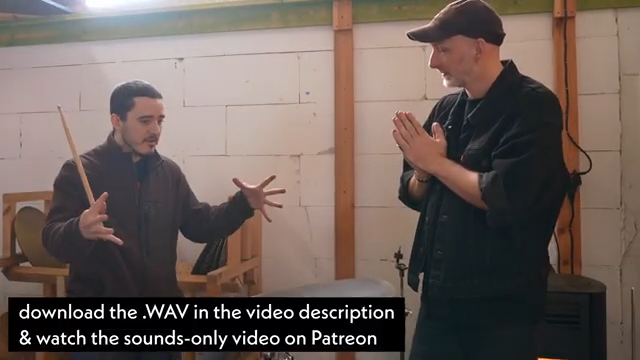
"I've only ever seen and manipulated cymbals from a distance and just looked at them as artifacts from some other dimension."
© Screenshot/Quote: Oscarunderdog (YouTube)
Mariano’s Alchemy: From Blank to Bell
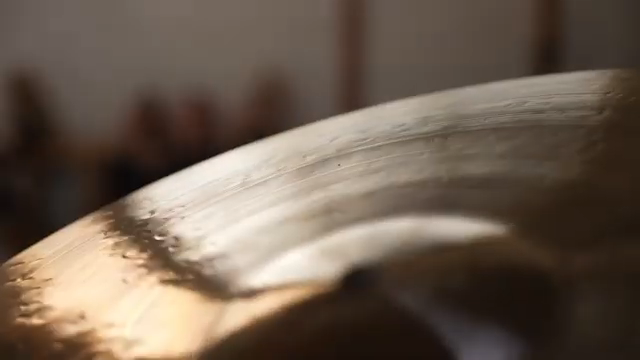
"It sounds kind of like space. You know, it has like these very like strong, extreme ends."
© Screenshot/Quote: Oscarunderdog (YouTube)
We meet Mariano, the cymbalsmith, in his Brussels workshop—a space where bronze is transformed by ritual and obsession. Every cymbal that leaves his hands is a singular creation, hammered and shaped through a process that is as much about listening as it is about labor. The raw material, the blank, is a disc of potential, warped and waiting, its voice still hidden beneath the surface.
Mariano’s craft is tactile and intimate. The act of hammering is where most of the magic happens, coaxing resonance from chaos. The bell, he explains, is the soul of the cymbal—its birth marked by a shift from void to warmth, from spectral extremes to a more human song. The transformation is gradual, each stage revealing new layers of sustain, color, and possibility.
Resonance and the Mystique Within
Cymbals are more than noise—they are a mesh of harmonics, a living bed of frequencies that shimmer and recede. Mariano describes his approach as one of subtraction: removing what is bothersome, allowing the instrument’s true resonance to emerge. The result is a sound that is both functional and mysterious, a beautiful white noise that carries both articulation and depth.
The physical form of the cymbal is inseparable from its voice. Every curve and angle shapes the movement of sound, from the sub-bass hum at the edge to the crystalline highs near the bell. Cymbals are cousins to gongs, their vibrations painting acoustic landscapes that are as visual as they are sonic. Each one is a world unto itself, a color and a character that inspires musicians across genres.
For Mariano, cymbals are the most expressive part of the drum set—a source of endless fascination and experimentation. Their sound is unchangeable, a gift and a challenge, offering a palette of tones that can be swapped, collected, and cherished like rare pigments.
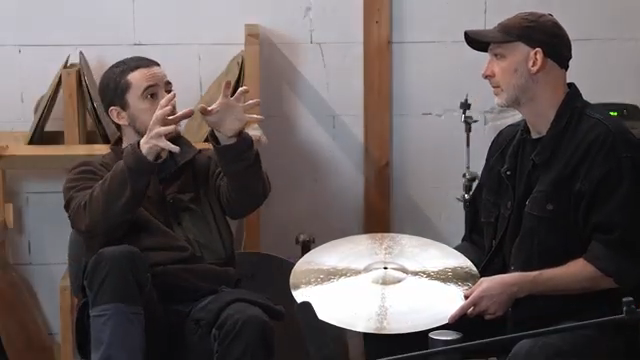
"I am not trying to approach the thing that I want. I am trying to take away the things that I don't."
© Screenshot/Quote: Oscarunderdog (YouTube)
The Triangle Method: Harvesting Sonic Textures
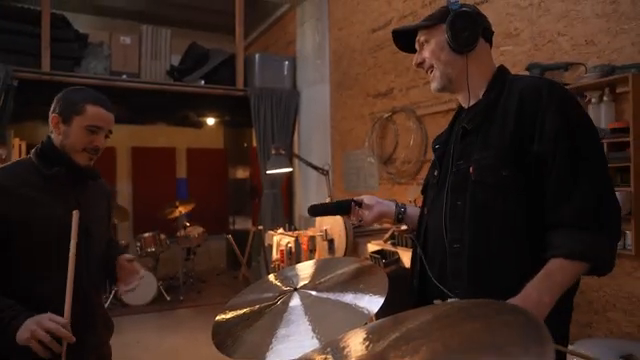
"It really sounds like a voice off in the distance going ahh."
© Screenshot/Quote: Oscarunderdog (YouTube)
The conversation turns to the triangle method—a ritual of exploration and capture. Here, the cymbal becomes a sound object, activated in myriad ways and recorded for later transformation. This approach is about harvesting textures, letting the instrument reveal its ghosts and hidden voices through unconventional interactions.
By recording extended explorations, the triangle method creates a reservoir of sonic colors. These fragments become the raw material for new compositions, blurring the line between acoustic tradition and electronic invention. The process is tactile, playful, and open-ended—a dance with resonance and unpredictability.
Bridging Worlds: Cymbals in the Electronic Imagination
Cymbals are revealed as bridges—between dryness and resonance, tradition and innovation, the physical and the digital. The video contrasts the current trend toward dry, muffled sounds with Mariano’s preference for instruments that speak, that resonate, that leave a trail of sonic ghosts in their wake. Resonance is not just a byproduct; it is the bed on which music rests, a mesh that warms and colors the space between notes.
The articulation of a cymbal is a story in itself. Some are washy, their resonance blooming outward like fog; others are focused, their attack sharp and immediate. Yet within each, there is a world of tinkering, a wall of sound that can be shaped and played. The video reminds us that true understanding comes not from description but from experience—these nuances are best felt in the swirl of overtones and the tactile dance of stick on metal.
In the end, Mariano’s cymbals are more than instruments—they are sonic storytellers, each one unveiling a new narrative with every strike. For those who seek to bridge the worlds of acoustic and electronic music, these sounds are invitations to drift, to experiment, and to let resonance guide the way.
This article is also available in German. Read it here: https://synthmagazin.at/underdog-electronic-music-school-becken-als-klanggeschichten-im-atelier-des-cymbalsmiths/
Watch on YouTube:
Latest articles
Watch on YouTube:
Visit the channel:
https://www.youtube.com/OscarUnderdog
https://www.youtube.com/OscarUnderdog
Links from OscarUnderdog:
underdog.brussels: https://underdog.brussels
Underdog instagram: https://instagram.com/oscarunderdog
Underdog facebook: https://facebook.com/underdogbrussels