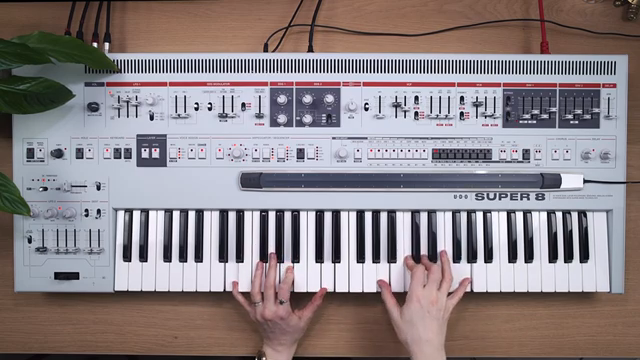
In this analytical dive, we follow Hazel Mills as she constructs evocative patches on the UDO Audio Super 8, revealing the instrument’s hybrid character and hands-on modulation appeal. UDO Audio, known for their lush, FPGA-driven analog-hybrid synths, provides the canvas for Mills’ performance video ‘SIGIL.’ The video is less about preset surfing and more about building sounds from the ground up—oscillator by oscillator, envelope by envelope—showcasing the Super 8’s strengths in rhythmic, percussive, and sustained textures. For those interested in how a synth’s architecture shapes real-world patches, this is a revealing look at both the instrument and the artist’s process.
3. February 2026
MILES
UDO Audio’s Super 8: Patchcraft and Performance with Hazel Mills
Patch Building Foundations: SIGIL in Focus
Hazel Mills opens the session by inviting viewers into her patch-building process with the UDO Super 8, setting the stage for a hands-on exploration rather than a mere preset showcase. The context is her performance video ‘SIGIL,’ where these patches are put through their paces in a musical setting. Mills outlines her approach: constructing three distinct performances, each built from two patches, aiming for a blend of rhythmic and melodic interplay. This structure hints at the Super 8’s flexibility in both split and layered modes, offering a glimpse into how the instrument can underpin a full composition.
From the outset, Mills makes it clear that every sound starts from an initialized patch, stripping away any factory polish in favour of raw, user-driven synthesis. This approach not only demonstrates the Super 8’s immediacy but also its suitability for those who prefer to sculpt their own tones from scratch. The focus is on building a percussive base, highlighting the synth’s potential as a rhythmic engine as much as a melodic one.
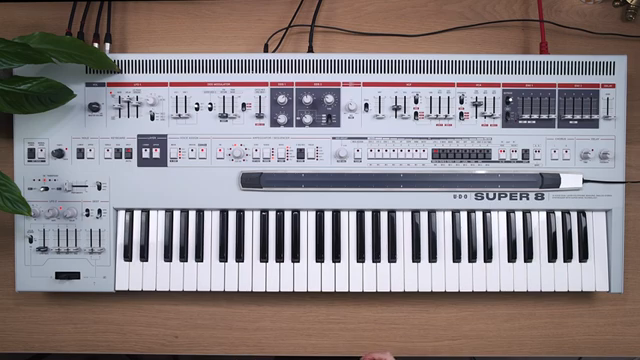
"All of these will start with a basic initialized patch, and I'll build it up from there."
© Screenshot/Quote: Udo Audio (YouTube)
From Blank Slate to Percussive and Sustained: Modulation at Work
"Now, we want to get away from it sounding like a pitched, melodic instrument."
© Screenshot/Quote: Udo Audio (YouTube)
The patch-building begins with two square waves and a short, snappy envelope—classic ingredients for a percussive sound. Mills uses the arpeggiator to inject rhythmic movement, then deliberately pushes the patch away from traditional melodic territory by modulating pitch and filter with envelope one. This not only alters the timbre but also introduces a quirky, less predictable character, showing the Super 8’s capacity for both subtle and pronounced modulation.
Dynamics are brought into play via VCA velocity sensitivity and full key tracking on the filter, ensuring the patch responds expressively across the keyboard. Cross-modulation and waveform experimentation follow, with Mills dialling in drive and delay to add grit and spatial depth. The result is a percussive patch that’s anything but static—alive with movement and variation, ready to anchor a track’s rhythmic core.
Sonic Palette Expansion: Waveforms, Pitch Tricks, and Effects
Switching focus, Mills crafts a sustained bass sound, again starting from an initialized patch. She tweaks the envelope for a touch of release and a slow filter attack, lending the sound a brassy, evolving quality. The second oscillator is introduced for warmth, and drive plus resonance are added for extra body. Stereo movement is achieved by modulating the filter with the LFO, exploiting the Super 8’s binaural architecture and phase manipulation for a wide, animated soundstage.
Mills experiments with oscillator pitch relationships and chorus, then demonstrates the wave morphing function—modulating between sawtooth and square for shifting timbres. Unison mode is engaged for a thicker, more imposing presence, and the patch is saved as part of a performance. Effects like chorus and delay are used judiciously, enhancing the patch without overwhelming its core character.
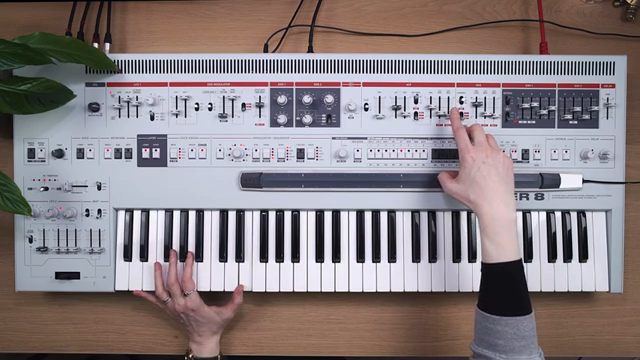
"The reason that gives it stereo movement is because of the binaural nature of the synth and you can kind of play on that with the phase of the LFO."
© Screenshot/Quote: Udo Audio (YouTube)
Layering, Rhythm, and Dynamic Control: Building Performances
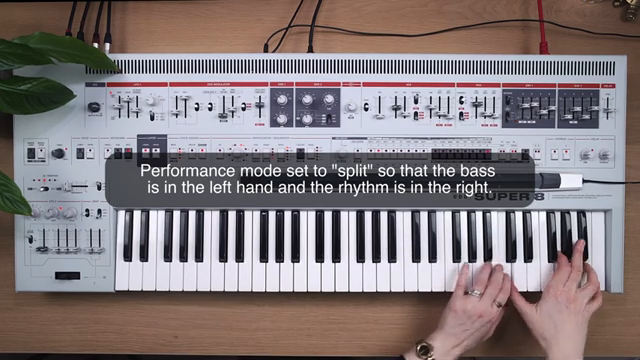
"So moving on to the next performance and what I would like this to be is this kind of also rhythmic but pitched interaction between two sequences of different rhythms."
© Screenshot/Quote: Udo Audio (YouTube)
Performance building takes centre stage as Mills layers patches, focusing on rhythmic interaction and dynamic envelope shaping. She constructs a new performance with two sequences running at different rhythms, starting with a sawtooth-based patch modulated by envelope and delay. Octave shifts and key tracking add further nuance, while envelope tweaks shape the attack and sustain for expressive phrasing.
The second patch in the performance is set to a contrasting tempo and timbre, using square waves and noise elements for variety. Delay is again employed, and Mills opts for a dual mode to play chords, rather than a split. The result is a performance where rhythmic and tonal layers interact dynamically, showcasing the Super 8’s ability to support complex, evolving arrangements with hands-on control.
This article is also available in German. Read it here: https://synthmagazin.at/udo-audio-super-8-patchkunst-und-performance-mit-hazel-mills/
Watch on YouTube:
Latest articles
Watch on YouTube:
Visit the channel:
https://www.youtube.com/udo_audio
https://www.youtube.com/udo_audio
Links from udo_audio:
website: https://www.udo-audio.com
instagram: https://www.instagram.com/udo_audio
Sponsored links:
If you purchase via these links, we may earn a small commission – at no extra cost to you. The link opens an Amazon keyword search, and results may vary depending on availability.
UDO Super 8
🔗 Check price on Amazon
🔗 Check price on Amazon