UDO Audio’s Super 8 is not your average polysynth—it’s a bi-timbral, modulation-rich machine designed for those who crave evolving, layered textures. In this official video, Hazel Mills takes the Super 8 through its paces, demonstrating how its dual sound engines, flexible modulation matrix, and hands-on controls can be harnessed for self-evolving patches. As typical for UDO Audio, the focus is on playability and sonic depth, with a clear invitation to experiment and push boundaries. If you’re interested in how modulation sources and destinations interact in a modern hybrid synth, this walkthrough is a must-watch.

10. September 2024
MILES
UDO Audio Super 8: Bi-Timbral Adventures in Evolving Sound
Bi-Timbral Foundations: The Super 8’s Layered Approach
The UDO Super 8 is introduced as a bi-timbral synthesizer, meaning it can play two distinct sound layers simultaneously. Hazel Mills sets the stage by explaining that each layer can be treated as a separate patch, yet both are triggered together, opening up a world of complex, evolving textures. This dual-layer architecture is at the heart of the Super 8’s sound design philosophy, allowing for intricate interplay between voices and modulation sources.
What makes these sounds truly ‘ever-evolving’ is the use of modulation at different rates and depths across both layers. By ensuring that modulation cycles rarely align, the resulting patches avoid obvious repetition and instead drift organically over time. This approach is ideal for those who want their sounds to breathe and transform, rather than loop predictably—a nod to UDO Audio’s ethos of inspiring, hands-on play.
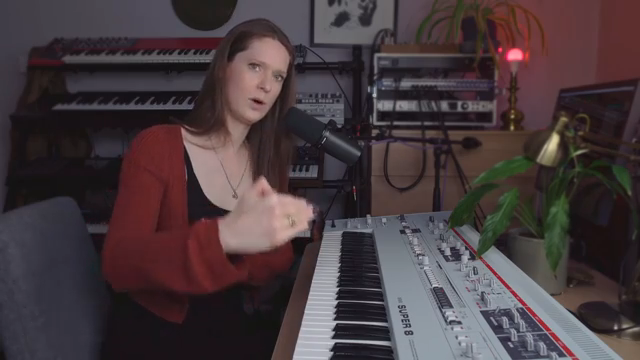
"There's always going to be an element of rhythmic displacement as it were or time displacement which means nothing is going to repeat."
© Screenshot/Quote: Udo Audio (YouTube)
Modulation in Motion: LFOs, Envelopes, and Destinations
"Envelope 1 which is set to loop so it's kind of acting a bit like an LFO in that sense and the attack is quite slow and the decay is quite slow as well."
© Screenshot/Quote: Udo Audio (YouTube)
Hazel breaks down the core modulation toolkit at the Super 8’s disposal: two LFOs and an envelope, each assignable to key sound-shaping destinations. LFO 1, LFO 2, and Envelope 1 form the backbone of movement within a patch, with each source capable of targeting parameters like filter cutoff, oscillator mix, and wave morphing. The interplay between these sources is what gives the Super 8 its evolving character.
In the lower layer of the first performance, DDS1 is set to triangle and DDS2 to sawtooth, both at the same octave. Envelope 1, set to loop with slow attack and decay, modulates the filter cutoff—essentially acting as a slow-moving LFO. LFO 1, running a fast square wave, also modulates the filter, injecting rhythmic pulses. The twist comes with LFO 2, which modulates the amount of LFO 1’s influence on the filter, creating a dynamic, shifting modulation depth that prevents the sound from becoming static.
On the upper layer, the focus shifts to slow morphing between alternative waveforms on DDS1, driven by LFO 1’s sine wave. LFO 2 modulates the mix between DDS1 and DDS2, ensuring the tonal balance is always in flux. Aftertouch is cleverly assigned to control the rate of LFO 1, allowing real-time, polyphonic manipulation of the evolving wave morphing—an expressive touch that further enhances the unpredictability of each note.
Performance Showcases: Two Approaches to Evolving Layers
The video features two distinct performances, each highlighting different modulation strategies. In the first, the interplay of looping envelopes, multiple LFOs, and aftertouch creates a lush, slowly shifting soundscape. The modulation sources interact in ways that ensure no two passes are identical, with rhythmic and timbral changes unfolding over time.
The second performance shifts gears, introducing more pronounced stereo movement and rhythmic pulsing. Here, LFO 1’s square wave modulates the filter cutoff, while LFO 2 (sine wave) modulates the depth of that effect. Delay sync and envelope-driven oscillator mixing add further complexity, resulting in a binaural, almost hypnotic texture that demonstrates the Super 8’s versatility in both subtle and dramatic sound design roles.
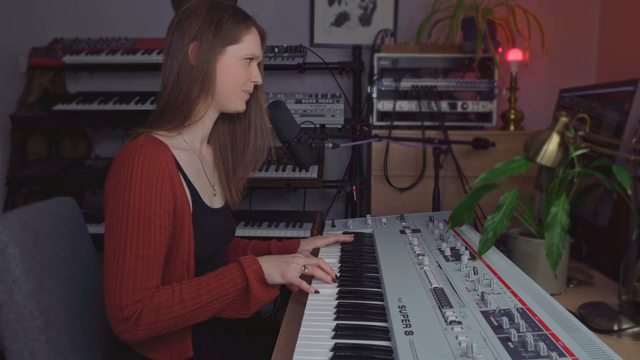
"It's like being out at sea."
© Screenshot/Quote: Udo Audio (YouTube)
Layering Techniques: Aftertouch, Modulation, and Continuous Evolution
Hazel demonstrates how combining multiple sound layers with creative modulation keeps the sonic character in constant motion. In the lower layer of the second performance, rhythmic pulsing is achieved not with an arpeggiator or sequencer, but through LFO-driven filter modulation and delay sync. The mix between oscillators is modulated by a looping envelope, introducing octave shifts and dynamic blends.
The upper layer employs an arpeggiator and dual modulation sources on the filter cutoff—LFO 1 and Envelope 1—each running at different rates. LFO 2 modulates the oscillator mix, ensuring that DDS2 occasionally peeks through. The result is a patch where filter movement, oscillator blending, and rhythmic elements are all in a state of flux, driven by both internal modulation and performance gestures like aftertouch.
An Invitation to Experiment: Evolving Sounds in Your Hands
Hazel closes the video by encouraging viewers to apply these modulation and layering techniques in their own sound design explorations. The Super 8’s architecture rewards curiosity and experimentation, making it a fertile ground for those who want to push beyond static patches. Whether you’re after subtle movement or wild, unpredictable textures, the tools are all there—just waiting for your next patching adventure.
This article is also available in German. Read it here: https://synthmagazin.at/udo-audio-super-8-bi-timbrale-abenteuer-im-sich-entwickelnden-sound/
Watch on YouTube:
Latest articles
Watch on YouTube:
Visit the channel:
https://www.youtube.com/udo_audio
https://www.youtube.com/udo_audio
Links from udo_audio:
website: https://www.udo-audio.com
instagram: https://www.instagram.com/udo_audio
Sponsored links:
If you purchase via these links, we may earn a small commission – at no extra cost to you. The link opens an Amazon keyword search, and results may vary depending on availability.
UDO Super 8
🔗 Check price on Amazon
🔗 Check price on Amazon