Tiptop Audio’s collaboration with Buchla USA brings the legendary Multiple Arbitrary Function Generator—now the 248t MARF—into Eurorack territory, and this official quickstart video wastes no time diving into its patchable depths. The 248t is introduced as a powerhouse for generating complex, evolving voltages and timings, with a hands-on interface that rewards both careful programming and spontaneous performance tweaks. As is typical for Tiptop’s technical-yet-practical style, the video walks viewers through the module’s core sections, real-time programming tricks, and integration with classic Buchla-inspired oscillators and envelopes. The result is a tantalising glimpse of how the MARF can become the nerve centre of a creative modular setup—whether you’re after precise sequences, wild modulations, or something in between.
9. April 2026
MILES
Tiptop Audio’s 248t MARF: Modular Function Wizardry in Eurorack
Tiptop Audio 248t Multiple Arbitrary Function Generator, Tiptop Audio 259 Oscillator, Tiptop Audio 281 Envelope Generator
Meet the MARF: A New Arbitrary Era
Tiptop Audio’s 248t, the Multiple Arbitrary Function Generator—or MARF for those in the know—lands in Eurorack with a reputation for flexibility and depth. Right from the outset, the video positions the 248t as a module designed to generate complex, user-defined functions, making it a central tool for anyone looking to move beyond simple LFOs or sequencers. The MARF’s roots in Buchla’s west-coast philosophy are clear, but Tiptop’s take is tailored for modern modular workflows.
The introduction sets the stage for a hands-on exploration, with the presenter noting the abundance of switches and controls that might initially seem daunting. Rather than shying away from this complexity, the video embraces it, promising a quickstart that demystifies the essential operations. For modular users accustomed to modules that reward experimentation, the 248t’s design philosophy will feel right at home—inviting both structured sequencing and on-the-fly voltage sculpting.
Three Pillars of Control: Voltage, Time, and Programming
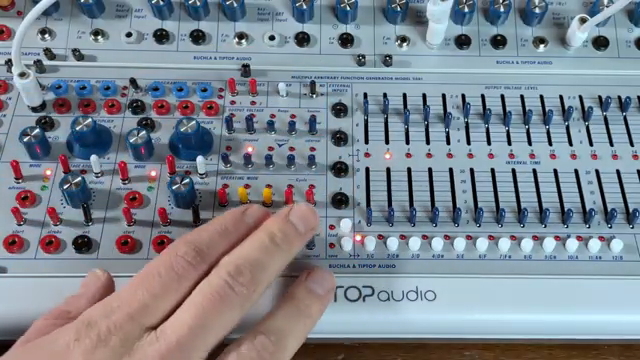
The 248t is neatly divided into three core sections: voltage and time, programming, and the function generator itself. Each section is given a clear role, with voltage and time sliders providing direct hands-on control over the shapes and durations of generated functions. These sliders can be accessed independently by the two function generators, each with its own timing, allowing for parallel or contrasting patterns.
Operational basics are highlighted, such as the importance of clearing the module’s memory before starting, and the use of the display switch to visualise which function generator is active. The start/stop switch, along with step advance and display toggling, gives users immediate feedback and control over playback. This structure encourages a workflow where programming and performance are tightly integrated, and where the user is always just a switch-flip away from reshaping their patch.
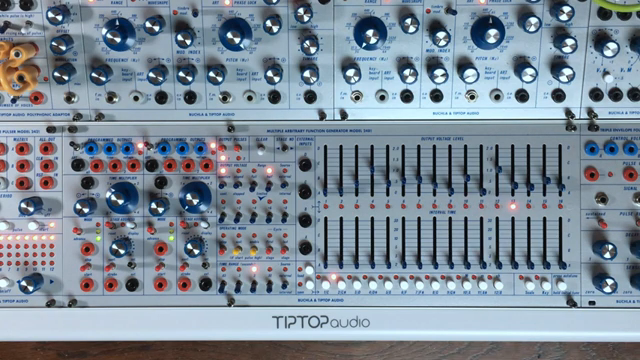
"When you clear, it will remove all the memories."
© Screenshot/Quote: Tiptop Audio (YouTube)
Programming in Motion: Real-Time Function Sculpting
"You can also do it while the function generator is running."
© Screenshot/Quote: Tiptop Audio (YouTube)
Programming the 248t is a tactile affair, with the ability to add or remove functions from stages in real time—even while the sequence is running. The video demonstrates how functions can be assigned to individual stages or applied across all stages simultaneously by holding the stage number switch and pressing the desired function. This approach streamlines the creation of complex patterns and makes it easy to experiment without halting the flow.
The presenter showcases the flexibility of the module by live-editing a sequence: pulses are added and removed on the fly, and amplitude modulation is introduced to enrich the sonic palette. This real-time programmability is a boon for performance-oriented setups, allowing users to morph sequences and modulations without breaking stride. The MARF’s interface encourages a playful, iterative approach to patching, where happy accidents are just as welcome as carefully planned moves.
Patch Bay Synergy: Integrating with Oscillators and Envelopes
Integration with other Eurorack modules is at the heart of the 248t’s appeal. The video walks through a classic patch: the MARF’s heart output is routed to control the pitch of a 259 oscillator, while gate outputs trigger a 281 envelope generator. This setup forms the backbone of a Buchla-inspired voice, with the 248t acting as both sequencer and modulation source.
Further examples show how the time sliders can be repurposed to control parameters like timbre on the 259, moving beyond mere timing into the realm of dynamic sound shaping. The ability to set timing to external control and modulate time multipliers with random voltages (from a source of uncertainty, naturally) demonstrates the module’s flexibility in a larger system. The 248t isn’t just a sequencer—it’s a modulation hub, ready to interact with oscillators, envelopes, and whatever else you care to patch into its orbit.
Creative Chaos: Timing, Modulation, and Sonic Exploration
The final stretch of the video dives into creative use cases, showing how the 248t can manipulate timing, amplitude, and modulation to craft unique sonic textures. Techniques like octave offset and range scaling allow for precise or wide-ranging control over pitch, while slope steps introduce slides for more fluid sequences. Adjusting the clock speed and programming speed changes with the time slider opens up rhythmic possibilities that go far beyond standard step sequencing.
Accents and modulation indices are programmed in, with pulse outputs selectively triggering additional envelopes or modulation paths. The quantised function ensures accurate pitch control for melodic work, while the module’s ability to combine multiple function types in a single sequence encourages experimentation. The result is a toolkit for everything from tightly controlled patterns to wonky, evolving modulations—ideal for those who see their modular system as a playground for voltage-driven invention.
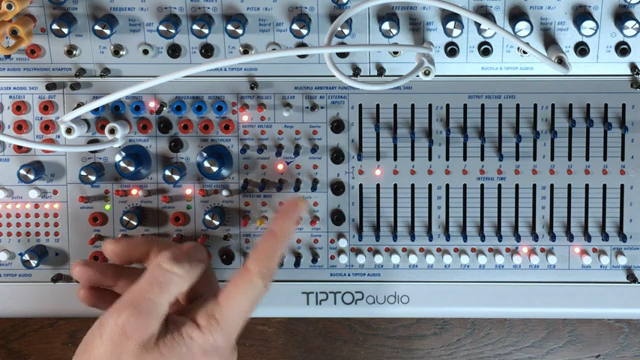
"Using the limited range with octave offset will limit the voltage to two octaves on the span of the slider."
© Screenshot/Quote: Tiptop Audio (YouTube)
Watch on YouTube:
Latest articles
Watch on YouTube:
https://www.youtube.com/tiptop-audio
Links from tiptop-audio:
Sponsored links:
If you purchase via these links, we may earn a small commission – at no extra cost to you. The link opens an Amazon keyword search, and results may vary depending on availability.
🔗 Check price on Amazon
🔗 Check price on Amazon
🔗 Check price on Amazon