Starsky Carr dives headfirst into the low-end trenches with the IK Multimedia iLoud Sub, putting this compact subwoofer through its paces in a real-world small studio. If you think a sub this size can’t shake your walls, think again—Starsky’s got the measurements, the room correction, and the brutal honesty to prove it. Expect standing waves, beefier mixes, and a bit of British banter about why most subs just make things worse. This isn’t your average gear review—this is a rave bunker upgrade, Starsky style. Prepare to question your monitor setup and maybe your life choices.
12. January 2026
SPARKY
Starsky Carr Unleashes the iLoud Sub: Small Box, Big Bass, No Nonsense
ARC X room correction, Dynaudio LYD7, IK Multimedia iLoud Sub, IK Precision 6
Tiny Box, Massive Punch
Starsky Carr kicks things off with the IK Multimedia iLoud Sub—a subwoofer so small it looks like it belongs in a lunchbox, not a studio. But don’t let the size fool you; this thing packs six-inch woofers on three sides and comes loaded with all the right connections. The real trick? It’s not just a sub, it’s a full system upgrade, bundled with a reference mic and ARC X room correction software. In a world where most compact subs just add mud, Starsky’s already hinting that this one’s got brains as well as brawn.

"They seem to have pulled a rab out of the hat and defied the laws of physics with the size of this."
© Screenshot/Quote: Starskycarr (YouTube)
Standing Waves: The Bass Assassin
"We can see these three big peaks around 39, 69 and 112 hertz, which are caused by standing waves bringing out the natural room resonances."
© Screenshot/Quote: Starskycarr (YouTube)
Every small studio owner knows the pain: standing waves turn your bass into a boomy mess, and unless you fancy knocking down walls, you’re stuck with it. Starsky lays out the science—those nasty peaks at 39Hz, 69Hz, and 112Hz aren’t random, they’re the ghosts of your room’s dimensions haunting your mixes. He breaks down the maths, showing how your room’s length, width, and height line up perfectly with the worst bass resonances.
But here’s where the iLoud Sub’s ARC X system comes in swinging. Instead of just boosting the low end and making things worse, it measures your room and corrects the whole system—sub and monitors together. No more guessing, no more endless foam panels. Just a few minutes with the reference mic and you’re on your way to a flatter, more honest low end. It’s the kind of fix that makes you wonder why every sub doesn’t come with this as standard.
ARC X: From Mud to Muscle
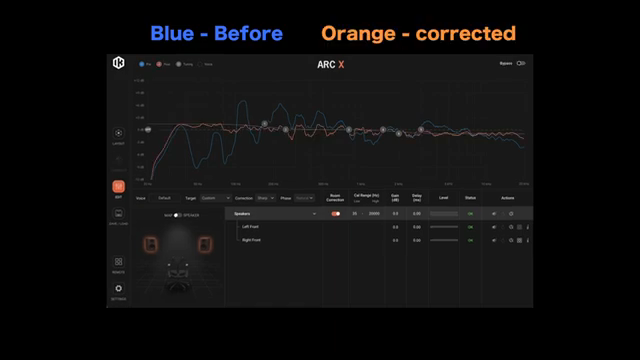
Calibration time: Starsky shows how the ARC X software takes a handful of measurements and spits out EQ corrections that flatten even the lumpiest frequency response. The before-and-after curves don’t lie—the blue line’s got humps like a camel, but the orange line is smooth as butter. He’s even double-checked ARC X against Sonoworks and found the results nearly identical, so there’s no snake oil here.
The real test? Listening. Starsky describes the difference as night and day—suddenly the low end is beefier, cleaner, and way more controlled. Filter sweeps drop below 50Hz with authority, and the buzziness that plagued his monitors is gone. If you want to hear the transformation for yourself, you’ll need to watch the video—some things just don’t translate to words, especially when your teeth are rattling from the bass.

"Listening in the room, the difference is night and day between having the correction in and bypassing it."
© Screenshot/Quote: Starskycarr (YouTube)
Old School Subs vs. The New Kid

"If this had been on the market six months ago, I may not have upgraded to the Precision 6s because it then have the room correction with the sub for the L-Y-D 7."
© Screenshot/Quote: Starskycarr (YouTube)
Starsky doesn’t just test the iLoud Sub in isolation—he pits it against both the Dynaudio LYD7s and the IK Precision 6s. The kicker? The Precision 6s play nice with ARC X, but the Dynaudios don’t, so the sub’s room correction becomes a game-changer. He admits that if the iLoud Sub had been around earlier, he might have skipped a pricey monitor upgrade altogether.
Price-wise, the iLoud Sub isn’t pocket change, but it’s a bargain compared to buying bigger monitors and separate room correction. The gap between his £900 Dynaudios and £700-a-pop Precisions shrinks dramatically once the sub enters the mix. Integration is seamless, and suddenly, even mid-tier monitors sound like they’ve had a protein shake and a pep talk.
Upgrade Without the Bankrupt Vibe
So, what’s the verdict? Starsky’s clear: for small and mid-sized monitors, the iLoud Sub is a monster upgrade without the monster price tag. You get more volume, deeper bass, and—crucially—room correction baked in. It won’t turn your speakers into Neumann KH310s, but it’ll get you a hell of a lot closer for a fraction of the cost.
One last tip: don’t kick your sub. Starsky managed to dent his just by stretching his legs—proof that even studio weapons have their weak spots. If you want to hear the real difference, check the video and let your ears decide. For everyone else stuck in a boxy room with limp bass, this is the street weapon you’ve been waiting for.
This article is also available in German. Read it here: https://synthmagazin.at/starsky-carr-entfesselt-den-iloud-sub-kleine-kiste-fetter-bass-keine-kompromisse/
Watch on YouTube:
Latest articles
Watch on YouTube:
Visit the channel:
https://www.youtube.com/StarskyCarr
https://www.youtube.com/StarskyCarr
Links from StarskyCarr:
Patreon: https://patreon.com/starskycarr
Instagram: https://instagram.com/starskycarr
Facebook: https://facebook.com/StarskyCarrOfficial
Sponsored links:
If you purchase via these links, we may earn a small commission – at no extra cost to you. The link opens an Amazon keyword search, and results may vary depending on availability.
ARC X room correction
🔗 Check price on Amazon
🔗 Check price on Amazon
Dynaudio LYD7
🔗 Check price on Amazon
🔗 Check price on Amazon
IK Multimedia iLoud Sub
🔗 Check price on Amazon
🔗 Check price on Amazon
IK Precision 6
🔗 Check price on Amazon
🔗 Check price on Amazon