Ever wanted a modular synth that’s as inviting as an Aussie BBQ and as wild as a wallaby on a caffeine high? Signal Sounds brought Tom Whitwell of Music Thing Modular to their Glasgow lair for a deep dive into the Workshop System—a self-contained, delightfully hands-on modular rig that’s more fun than a dust-up at a bush doof. Tom’s vision is all about playful creativity, not menu-diving misery, and this system proves you don’t need to be a millionaire or a soldering wizard to get amongst it. From community-built program cards to live workshops where everyone from total newbies to seasoned synth tragics get involved, this video captures a gear ecosystem that’s all about sharing sounds, laughs, and a fair bit of sonic chaos. If you reckon modular is only for the gatekept elite, think again, mate.
6. June 2026
TAS
Signal Sounds x Music Thing Modular: A Workshop System That Packs a Punch
Music Thing Modular Computer module, Music Thing Modular Workshop System
A Modular That Fits in Your Backpack—and Your Budget
The Workshop System isn’t your typical modular synth monstrosity that needs its own postcode and a second mortgage. Instead, Tom Whitwell set out to create something compact, affordable, and ready for action—think more pocket-sized chaos than intimidating lab gear. The idea was sparked at a pub chat, fuelled by the need for a synth that anyone could use at a workshop without forking out big bucks or lugging around a rack the size of a surfboard. Accessibility was the name of the game, and Tom wanted punters to get stuck in straight away, without needing a PhD in patching.
What’s magic is how the Workshop System brings together all the essentials—oscillators, filters, slopes (envelope generators), contact mic, stereo input, and even a pedal interface—all stuffed into a plastic box that’s as much a talking point as the circuits inside. It’s got enough classic flavour to keep the synth nerds happy but is simple enough that even a first-timer can get a tune out of it. You can plug in your phone, field recorder, or whatever else you fancy, making it a proper playground for creative mischief.
Fast, Fun, and a Bit Bonkers: Tom’s Playful Design Philosophy
Tom Whitwell doesn’t care for gear that makes you read the manual before you get a squawk out of it. His design mantra? Fast, playful, and deep—but never boring. If you can pick it up and have a laugh within five minutes, you’re onto a winner. He’s dead set on stripping back the fluff: no endless encoder twiddling, no menu mazes, just chunky knobs and instant gratification. Tom reckons if you’re not smiling or making strange faces at what comes out, you’re missing the point.
That approach means the Workshop System rejects the temptation to cram in every feature under the sun. Instead, each module is designed to be dead simple but with loads of character—like a good Aussie servo pie, it’s all about the essentials. There’s enough quirk to keep things interesting, but also the depth to reward proper mucking about. And if you think modular has to be a solo sport, Tom’s obsession with sharing—like those two headphone jacks—is proof he wants everyone in on the fun.
"The answer I think for that, the thing I'm always looking for, is the idea I think is things should be fast, so you can pick something up and immediately make something with it that is interesting and distinctive and is personal."
© Screenshot/Quote: Signal Sounds (YouTube)
The Computer Module: Cards, Code, and Community Power
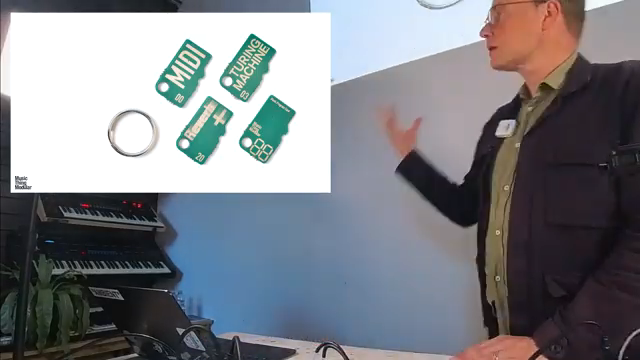
"So when you buy it you get this batch, you get a MIDI card, a Turing machine sequencer, a reverb and you get a blank card that you can program anything you want onto."
© Screenshot/Quote: Signal Sounds (YouTube)
The Workshop System’s not just a box of old-school circuits—it’s got a digital ace up its sleeve: the Computer module. This brainy bit is all about program cards, letting you swap out functions faster than a kangaroo changes direction mid-hop. Each card brings a new trick: from Turing Machine sequencing to reverb, MIDI, or even a looper that everyone swore was impossible—until the community proved otherwise. The real kicker? Anyone can write their own programs for these cards, and there’s a whole mob online sharing their latest code, hacks, and weird contraptions.
That sense of open-ended possibility means the Workshop System evolves with its crew. Folks have whipped up everything from pixel-to-sound converters to full-on patch emulators you can play in your browser. It’s a system that’s as much about collaboration as it is about sound—if you’ve got an idea, you can probably make it happen, and then show it off to a global audience of like-minded tinkerers. It’s proper DIY spirit, supercharged.
From Newbies to Noise Wizards: Real-World Chaos and Creativity
Don’t reckon you’re a synth head? No worries—this system’s seen everyone from total rookies to electronic veterans jamming out at workshops and gigs. Tom’s biggest surprise was how quickly people, even those who’d never patched a cable in their life, got the hang of things and started making wild sounds. There’s a beauty in the chaos: some users go for precision, finding hidden tones and sweet spots, while others just go full monster-noise and love every second. It’s like watching a bunch of kids discover the joys of chucking stuff on a backyard BBQ for the first time—messy, unpredictable, and a heap of fun.
The showreel of creative uses is as colourful as a Melbourne laneway: one bloke made a random patch book, someone else turned the system into a medium wave radio broadcaster, and another turned rainfall in Seattle into a playable card. There are albums made entirely on the system, and live collabs where folks bow nylon thread on a contact mic or run old pianos through the filters. The point is: if you think you’ve seen it all, the Workshop System’s community will prove you wrong every week.
Community Spirit: Learning, Sharing, and Pushing Boundaries Together
If there’s one thing Tom and Signal Sounds nail, it’s the sense of community. The workshops aren’t just about showing off a new gadget—they’re a place where people swap ideas, learn by doing, and realise there’s no wrong way to make noise. Tom’s not interested in gatekeeping or pretending there’s a secret handshake to modular; he reckons anyone can get involved if they’ve got the curiosity and a bit of cheek. Shared learning is the secret sauce—people teach each other, swap patches, and cook up new ways to use the gear.
Watching the Glasgow crowd and hearing about the Discord and online patch-swapping, you get the sense this isn’t just a synth—it’s a movement. The Workshop System thrives because people are willing to experiment, fail, and have a laugh together. If you want the full flavour, you’ve got to see the energy in the video—there’s something about the live chaos, the group discoveries, and the off-the-cuff ideas that text alone can’t capture. It’s a modular scene that feels more like a backyard gathering than an exclusive club.
"People have also talked about the fact that you can't really buy more, basically."
© Screenshot/Quote: Signal Sounds (YouTube)
More articles about these products:
Watch on YouTube:
Latest articles
Watch on YouTube:
https://www.youtube.com/signal-sounds
Links from signal-sounds:
Sponsored links:
If you purchase via these links, we may earn a small commission – at no extra cost to you. The link opens an Amazon keyword search, and results may vary depending on availability.
🔗 Check price on Amazon
🔗 Check price on Amazon