Signal Sounds, Glasgow’s magnetic hub for synth explorers, invites us into a world where sound is sculpted like light through fog. In this episode of their Signal Flow Podcast, Luke unpacks his live performance setup—a mesmerizing fusion of Serge modular, GRM Tools Atelier, and Max for Live, all woven into a quadraphonic tapestry. The conversation drifts from the tactile unpredictability of modular feedback to the immersive embrace of spatial sound, revealing both the risks and revelations of live electronic storytelling. For those who crave sonic adventure, this episode is a portal into the art of deep listening and the alchemy of space, risk, and resonance.
22. April 2026
LUMINA
Signal Sounds: Quadraphonic Journeys with Serge & GRM Tools – A Sonic Atlas Unfolds
Faderfox MX12, GRM Tools Atelier, Max for Live, Serge Paperface modular system
Serge & GRM Tools: The Quadraphonic Alchemy
Luke’s live performance setup is a constellation of analog and digital forces, where Serge Paperface modular and GRM Tools Atelier entwine in a dance of voltage and algorithm. This isn’t just a rig—it’s a living organism, breathing through a quadraphonic field, each element feeding and folding into the next. The Serge, hand-built and bristling with possibility, becomes the magnetic core, while GRM Tools Atelier acts as a spectral painter, layering samples and tones with a tactile sense of space.
The performance, staged at GLOSS in Glasgow, is more than a technical showcase. It’s a deliberate act of spatial storytelling, where every patch cable and modulation source is chosen for its ability to shape the air itself. With Max for Live serving as the connective tissue, Luke’s setup blurs the boundaries between hardware and software, analog grit and digital shimmer. The result is a quadraphonic experience that envelops the audience, inviting them to drift inside a soundscape that is at once meticulously crafted and thrillingly unpredictable.
Layering the Nebula: The Art of Spatial Sound
Creating a spatial environment is an act of sonic architecture—walls dissolve, and the room becomes a vessel for swirling, magnetic resonance. Luke and Sonya Kilman, driven by the rarity of quadraphonic experiences, crafted an event where sound moves not just left and right, but all around, blooming like underwater explosions in every corner. Four speakers, arranged in a near-square, transform the venue into a canvas where sonic ghosts can swirl, swoop, and vanish.
The layering is meticulous: field recordings, modular sequences, and digital textures are woven together, each modulated and placed with intent. This is not a wall of sound, but a living, breathing atmosphere—one where every frequency and modulation is a brushstroke on the air. The magic lies in the interplay: stems loop and fade, oscillators shimmer, and Foley recordings drift in and out, all orchestrated to create a sense of immersion that is both intimate and expansive.
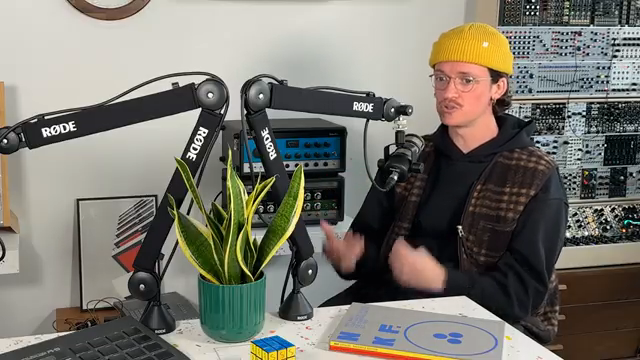
"As we started to explore working in quadraphonic, we kind of realized the spatial aspect is so interesting to work with from an artistic perspective."
© Screenshot/Quote: Signal Sounds (YouTube)
Deep Listening: Immersion in Quadraphonic Space
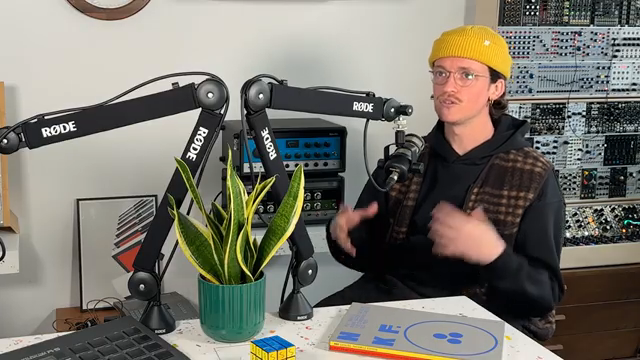
"The first time I experienced quadraphonic, I had a very similar thing where it made me realize how little I actually listen at a gig."
© Screenshot/Quote: Signal Sounds (YouTube)
The quadraphonic setup invites listeners to surrender to sound—not as passive observers, but as travelers within a sonic landscape. Attendees are encouraged to sprawl on cushions, close their eyes, and let the music wash over them. The performance space, with its vaulted ceilings and gentle lighting, becomes a liminal zone where time slows and attention sharpens. Here, deep listening is not just possible; it is inevitable.
As the sets unfold, the importance of attentive presence becomes clear. The absence of visual distraction, the encouragement to recline and drift, all serve to heighten the impact of spatial movement and subtle detail. The room itself transforms—no longer just a venue, but a resonant chamber where each sound blooms and decays in four directions. The true nature of this experience, as the creators themselves note, is something words can only hint at; the real magic is best felt in the moment, or by diving into the video itself.
Risk, Safety, and the Edge of Chaos
Behind the scenes, the performance is a balancing act—a negotiation between risk and safety, chaos and control. Luke’s approach is to build a set that hovers on the precipice: modular feedback patches teeter between sublime resonance and wild instability, while Max for Live and GRM Tools provide a safety net of stems and samples. The Serge system, with its banana cables and open-ended architecture, invites experimentation but demands respect; a slight twist can send the sound spiraling into beautiful instability or sudden disarray.
This tension is not a flaw, but the heart of the performance. The thrill comes from riding the edge, tuning oscillators by ear, and making real-time decisions that shape the unfolding narrative. The creative process is revealed as a series of choices—how much to risk, when to lean on pre-prepared material, and when to let the machine exhale its own fog and fractured light. In this space, the artist is both navigator and passenger, steering through magnetic turbulence toward moments of unexpected beauty.
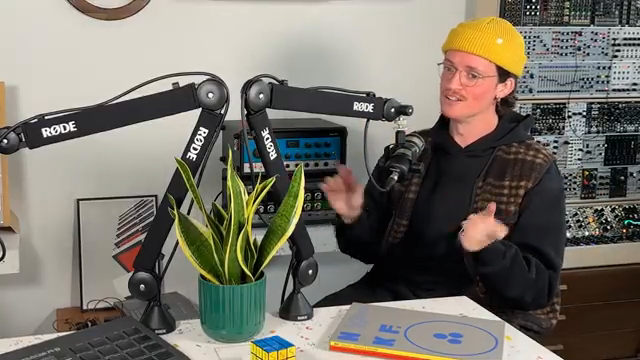
"The risk for me was like, even though it wasn't necessarily the loudest sound in the mix, there was always a possibility that it could really jump over and like poke out and be a little bit chaotic."
© Screenshot/Quote: Signal Sounds (YouTube)
Techniques for Sonic Adventurers: An Invitation
For those drawn to the art of sonic exploration, Luke’s performance offers a map of techniques and textures. GRM Tools Atelier becomes a playground for sample manipulation and spectral layering, while Max for Live orchestrates the flow, routing stems and modular signals into a quadraphonic sea. The Serge modular, patched for feedback and cross-modulation, acts as both sound source and processor—its oscillators shaped by field recordings, its outputs spun into swirling, spatial forms.
Yet, the true depth of these techniques is best experienced, not merely described. The performance is rich with moments where subtle modulation, spatial movement, and the interplay of analog and digital voices create a sense of narrative and place. For those hungry for more, the video is a portal—offering not just technical breakdowns, but the visceral impact of sound in space. The invitation is clear: watch, listen, and drift inside the story yourself.
This article is also available in German. Read it here: https://synthmagazin.at/signal-sounds-quadraphonische-reisen-mit-serge-grm-tools-ein-klangatlas-entfaltet-sich/
More articles about these products:
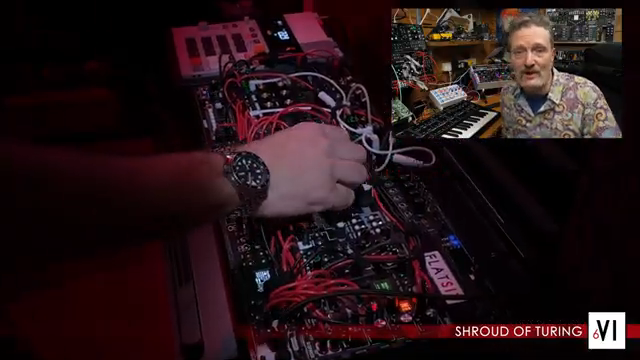
Watch on YouTube:
Latest articles
Watch on YouTube:
Visit the channel:
https://www.youtube.com/signal-sounds
https://www.youtube.com/signal-sounds
Links from signal-sounds:
website: https://www.signalsounds.com
instagram: https://www.instagram.com/signal_sounds
facebook: https://www.facebook.com/signalsoundsuk
Sponsored links:
If you purchase via these links, we may earn a small commission – at no extra cost to you. The link opens an Amazon keyword search, and results may vary depending on availability.
Faderfox MX12
🔗 Check price on Amazon
🔗 Check price on Amazon
GRM Tools Atelier
🔗 Check price on Amazon
🔗 Check price on Amazon
Max for Live
🔗 Check price on Amazon
🔗 Check price on Amazon
Serge Paperface modular system
🔗 Check price on Amazon
🔗 Check price on Amazon