Scott’s Synth Stuff returns from the wilds to drop a hands-on tour of Groove Synthesis 3rd Wave’s latest firmware. Forget polite reverbs—this update brings a shimmer that sings, plus a spectral wavetable mode ready to twist your sound design into new shapes. Scott slices through the hype and gets his hands dirty, showing off what’s new, what’s clever, and what’s downright brilliant (or bonkers) in 2.0. If you want to know how a flagship synth keeps its edge, this is the firmware deep-dive for you.

14. September 2026
SPARKY
Scott’s Synth Stuff Unleashes Shimmer: 3rd Wave Firmware 2.0 Gets Lush and Lively
Shimmer Hits: 3rd Wave Glows Up
Scott’s Synth Stuff is back in the game, fresh from tree-hugging and straight into firmware action. The 3rd Wave’s 2.0 (and sneaky 2.0C) updates land with the headline feature: a shimmer reverb that’s so lush it’ll make your old digital boxes weep. It’s not just a shiny add-on—the shimmer is computationally hungry, limited to certain parts because this thing chews CPU for breakfast. If you’re running a multi-part rave bunker, you’ll want to mind which pair gets the shimmer spotlight.
Of course, this isn’t just glitter for the sake of it. The shimmer reverb blooms musically, tracks pitches, and won’t let you stack it with other heavyweight effects—unless you’ve got the 8M version, where the rules are looser. Scott calls out the CPU constraints but shrugs them off—no one’s running a shimmer and a Leslie at once anyway. The real story: Groove Synthesis is pushing the hardware envelope, not babysitting it.
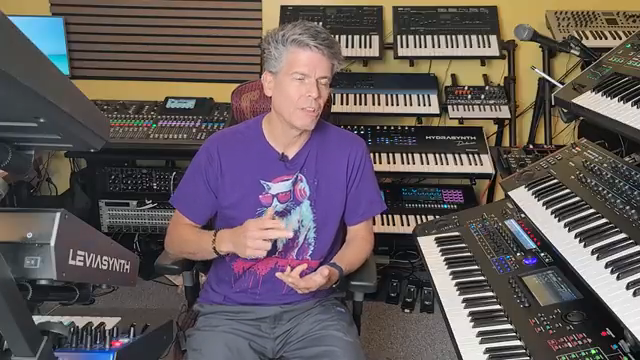
"The number one feature that it brings is a new shimmer reverb."
© Screenshot/Quote: Scottssynthstuff (YouTube)
Reverb Riffs: Pitch, Bloom, and Aftertouch Wizardry
"If you put it at 12, we get octaves."
© Screenshot/Quote: Scottssynthstuff (YouTube)
Here’s where the update flexes. Scott dials up the shimmer reverb and instantly gets results that drip with character. It’s not just about long tails—this reverb lets you pitch-shift the shimmer interval by semitones. Octaves, thirds, whatever fits your twisted chord progression, it’s all on tap. The bloom speed and high-frequency damping are there too, letting you shape the wash from pristine to swampy with a twist of a knob.
The real sauce? Routing shimmer pitch to aftertouch via the Mod Matrix. Now, every press and squeeze warps the reverb’s pitch in real time—hands-on, expressive, and begging for abuse in a live set. Scott’s joy is obvious: this isn’t just a pretty effect, it’s a playable, musical superpower. But don’t just read about it—the movement and blooming shimmer really need to be heard, not described. Go watch the video for the full mind-melt.
Spectral Mode: Wavetables Get Weird
Firmware 2.0 isn’t just about shiny verbs—it drops a new Spectral mode in Make Waves that lets you cook up wavetables from any sound you can throw at it. Scott skips the manual and jumps straight into sampling wild tones from his LeviA synth. The workflow is dead simple: grab a sound, arm it, and hit make table. Spectral analysis grabs the essence, not just the pitch, so you get timbres that feel alive and unpredictable.
Scott’s initial experiments show the new mode capturing the spectral fingerprint, not just a static slice. The result? Wavetables that move and morph in fresh, sometimes unpredictable ways. It’s a playground for anyone who wants something weirder than the usual pitch-based tables. If you’re bored of classic wavetables, this is where things get spicy.
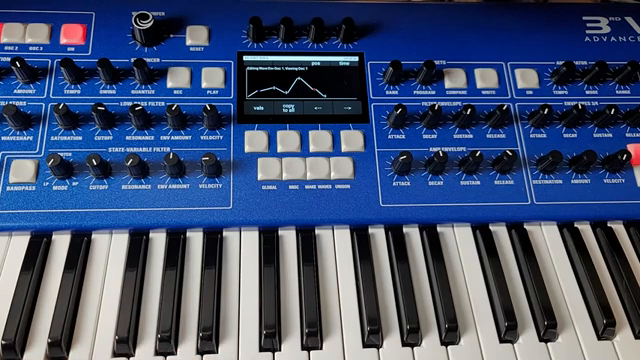
"It's definitely captured the essence of it, hasn't it?"
© Screenshot/Quote: Scottssynthstuff (YouTube)
Pitch-On vs. Spectral: A Sonic Cage Match
Scott dives into side-by-side comparisons between Spectral and the classic Pitch-On wavetable methods. Importing bell tones, FM plucks, and more, he reveals how Spectral often captures the movement and harmonics, while Pitch-On keeps things more literal and static. Sometimes you want that fizzy chaos; other times, the old-school method just delivers the goods.
The surprises keep coming: Spectral mode grabs the vibe and harmonics, creating waves that shimmer and evolve, while Pitch-On sticks to the faithful reproduction. Scott admits he sometimes prefers the new spectral flavour, even if it takes a manual tweak to match pitch. This is the kind of feature that’ll have sound designers drooling and preset tweakers losing sleep. Again—words can’t do the A/B justice. Hit play on the video to catch the wild differences with your own ears.
Groove Synthesis Keeps the Heat On
"Absolutely one of the best sounding synthesizers I've ever played."
© Screenshot/Quote: Scottssynthstuff (YouTube)
This isn’t just about firmware numbers—it’s about a synth that refuses to get stale. Scott gives props to Groove Synthesis for dropping real updates, not just bugfixes. The 3rd Wave is still a beast: 24 voices, 24 analog filters, and a UI so slick it barely needs an editor (though one’s coming for the MIDI crowd).
Scott doesn’t mince words: the 3rd Wave sounds better than some analog classics, especially with these new tricks. The spectral wavetables and shimmer reverb aren’t just technical feats—they’re street weapons for any producer who wants fresh, playable sounds. If you own one, update now. If you don’t, maybe it’s time to start saving.
This article is also available in German. Read it here: https://synthmagazin.at/scotts-synth-stuff-entfesselt-shimmer-3rd-wave-firmware-2-0-wird-ueppig-und-lebendig/
More articles about these products:
 Scott’s Synth Stuff Throws Down: Leviasynth vs 3rd Wave – Evolving Sound Face-Off
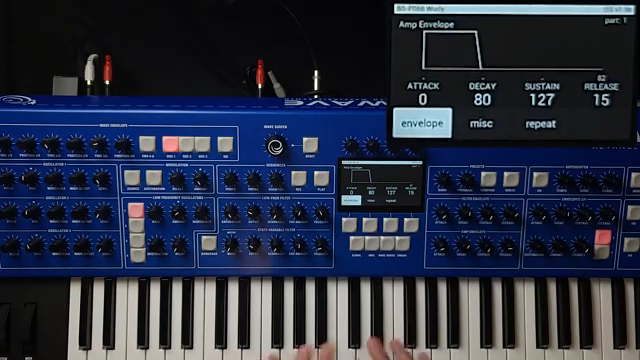 Scott’s Synth Stuff Gets Dirty: Cooking Up a Wurlitzer Patch on the 3rd Wave
 Scott’s Synth Stuff Throws Down: Groove Synthesis 3rd Wave — Future Nostalgia in a Box
 Scott’s Synth Stuff Dives Into the Groove Synthesis 3rd Wave: Polyphony Overkill or Wavetable Dream Machine?
 Scott’s Synth Stuff Unleashes the Groove Synthesis 3rd Wave: Wavetables Go Nuclear
 Devin Belanger’s Rave Bunker Showdown: 3rd Wave vs UDO Super Gemini
 Starsky Carr’s Synth Bunker: Vintage Heat Meets Modern Muscle
 Sam Gutman Unleashes the 3rd Wave: Not Just Another Wavetable Warrior
 AudioPilz’s BAD GEAR Shopping Guide: Synths for Every Wallet and Weirdo
Watch on YouTube:
Latest articles
Watch on YouTube:
Visit the channel:
https://www.youtube.com/ScottsSynthStuff
https://www.youtube.com/ScottsSynthStuff
Sponsored links:
If you purchase via these links, we may earn a small commission – at no extra cost to you. The link opens an Amazon keyword search, and results may vary depending on availability.
Groove Synthesis 3rd Wave
🔗 Check price on Amazon
🔗 Check price on Amazon
LeviA synth
🔗 Check price on Amazon
🔗 Check price on Amazon