Qu-Bit Electronix returns with Bloom v2, a fractal sequencer that promises to turn your modular rig into a veritable garden of evolving melodies and rhythmic intricacies. In this comprehensive tutorial, Michael from Qu-Bit walks through every function, from basic patching to the module’s more esoteric features like macro editors and fractal branches. As always with Qu-Bit, the focus is on hands-on creativity and algorithmic depth, sidestepping traditional sequencer paradigms in favour of something far more generative. If you’re after a sequencer that mutates, branches, and surprises at every turn, Bloom v2 might just be the seed your rack needs.
Planting the Seeds: Bloom v2’s Fractal Philosophy
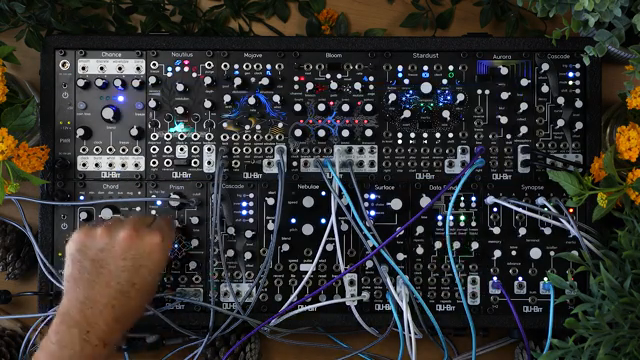
Bloom v2 is introduced as the latest evolution of Qu-Bit’s fractal sequencer concept, aiming to provide modular users with an ever-evolving source of melodic and rhythmic material. The video sets the tone as a thorough, function-by-function walkthrough, promising a deep dive rather than a mere overview. Qu-Bit’s approach is to encourage sonic exploration, and Bloom v2 embodies this ethos with its generative sequencing architecture.
The module is positioned not just as a tool for note generation, but as a creative partner in patch design and performance. Michael, the presenter, makes it clear that Bloom v2 is about more than just programming steps—it’s about cultivating sequences that grow, mutate, and surprise. The fractal nature of the sequencer allows for both predictability and unpredictability, giving users a platform for both structured composition and happy accidents.
"Okay, let's plant a new sequence."
© Screenshot/Quote: Qubitelectronix (YouTube)
Three Channels, Notes, Gates, and Clocking: The Core Mechanics
Bloom v2 offers three independent sequencing channels, each with dedicated note and gate outputs. The tutorial demonstrates patching these outputs into various synth voices, highlighting flexibility whether you’re sequencing a single module or a multi-part voice. The note outputs follow standard 1V/oct tracking, while the gate outputs provide 5V signals with adjustable length, suitable for triggering envelopes or percussion.
Clocking is handled internally or via external sources, with the rate knob controlling tempo and the option to sync to external clocks by patching into the clock input. The module’s PPQN (pulses per quarter note) settings can be fine-tuned using Qu-Bit’s Narwhal software, allowing for integration with a wide range of modular and MIDI gear. The trunk encoders and LEDs provide immediate visual and tactile feedback, making step editing and navigation straightforward even as sequences grow in complexity.
Tune Modes and Modulation: Shaping Every Step
"No, these are not repeats like the original Bloom. They are real, bona fide ratchets."
© Screenshot/Quote: Qubitelectronix (YouTube)
Bloom v2’s step encoders are multi-functional, thanks to the five available tune modes. Users can quickly switch between editing note pitch, gate length, slew amount, ratchets, and modulation output per step. Each mode is colour-coded with LEDs, providing clear feedback as you sculpt your sequence. The gate length mode allows for anything from staccato blips to tied notes, while slew introduces portamento-like transitions between pitches.
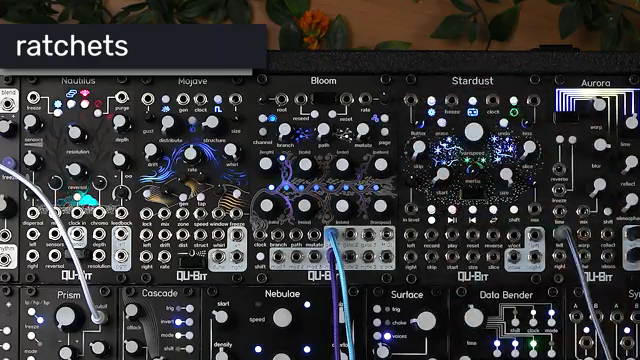
Ratchets are a standout feature, offering up to 32 subdivisions per step for intricate rhythmic flurries. These are true ratchets, not mere repeats, and their behaviour can be further tweaked via Narwhal, including triplet removal and pulse width adjustments. The modulation output adds a third CV lane per channel, with selectable modes such as LFO shapes, fixed voltages, smooth transitions, and per-step envelopes—essentially giving you a sequencer-within-a-sequencer for modulation duties.
The video demonstrates how these modulation modes can be chained, subdivided, and even stretched across multiple steps, allowing for evolving LFOs or envelope sequences that sync perfectly with your melodic content. The ability to dice-roll parameters with the reseed button means you’re never far from a fresh idea, whether you want to randomise an entire sequence or just a single aspect like ratchets or mod shapes.
Macro Editors and Pattern Manipulation: Pruning and Expanding the Sequence
Beyond per-step editing, Bloom v2 introduces macro editors for large-scale sequence manipulation. Holding shift and turning the encoders unlocks controls for sequence length, scale quantisation, playback order, pattern saving, clock division/multiplication, resizing, rotation, and transposition. These allow users to quickly reshape a sequence, save and recall patterns, or experiment with different playback algorithms such as forward, reverse, pendulum, converge/diverge, and page jump.
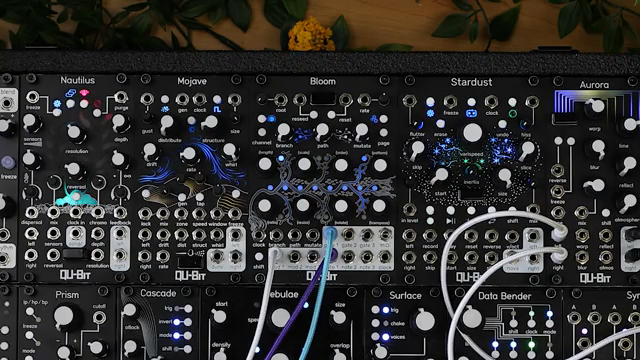
New to v2 are the resize, rotate, and destructive transpose functions, which let you stretch, clone, or prune sequences and shift their starting points. The fractal engine’s branch, path, and mutate knobs open up vast possibilities for generative sequencing, with up to 16,320 steps possible through deep branching. Performance and micromutate modes provide both destructive and non-destructive ways to introduce variation, ornamentation, and controlled chaos, making Bloom v2 as much an instrument for improvisation as for composition.
"The rotate encoder will do exactly what its name states. It will rotate the sequence and move the start point accordingly."
© Screenshot/Quote: Qubitelectronix (YouTube)
MIDI Integration and Modular Ecosystem: Bloom v2 in the Wider Patch
"Using MIDI, we can break out the different knob modes, set up individual buttons for all the reseed variants, trigger patterns from our pattern bank on the fly, or even transpose the root knob with a chromatic keybed."
© Screenshot/Quote: Qubitelectronix (YouTube)
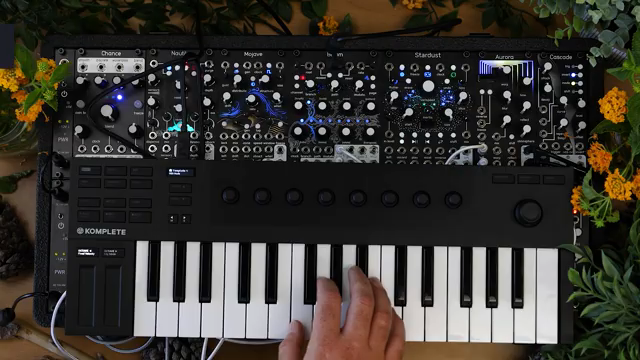
The tutorial rounds out with a look at Bloom v2’s MIDI capabilities, including TRS MIDI output for sequencing external gear and USB MIDI host functionality for advanced control. Each channel can send note, mod, and slew data to different MIDI channels, with customisable offsets and routing via Narwhal. This makes Bloom v2 a powerful bridge between Eurorack and MIDI synths, drum machines, or DAWs.
Michael demonstrates how sequences are automatically saved to USB, and how tuning reference modes and LED dimming make the module friendly for both live performance and studio work. The focus remains on hands-on interaction, with features designed to keep you in the flow of patching rather than menu-diving. Bloom v2 is presented as a sequencer that not only adapts to your modular environment but actively encourages new creative directions, whether you’re working with pure CV or integrating external MIDI hardware.
This article is also available in German. Read it here: https://synthmagazin.at/qu-bits-bloom-v2-komplexitaet-kultivieren-im-modular-sequencing/
Watch on YouTube:
Latest articles
Watch on YouTube:
Visit the channel:
https://www.youtube.com/QuBitElectronix
https://www.youtube.com/QuBitElectronix
Links from QuBitElectronix:
Sponsored links:
If you purchase via these links, we may earn a small commission – at no extra cost to you. The link opens an Amazon keyword search, and results may vary depending on availability.
Bloom v2
🔗 Check price on Amazon
🔗 Check price on Amazon