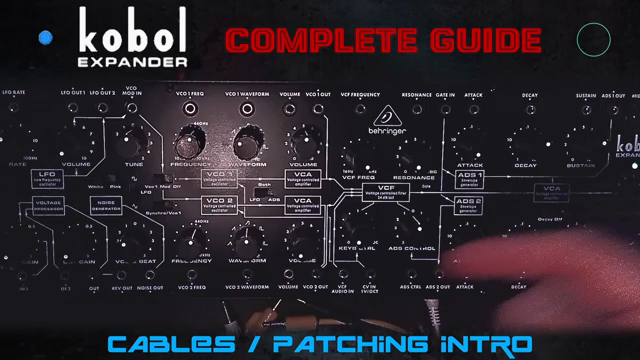
Ready to wring every drop of filth and finesse out of the Behringer Kobol Expander? Produkt Audio delivers a full-on rave bunker tutorial, pulling apart every knob, switch, and patch point with the kind of technical swagger that makes manuals look like bedtime stories. Expect a relentless, feature-by-feature breakdown—no cable left dangling, no waveform un-swept. If you think you know this synth, think again. This is the unofficial manual your patch cables have been begging for, and Produkt Audio’s methodical-yet-musical approach means you’ll actually want to watch (and re-watch) every minute.
20. January 2026
SPARKY
Produkt Audio’s Kobol Expander Deep Dive: No Knob Left Unturned
Unboxing the Beast: Kobol’s Quirks & Charms
Produkt Audio doesn’t waste time with pleasantries—the Behringer Kobol Expander lands on the bench and immediately gets the forensic treatment. Forget the usual synth fluff: this is a methodical, knob-by-knob strip-down that exposes what makes the Kobol more than just another analog clone. The host promises a PhD-level understanding by the end, and from the first moments, it’s clear that every switch, jack, and oddball feature will be put under the microscope.
What sets the Kobol Expander apart? For starters, its oscillator section is a playground of unique waveforms and crossfades, with a panel layout that’s as much puzzle as it is instrument. Produkt Audio’s style is clinical but never dry—each control is explained with the kind of detail that makes you want to reach for your own unit and follow along. If you’re after a synth that rewards curiosity (and a bit of patience), this one’s got you covered.

"By the end of this video, you're going to get your PhD in the Behringer Cobalt."
© Screenshot/Quote: Produktaudio (YouTube)
Panel vs. Patch Bay: Two Worlds, One Synth
"We're going to go over every single patch point on the synthesizer and exactly what it does, and what is the optimal way to use it."
© Screenshot/Quote: Produktaudio (YouTube)
The tutorial splits the Kobol into two battlegrounds: the Main Panel, where you get your classic analog action with zero patch cables, and the Patch Bay, where things get semi-modular and slightly unhinged. Produkt Audio walks through the Main Panel first, showing how you can wring a surprising range of sounds from the oscillators, filter, envelopes, and LFO—no spaghetti required. Even here, quirks abound: the PWM section is a bit of a diva, and tuning isn’t exactly idiot-proof, but the results are worth the effort.
Once the cables come out, the Kobol’s true personality emerges. The Patch Bay transforms the synth into a voltage playground, letting you reroute, overdrive, and generally abuse the signal path in ways that would make a purist blush. Produkt Audio’s approach is hands-on and practical, with every patch demonstrated and explained. If you’ve ever wondered what happens when you feed the audio out back into the filter, or use the voltage processor for gain-staging chaos, this is your roadmap.
Voltage Mayhem: Modulation & Patching Unleashed
Here’s where the Kobol Expander earns its street cred. Produkt Audio dives into the voltage processor, showing how it’s not just for CV but can mangle audio with the best of them. The patch points are explored with surgical precision—LFOs get rerouted, envelopes escape their default assignments, and noise becomes a weapon. The voltage processor’s dual gain stages allow for everything from subtle modulation to full-on toaster-fight distortion, and the host demonstrates how to chain these for maximum effect.
The real fun starts when patching gets creative: LFOs modulate filter cutoff, envelopes sweep oscillator pitch, and noise is pressed into service as a control source. Produkt Audio doesn’t just patch for the sake of it—each example is musical, showing how these tricks translate to actual tracks. If you want to see the Kobol Expander pushed to its limits, this section is pure gold. Of course, some of the wildest sounds and patching gymnastics are best experienced with your own ears—so don’t expect every secret to be spoiled in text.

"This is not just a voltage processor, this is a signal processor."
© Screenshot/Quote: Produktaudio (YouTube)
Sound Design Arsenal: PWM, Filters & Envelopes Demystified

"This is a tutorial for the cobalt synthesizer, it's not a tutorial for basic synthesis 101 and I don't want to put a lot of time in that."
© Screenshot/Quote: Produktaudio (YouTube)
Produkt Audio takes a scalpel to the Kobol’s key sound-shaping tools. Pulse Width Modulation isn’t just a checkbox here—it’s a multi-mode, LFO-and-envelope-driven beast that can get quirky but delivers thick, shifting tones when dialled in right. The filter section is classic 24dB low-pass, but with a resonance that’ll self-oscillate and a keyboard tracking circuit that’s more flexible than it looks. Envelopes are streamlined ADS, with a decay switch that toggles between snappy percussion and lush, ringing tails.
The host doesn’t waste time on synthesis basics—if you don’t know your ADS from your elbow, look elsewhere. Instead, the focus is on how these controls interact, especially when combined with patching. Produkt Audio’s explanations are direct, highlighting the quirks (like inverted envelope amounts and non-linear responses) that give the Kobol its character. This is the section where you’ll pick up the gritty tricks that separate a bland patch from a dancefloor weapon.
The Definitive Kobol Guide: Why This Video Matters
Let’s be real: most synth tutorials barely scratch the surface. Produkt Audio’s Kobol Expander deep dive is the exception—a full-spectrum, no-nonsense manual replacement that covers every feature, patch point, and sonic trick. Whether you’re a modular veteran or just got your first patch cable, this video is essential viewing if you want to actually master the Kobol Expander. Some things—like the raw sound and the patching madness—just can’t be captured in words, so do yourself a favour and watch the whole thing.
This article is also available in German. Read it here: https://synthmagazin.at/produkt-audio-zerlegt-den-kobol-expander-kein-regler-bleibt-verschont/
Watch on YouTube:
Latest articles
Watch on YouTube:
Visit the channel:
https://www.youtube.com/produktaudio
https://www.youtube.com/produktaudio
Sponsored links:
If you purchase via these links, we may earn a small commission – at no extra cost to you. The link opens an Amazon keyword search, and results may vary depending on availability.
Behringer Kobol Expander
🔗 Check price on Amazon
🔗 Check price on Amazon