Mystic Circuits IDUM: One knob, two directions, one manual too many
The Mystic Circuits Idum is a Eurorack module for rhythmic processing. Creators describe, among other things, gate shifts in Delay mode, independent random decisions across four voices, and looping that samples inputs multiple times per clock for triggers, gates and ratchets.
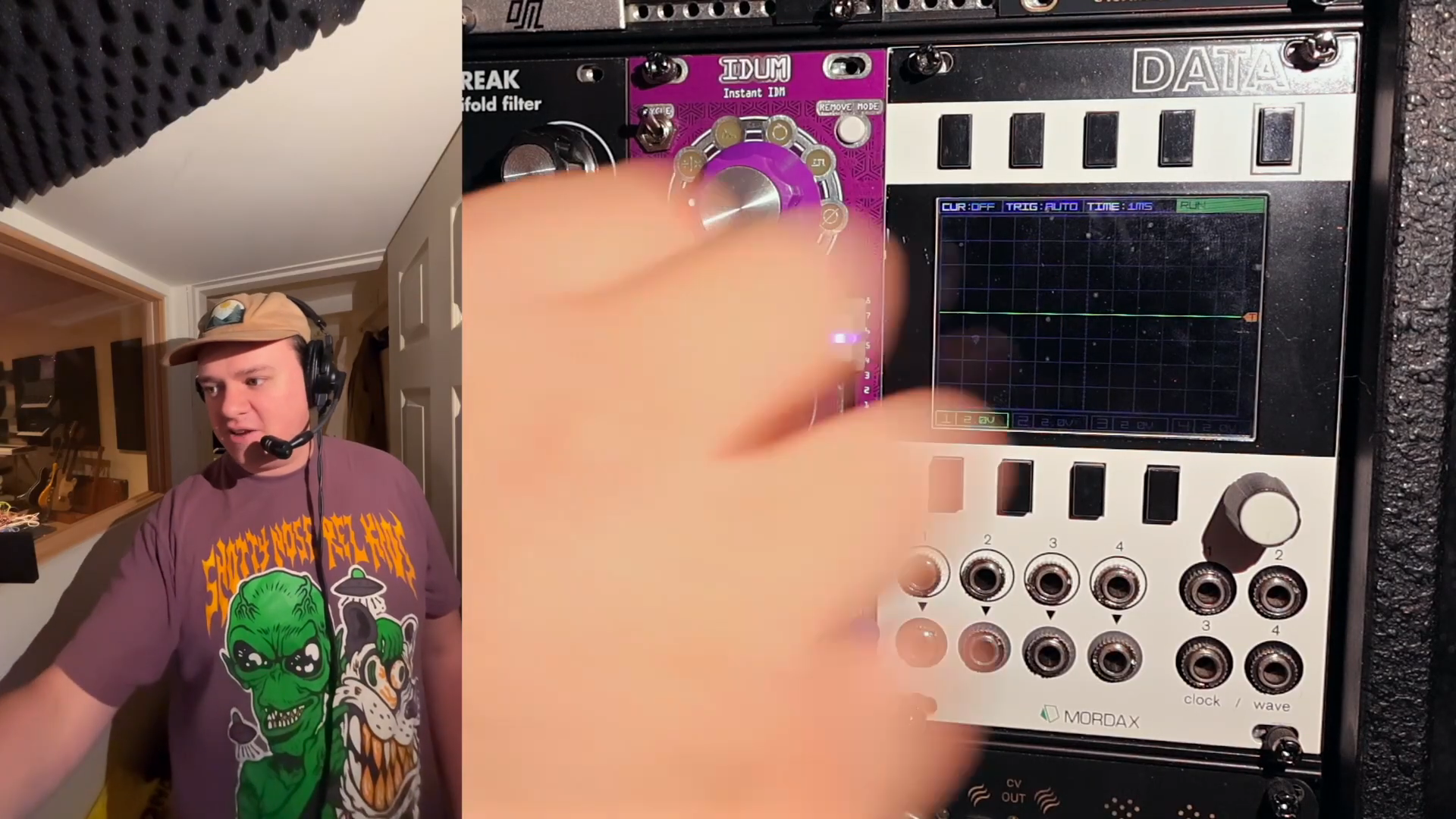
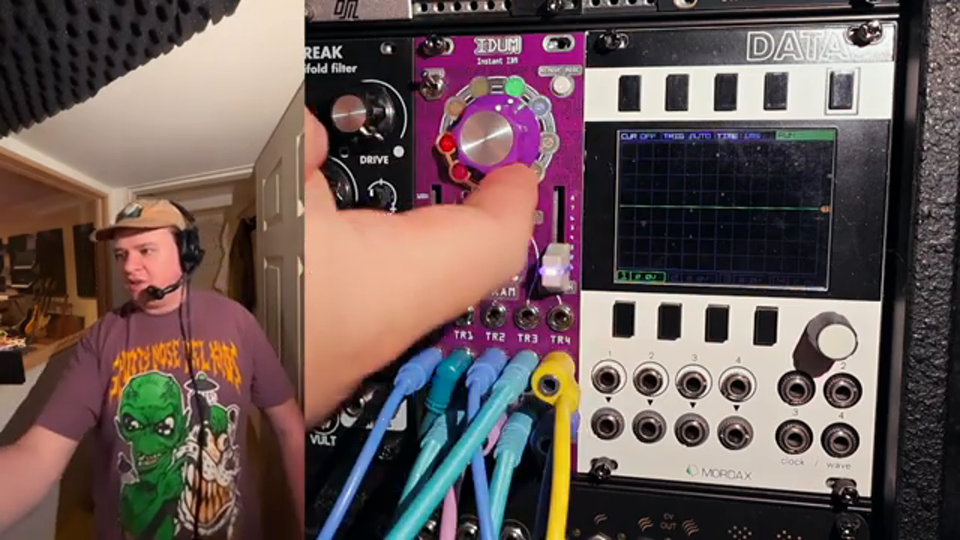
Turn the parameter control left or right and, as tafony notes, you may land in different modes. That can slow down exploration—and makes learning the controls part of the musical process.
tafony
„usually there's usually one mode to the left and another mode to the right which is kind of unfortunate because you do need to go to the manual for a lot of this stuff sadly“
ID00M for Mystic Circuits Idum: Four voices with independent rhythmic rates
Independent ratchet rates and a linear-drumming filter give Idum new rhythmic roles. An added stock-firmware image makes comparison with the manufacturer's firmware more accessible.
+
A hi-hat accelerates while the kick holds its pulse: ID00M focuses on relationships between four trigger channels. The community firmware by 00 Modular derives from Eli Pechman's original IDUM firmware and gives bursts and bouncing balls separate multiplication or division factors per channel. An existing beat can therefore branch into movements at different rates without dedicating a separate clock processor to each voice. To recover some space, linear drumming can restrict competing hits to one voice according to editable priorities. MERGE ADD also combines the original trigger with its delayed counterpart in delay mode. This suggests a playful transition between dense fills and sparse grooves. The latest verified progress concerns comparison with the original: the repository adds compiled manufacturer firmware as a new return target. The musical extensions themselves come from earlier development; the August commit expands firmware switching.
Compatibility and limitations
For Mystic Circuits Idum using Arduino Nano Every/ATmega4809. The changelog documents both LED-ring arrangements, including hardware revision 1.3 onward. The browser updater requires a Chromium desktop browser.
Independent community firmware without manufacturer endorsement. According to the changelog, MERGE affects live operation rather than loop playback. Updating to v1.0.4 resets saved settings. The onboard programmer can be unreliable; changing pin assignments can damage hardware.
Metamyther explains that the enabled setting lets each of the four voices make its own random decision about ratchets. A ratchet on the kick therefore need not affect the snare, which the creator says makes the drum kit feel more varied and organic.
„Basically, this allows the idum to execute four different coin flips for each of the four voices. So if the kick drum executes and is doing some crazy ratcheting, that doesn't necessarily mean that the snare drum will as well. So that works for all four. So it creates basically a much more varied and organic feel to the entire drum kit, which again, I recommend having that on at all times.“
According to sonicstate, the looper now captures inputs four times per clock instead of once. The creator says this allows it to distinguish triggers from gates and produce ratchets at up to twice the clock speed, as well as multiply or divide them more accurately.
Read the full statement
„The looper only captured the inputs once per clock. Now it captures them four times a clock. So that lets it not only differentiate between triggers and gates, but also do ratchets at twice the speed of the clock. And it can multiply or divide those ratchets pretty accurately.“
Reddit · r/modularMove the randomness from the beat to the filter
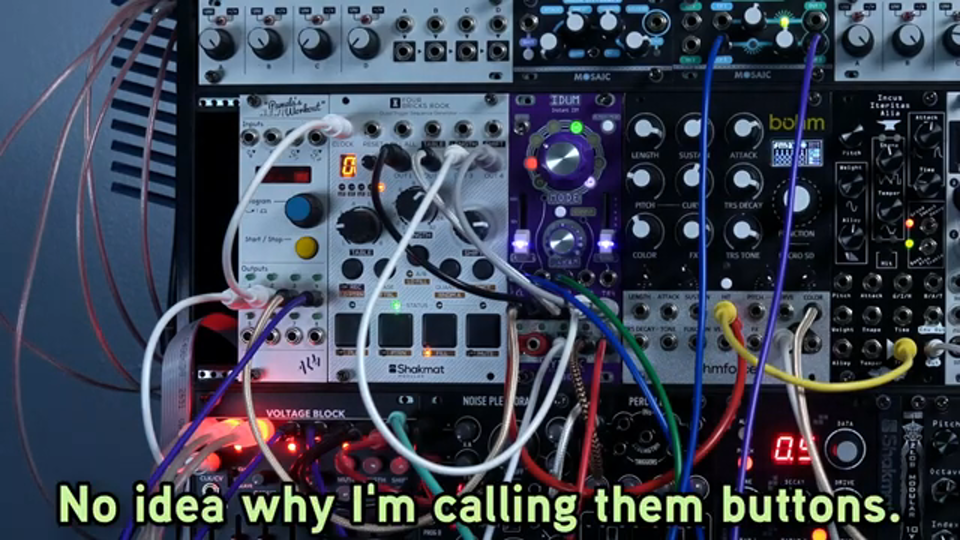
An Idum user can’t get a dependable beat going. The reply starts with the patch: keep the basic rhythm running separately and let Idum trigger an envelope for the filter. The hits could stay put while their tone changes. The original poster says they’ll try it.
+
In November 2024, an Idum user was struggling to make a usable beat, finding the module’s behavior unstable. A reply suggested giving randomness a different job. A separate module would provide a simple, steady drum rhythm. Idum, meanwhile, would trigger an envelope to modulate the drum sound’s filter, for example.
That would preserve the rhythmic figure while random events shaped its tone. The reply argues that variation in sound and dynamics is easier to follow than hits that appear or disappear at random. The original poster was open to the idea: they had expected fixed starting patterns, with modulation introducing the IDM-like transformations. They said they would try the proposed division of roles. No outcome of that experiment is reported. The suggestion remains a concrete patch idea with clearly separated roles.