Ever get stuck making leads that sound like they came free with your DAW? Pick Yourself is here to shake up your workflow, throwing synths out the window and dragging you into the wild world of sample-based sound design. In this video, you’ll see how a single percussion hit can morph into a lead line that slaps harder than a late rent notice. Forget your comfort zone—this is about breaking habits, getting weird, and making your tracks stand out in a sea of preset clones. If you’re tired of cookie-cutter sounds, buckle up—this ride’s got more twists than a Chicago alley.
21. January 2026
RILEY
Pick Yourself’s No-Synth Challenge: Flipping the Script on Sound Design
Ableton Corpus, Ableton Drum Sampler, Ableton EQ Eight, Ableton Grain Delay, Ableton Hybrid Reverb, Ableton Live, Ableton Resonators, Ableton Shifter, FabFilter Pro-Q 4
Breaking Up With Your Synths
Let’s be real: most of us have spent hours tweaking synths only to end up with leads that sound like they came straight out of a bargain bin preset pack. Pick Yourself kicks things off by admitting to hitting that same wall—no matter how much you know about oscillators and envelopes, sometimes your sound just won’t break through the ceiling of originality.
The solution? Step away from the synths entirely. Instead of reaching for another virtual analog, Pick Yourself lays down a challenge that flips the script: build a lead line using nothing but a single percussion hit. It’s a bold move, but sometimes you gotta throw out the rulebook to get something fresh. This isn’t about abandoning synthesis forever—it’s about shaking up your process and finding new creative ground.

"I needed to do things differently and that's when I gave myself a challenge that I'm still grateful for to this day because it has changed my sound design for the better."
© Screenshot/Quote: Pickyourselfofficial (YouTube)
Percussion Hits: The Secret Sauce
"you're absolutely right but this is exactly what we're about to change right now"
© Screenshot/Quote: Pickyourselfofficial (YouTube)
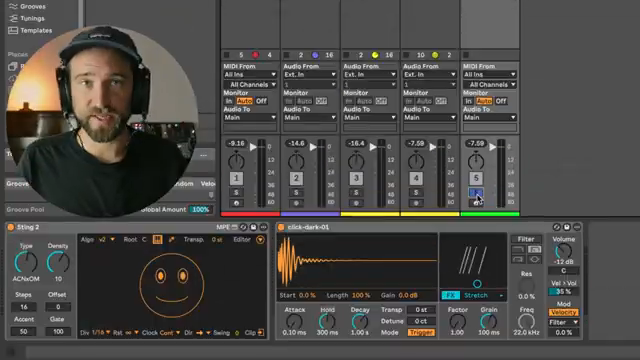
Now here’s where the fun starts. Instead of dialing up another saw wave, Pick Yourself loads up a sampler with a random click sound—no synths allowed. The idea is to use something totally left-field as your main ingredient, and let’s be honest, that’s how you get flavors nobody else is cooking with.
Sequencing that sample is where the magic happens. You can draw in MIDI, convert audio loops to MIDI, or just let a sequencer go wild and see what sticks. The point is to break out of the same old patterns and let the groove lead the way. Sure, at first it might sound like you’re just playing percussion, but hang tight—the transformation is coming.
FM, Physical Modeling, and Getting Weird
Here’s where Pick Yourself really starts flexing. First up: frequency modulation. By modulating the sample’s frequency, you can twist that percussion hit into something with real tonal character. Throw an LFO on the FM amount, and suddenly your sound’s got movement and unpredictability—way more streetwise than your average synth patch.
But why stop there? Enter physical modeling. Using Ableton’s resonators and the Corpus effect, you can make your sample behave like it’s running through a marimba, membrane, or some other imaginary instrument. Tweak the intervals, blend in the original signal, and you’re cooking up tones that are anything but generic.
All these tools let you fine-tune the vibe—make it snappy, weird, or lush. The best part? Every little change in your chain, from the sample itself to the FM amount, totally transforms the outcome. This is the kind of sound design that keeps your beats from ever sounding stale.
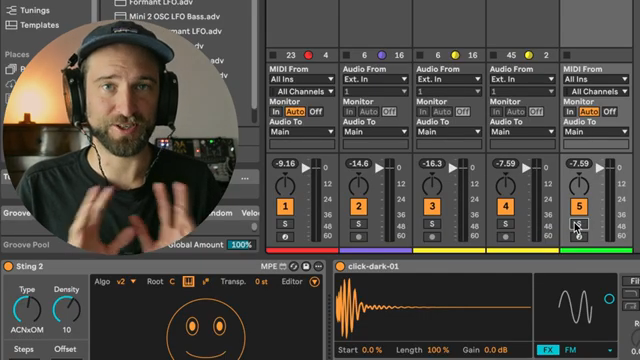
"this is just the beginning the step two in our process is to infuse the sound with tonality and we do this with a synthesis technique called physical modeling"
© Screenshot/Quote: Pickyourselfofficial (YouTube)
Texture Machines and FX Mayhem
Once you’ve got your basic groove and tonality, it’s time to get wild with effects. Pick Yourself shows off a send/return path loaded with grain delay, phaser, flanger, and hybrid reverb. These aren’t just for polish—they’re for building textures that make your sound pop off the speakers.
The hybrid reverb, especially in algorithmic mode, is a straight-up texture machine. You can create evolving soundscapes, shimmering tails, and vintage grit that’ll make your leads stand out in any mix. The trick is to experiment and not be afraid to push things into weird territory—sometimes the best sounds come from happy accidents you’d never get with a stock synth.
Coaching, Community, and Real-World Results
"it has taught me a valuable lesson that still sticks with me until this day you need to think beyond oscillators filters and envelopes when thinking about sound design"
© Screenshot/Quote: Pickyourselfofficial (YouTube)
This isn’t just theory—Pick Yourself has put these techniques to the test in their coaching program. Turns out, a lot of producers in genres like techno hit the same wall with generic leads. By forcing themselves to get creative with samples and effects, they’ve managed to break out of the preset rut and make music that actually stands out.
The takeaway? Sometimes you need to limit yourself to unlock your best ideas. Whether you’re a bedroom beatmaker or a club regular, these tricks can help you finish tracks you’re actually proud of. And if you want to see all the nitty-gritty details—or just watch some wild FX chains in action—do yourself a favor and check the video. Some things just hit different when you see (and hear) them live.
This article is also available in German. Read it here: https://synthmagazin.at/pick-yourselfs-no-synth-challenge-sounddesign-auf-links-gedreht/
Watch on YouTube:
Latest articles
Watch on YouTube:
Visit the channel:
https://www.youtube.com/pickyourselfofficial
https://www.youtube.com/pickyourselfofficial
Links from pickyourselfofficial:
Work with me: https://pickyourself.com/coaching/
FREE Guide: https://pickyourself.com/framework/
Sponsored links:
If you purchase via these links, we may earn a small commission – at no extra cost to you. The link opens an Amazon keyword search, and results may vary depending on availability.
Ableton Corpus
🔗 Check price on Amazon
🔗 Check price on Amazon
Ableton Drum Sampler
🔗 Check price on Amazon
🔗 Check price on Amazon
Ableton EQ Eight
🔗 Check price on Amazon
🔗 Check price on Amazon
Ableton Grain Delay
🔗 Check price on Amazon
🔗 Check price on Amazon
Ableton Hybrid Reverb
🔗 Check price on Amazon
🔗 Check price on Amazon
Ableton Live
🔗 Check price on Amazon
🔗 Check price on Amazon
Ableton Resonators
🔗 Check price on Amazon
🔗 Check price on Amazon
Ableton Shifter
🔗 Check price on Amazon
🔗 Check price on Amazon
FabFilter Pro-Q 4
🔗 Check price on Amazon
🔗 Check price on Amazon