OXI Instruments, the Spanish innovators behind the OXI One, dive deep into the architecture of internal modulation in their latest advanced tutorial. This video is a masterclass in using LFOs and modulation lanes to breathe life and complexity into multitrack sequences. With a focus on hands-on workflow and real-time creative control, OXI demonstrates how their flagship sequencer transforms static patterns into evolving, expressive tracks. If you’re curious about how modulation engines, parameter automation, and generative tools intersect in a modern hardware sequencer, this walkthrough is essential viewing.
23. August 2024
LYRA
OXI Instruments Pushes Modulation Frontiers: LFOs and Mod Lanes in OXI One Multitrack Mode
Multitrack Mode: The Modulation Playground
The OXI One is positioned as a powerhouse for those seeking dynamic and evolving musical sequences, thanks to its robust multitrack mode. This mode is not just about sequencing notes—it’s about infusing patterns with movement and organic variation through a suite of internal modulation tools. OXI Instruments frames modulation as a core creative resource, enabling users to transcend static rhythms and melodies.
From the outset, the video emphasizes the breadth of modulation sources available: LFOs, modulation lanes, CV input, and MIDI mappings. This architectural flexibility is designed to empower electronic musicians to sculpt both subtle and dramatic changes across their tracks. The focus here is on workflow—how quickly and intuitively users can access these modulation tools to enhance the expressive potential of their sequences.
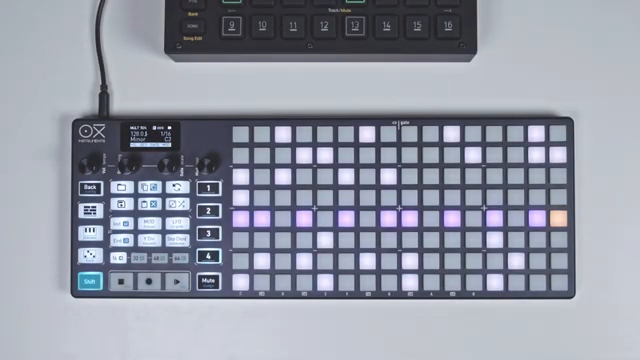
"Modulation is a powerful resource to create much more compelling rhythms and melodies, adding up movement and variation to your patterns."
© Screenshot/Quote: Oxiinstruments (YouTube)
LFOs: Breathing Life into Pitch and Velocity
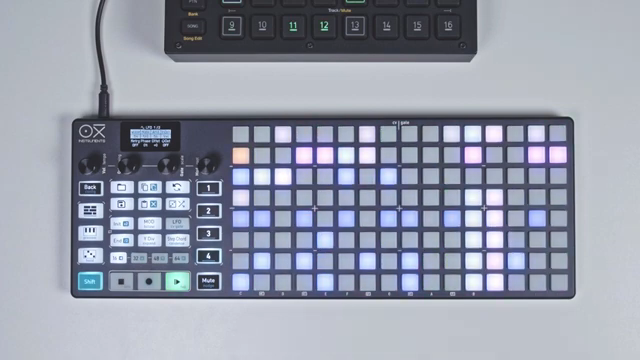
"To just affect the hats track, the LFO can be enabled or disabled on individual tracks in Multitrack Mode."
© Screenshot/Quote: Oxiinstruments (YouTube)
The tutorial opens the modulation chapter with a hands-on demonstration of the OXI One’s LFO system. Users can assign LFOs to internal parameters like gate, pitch, or velocity, injecting controlled randomness or cyclical movement into their patterns. The workflow is direct: select a parameter, dial in the wave, rate, and amount, and immediately hear the results.
A particularly useful feature is the per-track LFO enable/disable, allowing granular control over which tracks are modulated. The video shows how to isolate LFO effects to a single track—such as hi-hats—while leaving others untouched. This level of specificity is crucial for nuanced arrangements, and the interface supports it with clear visual feedback and simple pad-based selection.
Modulation Lanes: Automated Control, Streamlined
Moving beyond LFOs, the OXI One’s modulation lanes offer deep automation for each track. In Multitrack Mode, users get eight independent mod lanes—one per track—organized into banks for efficient access. These lanes can automate or manually modulate a range of internal parameters, from gate length to velocity and beyond.
The workflow is designed for immediacy: holding the mod button and tapping a grid row brings up the relevant modulation lane, while encoders allow step-by-step value editing. The video demonstrates real-world use by programming gate variations on hi-hats, drawing modulation curves directly on the grid, and using quick shortcuts for time division changes. The system’s design encourages experimentation without menu-diving, keeping modulation accessible and fast.
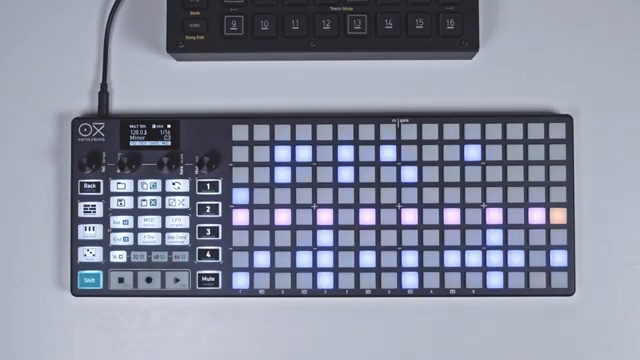
"In Multitrack Mode there are 8 mod lines, 1 per track into banks of 4, instead of the usual set of 4 from the other sequencers."
© Screenshot/Quote: Oxiinstruments (YouTube)
Generative Modulation: Euclidean, Drum Patterns, and Randomness
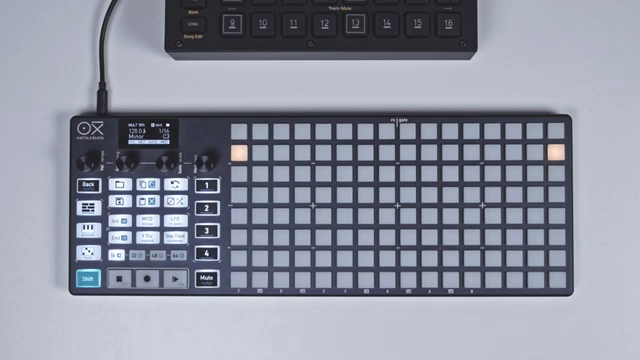
"The random generator is also a very nice way to create interesting rhythmic and melodic patterns in multi-track mode."
© Screenshot/Quote: Oxiinstruments (YouTube)
The creative potential of OXI One’s modulation architecture shines when combined with generative tools. The tutorial walks through modulating Euclidean pattern generators using mod lanes, allowing users to automate pulse counts and rotation parameters for ever-shifting rhythmic structures. The interface provides visual feedback—color-coded triggers—making it easy to track modulation effects in real time.
Drum pattern generators also benefit from internal modulation. By assigning mod lanes to parameters like snare density, users can create fills and dynamic variations that evolve over the course of a pattern. The video highlights how time division and modulation range settings prevent unwanted clipping and keep the results musical.
Finally, the random generator is introduced as a destructive but powerful tool for injecting unpredictability into both melodic and rhythmic sequences. The workflow allows for detailed control—locking steps, setting note ranges, and undoing changes—so users can strike a balance between chaos and structure. This section demonstrates how modulation, generative algorithms, and user input combine for a uniquely flexible sequencing environment.
Encouragement to Explore: Modulation as Creative Catalyst
The tutorial closes with an invitation to the OXI One community: dive into the modulation engines, experiment with different techniques, and push the boundaries of your rhythmic and melodic ideas. By showcasing practical modulation workflows, the video positions the OXI One as a fertile ground for creative exploration, where internal modulation isn’t just a feature—it’s a catalyst for musical evolution.
This article is also available in German. Read it here: https://synthmagazin.at/oxi-instruments-treibt-modulation-voran-lfos-und-mod-lanes-im-oxi-one-multitrack-modus/
Watch on YouTube:
Latest articles
Watch on YouTube:
Visit the channel:
https://www.youtube.com/oxiinstruments
https://www.youtube.com/oxiinstruments
Links from oxiinstruments:
website: https://oxiinstruments.com
instagram: https://www.instagram.com/oxiinstruments
facebook: https://www.facebook.com/oxiinstruments/
support: https://oxiinstruments.com/support
Sponsored links:
If you purchase via these links, we may earn a small commission – at no extra cost to you. The link opens an Amazon keyword search, and results may vary depending on availability.
Oxi One
🔗 Check price on Amazon
🔗 Check price on Amazon