OXI Instruments, renowned for their hybrid sequencing brains, take center stage in this deep-dive into the OXI One’s Arranger mode. This official walkthrough unpacks how Arranger transforms the OXI One from a powerful multitrack sequencer into a dynamic performance engine—balancing hands-on control with automated song structure. Whether you’re a detail-obsessed studio architect or a live improviser craving flexibility, the video explores how Arranger mode lets you build, trigger, and morph complex pattern combinations on the fly. We follow OXI’s own workflow to see how song progression, transitions, and spontaneous edits are all managed from a single, elegantly designed interface.

7. November 2024
LYRA
OXI Instruments Arranger Mode: Architecting Live Performance with OXI One
Arranger Mode: The OXI One’s Performance Powerhouse
The OXI One is introduced as more than just a sequencer—it’s positioned as a performance hub, and the Arranger mode is at the heart of this transformation. OXI Instruments frames Arranger as a tool for both meticulous planners and spontaneous performers, highlighting its dual nature: you can either automate your entire set or trigger sections on the fly. This flexibility is what sets the OXI One apart in the crowded field of MIDI/CV sequencers.
From the outset, the video emphasizes that Arranger mode is designed to keep musicians focused on their craft, not on menu-diving or manual pattern juggling. By handling transitions and pattern changes in the background, the Arranger allows users to stay in the moment, whether they’re building a full song structure or improvising live. This workflow-centric approach is typical of OXI Instruments, who consistently prioritize fast, hands-on control in their product design.
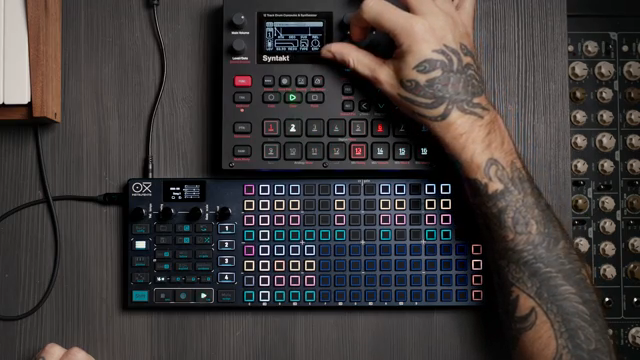
"It's a tool that lets you stay focused on the music while Oxyone takes care of the transition in the background."
© Screenshot/Quote: Oxiinstruments (YouTube)
Core Features: Building Seamless Arrangements and Pattern Combinations
"You can even save up to 10 songs per project."
© Screenshot/Quote: Oxiinstruments (YouTube)
Arranger mode’s interface is laid out to mirror the familiar Load page, but with a twist: the bottom four blue rows represent the Arranger lanes, each mapped to one of OXI One’s sequencers. With 15 slots per lane and a dedicated master lane, users can construct complex progressions, assign patterns, and create mute states by leaving slots blank. The visual feedback—blue for inactive, gray for empty, and colored for active—makes it easy to track your arrangement at a glance.
The video walks through how to populate the Arranger: simply hold a pattern pad and assign it to a lane. Slot settings are accessed by holding a pad, revealing options for program/bank changes and repetitions. This enables intricate control over how and when patterns play, supporting both structured song building and more modular, performance-driven setups. The ability to save up to 10 songs per project underlines the OXI One’s commitment to both studio and stage workflows.
Master Lane and Launch Settings: Managing Progression and Transitions
A key architectural feature of Arranger mode is the master lane, which governs overall song progression and transition timing. By assigning a master track, users can dictate when all sequencers advance, streamlining arrangement setup and ensuring tight transitions. Launch quantization is another crucial parameter, letting you define how many bars must pass before a pattern change occurs—represented visually as a progress bar on the screen.
The video demonstrates how these settings interact: when launch quantization is off, the pattern must complete its last step before advancing. With quantization set (1, 2, or 4 bars), transitions become predictable and musically synced. This system is designed to minimize manual intervention, freeing the performer to focus on expressive control elsewhere. The ability to copy, paste, shift, and color-code slots further enhances workflow efficiency, making the OXI One’s Arranger mode a robust tool for both pre-planned and reactive live sets.

"The quantization sets the amount of internal clock bars to complete one pattern repetition cycle."
© Screenshot/Quote: Oxiinstruments (YouTube)
Automatic vs Manual: Exploring Sequence Control and Creative Flexibility
The Arranger supports both automatic and manual progression, catering to a wide range of performance styles. In automatic mode, the master lane and launch quantization settings ensure that patterns advance seamlessly according to the arrangement. This is ideal for structured sets where consistency and timing are paramount. The video illustrates this with a song broken into intro, main, drop, and ending sections, each with its own pattern, allowing the performer to focus on live tweaks while the Arranger handles the backbone.
Manual progression, on the other hand, is enabled by setting repetitions to infinite. This gives performers the ability to trigger the next section at will, perfect for improvisation or responding to the energy of a live audience. The demonstration shows how blank slots can be used for mutes, and how arming the Arranger is required before playback. The OXI One’s design ensures that even in manual mode, transitions remain smooth and musically coherent, supporting creative exploration without sacrificing control.
Infinite Repetitions and Program Changes: Spontaneity Meets Structure
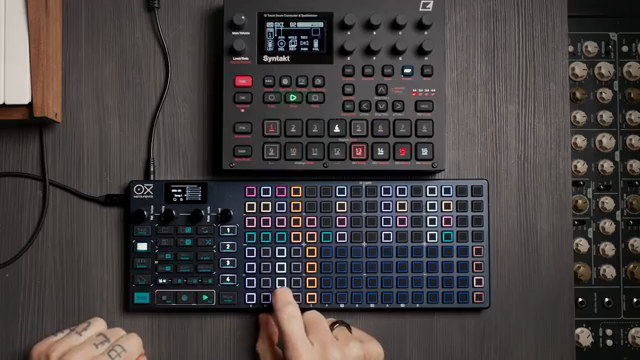
"This saves so much time during a performance."
© Screenshot/Quote: Oxiinstruments (YouTube)
A standout feature of the Arranger is its support for infinite repetitions and real-time program changes, which together enable a hybrid workflow balancing structure and spontaneity. By setting slots to infinite, users can loop combinations of patterns indefinitely, jumping between them as needed. This is particularly powerful in live contexts, where the ability to trigger new sections or variations on the fly can elevate a performance.
The video showcases how program changes can be assigned to slots, allowing for seamless patch switching on connected gear—demonstrated here with the syntax. This integration saves valuable time and reduces the risk of error during a set. The Arranger’s architecture thus empowers musicians to prepare complex transitions and variations in advance, while still leaving room for real-time decision-making. The reminder to save patterns before switching slots is a practical touch, highlighting the importance of workflow discipline in high-stakes performance environments.
This article is also available in German. Read it here: https://synthmagazin.at/oxi-instruments-arranger-mode-live-performance-architektur-mit-dem-oxi-one/
Watch on YouTube:
Latest articles
Watch on YouTube:
Visit the channel:
https://www.youtube.com/oxiinstruments
https://www.youtube.com/oxiinstruments
Links from oxiinstruments:
website: https://oxiinstruments.com
instagram: https://www.instagram.com/oxiinstruments
facebook: https://www.facebook.com/oxiinstruments/
support: https://oxiinstruments.com/support
Sponsored links:
If you purchase via these links, we may earn a small commission – at no extra cost to you. The link opens an Amazon keyword search, and results may vary depending on availability.
Oxi One
🔗 Check price on Amazon
🔗 Check price on Amazon