In the soft glow of Oscillator Sink’s world, the Spotykach emerges as both ghost and guide—a looping device that haunts the threshold between instrument and effect. This video slips beneath the surface of its drifting sound, where tape echoes and digital fragments fold into each other, summoning blurs of memory and fragile resonance. Oscillator Sink’s ASMR calm draws us into an open, unsynchronized exploration—ambient clouds, accidental beauty, and stories written in delay and decay. Here, every loop is an invitation to wander, and every modulation a gentle ripple in the fabric of sound.
15. September 2026
LUMINA
Oscillator Sink’s Spotykach: Loops That Breathe in the Half-Light
Between Echo and Instrument
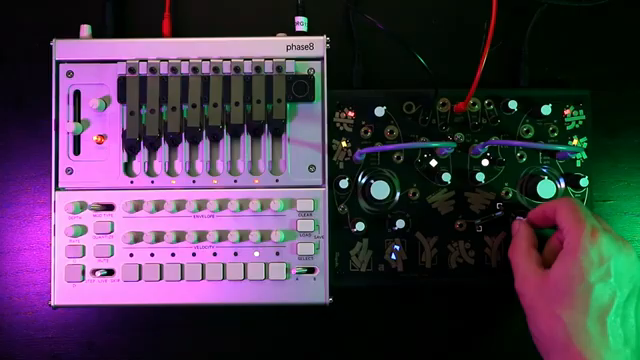
Spotykach does not choose a side—it floats at the crossroads, dissolving the boundaries between effect and instrument. Oscillator Sink introduces us to this liminal device, one that does not simply process sound, but reshapes the act of making music itself. As we enter its orbit, Spotykach’s philosophy reveals itself: looping is not just repetition, but a form of sonic storytelling, where each layer is both canvas and echo, companion and surprise.
Through its design, Spotykach invites us to dwell in the unpredictable—never chaotic, but always fertile with new ideas. The device takes whatever input you offer and spins it into a stream of happy accidents, each loop a nebula of possibility. It is not a machine to be tamed, but a partner in exploration; you drift with it, discovering textures that shimmer on the edge of intention.
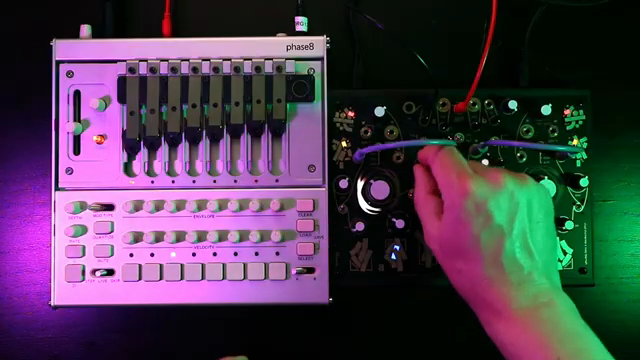
"Spotty Catch is one of those wonderful bits of gear that sits in the intersection of effect and instrument."
© Screenshot/Quote: Oscillatorsink (YouTube)
Ambient Currents—Unmoored Looping
Oscillator Sink guides us down the river of unsynchronized looping, where time is elastic and boundaries dissolve into fog. The Spotykach’s two decks shimmer like parallel universes—each capable of capturing, stretching, and fracturing sound in ways that feel organic and free. Decks can be armed, bounced, and entwined, letting fragments drift, collide, and recombine. The controls—pitch, position, size, envelope—are not just technical parameters, but tools for sculpting mood and shadow. Sounds can be slowed to half-speed, their grain drawn out, or looped into delicate micro-structures that flutter like moths in low light.
Ambient soundscapes blossom from these techniques, each gesture painting new textures across the stereo field. Effects like flux and grit, delay and distortion, layer onto the loops, deepening their spectral haze. Modulation is ever-present—smooth or stepped, internal or cross-patched—introducing gentle tides of movement. The result is a sound world that feels alive, unpredictable in the most inviting way, as if each twist of a knob breathes fog and fractured light into the air.
Rhythms in the Grid
While Oscillator Sink’s journey leans toward the drifting and dreamlike, Spotykach is no stranger to the pulse of order. Its full MIDI implementation and robust clock synchronization mean that, with a shift in approach, this instrument can lock into the grid, responding to external signals and structured commands. Rhythmic, tightly controlled setups are not just possible—they are welcome, for those who wish to trade clouds for crystalline pattern. These features remain woven beneath the surface, ready for the musician who seeks structure in the swirl.
Modes of Memory—Tape, Slice, and Drift
Spotykach’s heart beats across three modes: tape, slice, and drift—each a different lens on the passage of sound. In tape mode, loops behave as magnetic ghosts: pitch changes stretch time, and the playback head roams through memory, conjuring analog nostalgia. Slice mode offers a digital palette—granular repitching, time-stretch without smear, and the ability to carve loops into crystalline fragments. Here, each slice is a discrete event, a shard of memory that can be sequenced or scattered at will. Drift mode, the granular soul of the device, dissolves boundaries entirely. Sound grains swirl and hover, modulated gently by cycles and envelopes, creating clouds that shimmer, fade, and reform—a nebula in stereo.
Oscillator Sink demonstrates these modes not as dry functions, but as living textures. Decks can be bounced between, effects layered, envelopes folded into each other. Delays feedback into the mist, grit distorts the edges, and stereo modes pan and swirl like wind in a cathedral. The full depth of these features is best felt in motion and sound—watching the video, one hears how each parameter shift becomes a ripple, every overdub a new horizon line in the ambient dusk.
Evolving Horizons—What Comes Next
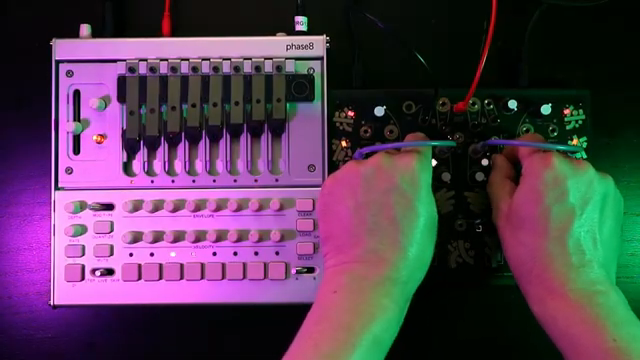
"This is an instrument which is still being actively developed, both officially by Syntax and given its open source nature by the community."
© Screenshot/Quote: Oscillatorsink (YouTube)
Spotykach is unfinished in the best possible way. Oscillator Sink closes with the promise of future firmware—the device is alive, open source, and evolving, fed by both its creators and its community. New expansions to effects like grit and flux loom on the horizon, ensuring that this instrument’s story is only beginning. Each update is another chapter, another chance for the Spotykach to drift further into the unknowable, where new sounds wait to be discovered.
This article is also available in German. Read it here: https://synthmagazin.at/oscillator-sinks-spotykach-loops-die-im-zwielicht-atmen/
Watch on YouTube:
Latest articles
Watch on YouTube:
Visit the channel:
https://www.youtube.com/OscillatorSink
https://www.youtube.com/OscillatorSink
Links from OscillatorSink:
website: https://oscillatorsink.com
instagram: https://www.instagram.com/oscillatorsink
twitter: https://x.com/OscillatorSink
facebook: https://www.facebook.com/OscillatorSink
bandcamp: https://oscillatorsink.bandcamp.com
gumroad: https://oscillatorsink.gumroad.com
Sponsored links:
If you purchase via these links, we may earn a small commission – at no extra cost to you. The link opens an Amazon keyword search, and results may vary depending on availability.
Polyend Poly 2
🔗 Check price on Amazon
🔗 Check price on Amazon
Spotykach
🔗 Check price on Amazon
🔗 Check price on Amazon