Oscillator Sink, the master of calm synth explorations, takes a hard left turn into chaos with the Manifold Research Centre Antilope—a machine that refuses to pick a lane. This isn’t your dad’s drum machine; it’s a feedback-fuelled, semi-modular Frankenstein that blurs the lines between groovebox, FX mangler, and noise synth. In this deep-dive, Oscillator Sink methodically tears down the Antilope’s architecture, pokes at its analog guts, and shows off just how far you can push its experimental edge. If you’re bored of polite, grid-locked boxes, this one’s got enough attitude to start a toaster-fight in your rack. Dive in for a taste of British synth nerdery at its finest.
22. December 2025
SPARKY
Oscillator Sink’s Antilope: The Anti-Drum Machine That Eats Grooveboxes for Breakfast
A Drum Machine with an Identity Crisis
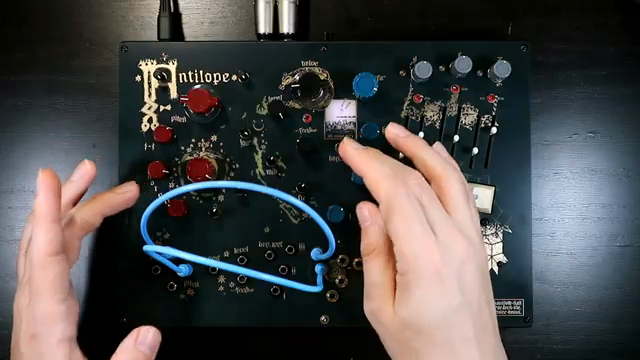
Forget everything you know about grooveboxes—Oscillator Sink introduces the Manifold Research Centre Antilope as a machine that doesn’t care about your categories. Is it a drum machine? A groovebox? An FX processor? Yes, and then some. The Antilope is a semi-modular beast that sits at the intersection of percussion synth, noise box, and experimental feedback playground, all wrapped up in a Eurorack-friendly package. If you’re looking for a polite, one-trick pony, keep walking.
What sets the Antilope apart is its refusal to play by the rules. Oscillator Sink wastes no time diving into its multi-headed personality, highlighting how it can be a standalone instrument, a wild effects processor, or the unruly heart of your modular setup. The video promises a section-by-section breakdown, so you know you’re in for a ride that’s as much about sonic exploration as it is about breaking out of the 4/4 grid. This isn’t just a drum machine—it’s a rave bunker in a box.

"It's a semi-modular instrument that sits somewhere at the crossroads of being a drum machine, a groove box, a percussion synthesiser, an FX processor, an experimental noise synth, all tied together through an exploration of feedback and resonance."
© Screenshot/Quote: Oscillatorsink (YouTube)
Under the Hood: Analog Mayhem Meets Digital Chaos
"I think it's these multiple sources of resonance within Antelope so the filter resonance, the feedback that really gives it its character."
© Screenshot/Quote: Oscillatorsink (YouTube)
Oscillator Sink gets his hands dirty with the Antilope’s architecture, and it’s a proper Frankenstein’s monster. The analog dual filter core is the main sound engine, capable of everything from classic pings to detuned, marimba-like weirdness. You’ve got direct filter pinging, external audio routing, and enough resonance to make your neighbours file a complaint. The controls let you detune, notch, and push the filters into self-oscillation territory, all with a satisfying unpredictability.
But the fun doesn’t stop there. The overdrive section is built around a Sun Beta bass amp circuit, giving you everything from subtle warmth to full-on stoner-metal filth. The three-band EQ shapes the tone before it hits the analog distortion, and the feedback routing lets you loop the signal through the effects for extra mayhem. Speaking of effects, the digital multi-FX section is no afterthought—delays, reverbs, pitch-shifting, ring mod, and chorus are all on tap, with CV control for maximum tweakability. The interplay between analog grit and digital madness is where the Antilope really comes alive, and Oscillator Sink’s demo patches show just how deep the rabbit hole goes.
Plug It In, Freak It Out: Integration and Experimentation
This is where the Antilope earns its stripes as a sonic street weapon. Oscillator Sink shows how the sequencer—dubbed the “core”—is anything but traditional. It’s unquantised, unpredictable, and designed for hands-on chaos. You can record, overdub, and modulate with touch plates and sliders, bending sequences in real time. If you want to stay on the grid, just ignore the core and plug in your favourite external sequencer or clock. The Antilope doesn’t care—it’ll take triggers, CV, and MIDI, letting you blend conventional patterns with its own brand of madness.
The real magic happens when you start patching the Antilope with other gear. Whether you’re using it as a filthy filter box, a feedback-driven FX unit, or a melodic sequencer with volts-per-octave tracking, this thing adapts to whatever you throw at it. Oscillator Sink’s walkthrough proves that the Antilope is just as happy in a disciplined techno set as it is in a freeform noise jam. If you’re after versatility and a bit of unpredictability, this is your new best mate.

"The sequencer which sits at the heart of the core is experimental by nature, it's unquantized, it works with a weird step length, the envelopes and the steps interact with each other, the touch plates where you start bridging parts together is by its nature unpredictable."
© Screenshot/Quote: Oscillatorsink (YouTube)
Character Over Control: The Antilope’s Sonic Attitude

"I always feel that instruments with a strong character like this lead to the music making process being more of a conversation."
© Screenshot/Quote: Oscillatorsink (YouTube)
Let’s be clear: the Antilope isn’t here to hold your hand. Oscillator Sink makes it obvious that this machine has a mind of its own, pushing you into creative corners you didn’t know existed. The feedback, the resonance, the unquantised sequencing—all of it conspires to pull you out of your comfort zone. It’s not about total control; it’s about having a conversation with your gear and letting it talk back, sometimes louder than you’d like.
This is an instrument with opinions, and it’s not afraid to steer your music somewhere strange. If you’re the type who wants every note locked to a grid, the Antilope might drive you mad. But if you’re up for a bit of chaos and want your rig to fight back, this box delivers. As Oscillator Sink points out, sometimes the best music happens when you let the machine take the reins.
See It, Don’t Just Read It: The Antilope in Action
Words barely scratch the surface of what the Antilope can do—Oscillator Sink’s video is packed with hands-on demos, patching tricks, and sound examples that you simply have to hear to believe. If you want to know how this anti-drum machine really slaps, don’t just take my word for it—watch the video and get your ears dirty.
This article is also available in German. Read it here: https://synthmagazin.at/oscillator-sink-und-das-antilope-die-anti-drum-machine-die-grooveboxen-zum-fruehstueck-frisst/
Watch on YouTube:
Latest articles
Watch on YouTube:
Visit the channel:
https://www.youtube.com/OscillatorSink
https://www.youtube.com/OscillatorSink
Links from OscillatorSink:
website: https://oscillatorsink.com
instagram: https://www.instagram.com/oscillatorsink
twitter: https://x.com/OscillatorSink
facebook: https://www.facebook.com/OscillatorSink
bandcamp: https://oscillatorsink.bandcamp.com
gumroad: https://oscillatorsink.gumroad.com
Sponsored links:
If you purchase via these links, we may earn a small commission – at no extra cost to you. The link opens an Amazon keyword search, and results may vary depending on availability.
Manifold Research Centre Antilope
🔗 Check price on Amazon
🔗 Check price on Amazon