Novation’s Circuit Rhythm takes center stage in this artist-focused walkthrough, where the emphasis is on breaking free from rigid quantization and exploring the subtle art of groove. In this official NovationTV video, Dylan demonstrates how to blend quantized and non-quantized playing, manipulate swing, and layer treated samples for a beat that feels alive and unpredictable. The video is a practical, hands-on journey through the Circuit Rhythm’s core workflow features, from click and swing settings to scene chaining and sidechain effects. If you’re curious about how digital grooveboxes can foster organic, off-grid rhythms, this is a concise yet revealing showcase of what Novation’s sampler brings to the table.

2. May 2025
LYRA
Novation Circuit Rhythm: Crafting Organic Grooves Beyond the Grid
Breaking the Grid: Circuit Rhythm’s Organic Approach
The video opens with Dylan introducing the Novation Circuit Rhythm as a platform for crafting grooves that move beyond the mechanical feel of strict quantization. By combining quantized sequences, swing, and freely played, non-quantized material, the Circuit Rhythm is positioned as a tool for injecting a human touch into electronic beat-making. The initial demonstration uses a piano sample, processed with dub and tape effects, which is then repitched and sequenced to create a melodic foundation.
While the melodic pattern is evocative, it lacks a strong rhythmic anchor, prompting Dylan to set up the groundwork for more rhythmically engaging layers. This sets the stage for a workflow that values imperfection and nuance, encouraging users to explore the interplay between grid-based precision and expressive timing. Novation’s presentation style here is direct and practical, focusing on how the instrument’s architecture supports real-world creative decisions.
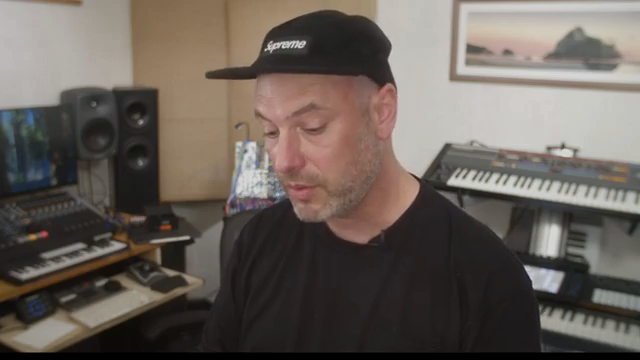
"Combining quantized playing, swing and played material that's not quantized."
© Screenshot/Quote: Novationtv (YouTube)
Swing, Clicks, and Quantization: Shaping the Beat
"We can adjust the swing of the sequencer."
© Screenshot/Quote: Novationtv (YouTube)
Moving into the core rhythm-building tools, Dylan demonstrates how to activate the Circuit Rhythm’s click track and adjust its level for comfortable monitoring. The swing parameter is highlighted as a key feature, subtly shifting sequenced material off the grid for a more natural groove. This is not just about adding swing for its own sake, but about using it as a creative lever to shape the feel of quantized patterns.
The workflow for recording both quantized and non-quantized material is clearly shown: hi-hats are laid down with record quantization enabled for tightness, while kicks and snares are recorded with quantization off, capturing the performer’s timing as-is. The result is a layered groove where some elements lock to the grid and others float around it, creating rhythmic tension and character. This section underscores how the Circuit Rhythm’s interface makes these adjustments accessible and encourages experimentation with timing.
Layering and Sidechaining: Cohesion in Complexity
As the beat becomes more intricate, Dylan explores layering additional samples and using sidechain effects to glue disparate elements together. By adding non-quantized hi-hats and further tweaking the kick and snare patterns, the groove drifts even further from metronomic rigidity, embracing a deliberately ‘wonky’ feel. This approach is about celebrating the organic interplay between different rhythmic layers.
To ensure cohesion, the piano sample is sidechained to the kick and snare tracks, using the Circuit Rhythm’s effects section. This process is shown step by step, with the amount of sidechain easily dialed in via dedicated controls. The result is a beat where the melodic and percussive elements breathe together, demonstrating how digital tools can foster a sense of live interplay even in a sample-based environment.
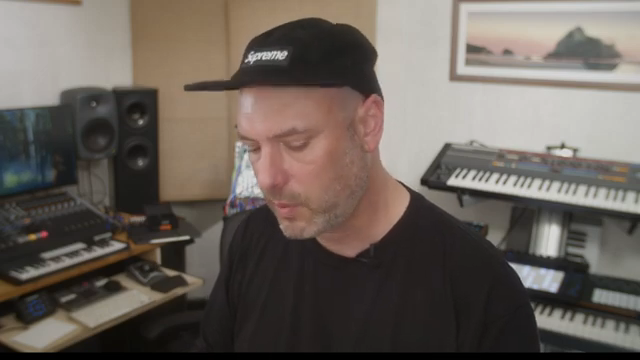
"This is where sidechain can be helpful."
© Screenshot/Quote: Novationtv (YouTube)
Scenes and Chaining: Navigating Rhythmic Landscapes
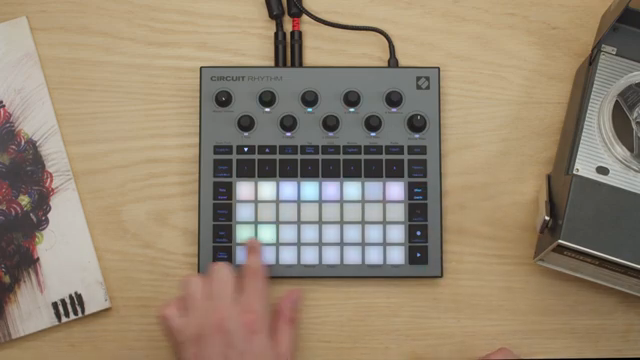
"Chain those two scenes together so that it alternates between the two different feels."
© Screenshot/Quote: Novationtv (YouTube)
With multiple rhythmic feels established, the focus shifts to organizing and performing with these ideas. Dylan demonstrates how to save the current mix as a scene, allowing for instant recall of complex setups. By chaining scenes, it’s possible to alternate between different grooves, effectively building song sections and navigating dynamic changes during a performance or production session.
The video concludes with a brief jam using the Circuit Rhythm’s grid effects, highlighting how these scene and pattern management tools support fluid, improvisational workflows. While the demonstration is concise, it effectively showcases how Novation’s groovebox architecture enables both structured composition and spontaneous exploration, making it a compelling option for producers seeking to push their beats beyond the grid.
This article is also available in German. Read it here: https://synthmagazin.at/novation-circuit-rhythm-organische-grooves-jenseits-des-rasters/
Watch on YouTube:
Latest articles
Watch on YouTube:
Visit the channel:
https://www.youtube.com/NovationTV
https://www.youtube.com/NovationTV
Links from NovationTV:
website: https://novationmusic.com
instagram: https://instagram.com/wearenovation
twitter: https://twitter.com/WeAreNovation
facebook: https://facebook.com/NovationMusic
Sponsored links:
If you purchase via these links, we may earn a small commission – at no extra cost to you. The link opens an Amazon keyword search, and results may vary depending on availability.
Novation Circuit Rhythm
🔗 Check price on Amazon
🔗 Check price on Amazon