Noise Engineering, the Los Angeles boutique known for their wild and immediate Eurorack modules, has dropped the Gamut Repetitor—a four-channel random quantized voltage generator designed for generative melodic sequences and much more. This 10HP module promises a heady blend of looping, scale manipulation, and unpredictable voltage patterns, all quantized for musical utility. In their official video, Noise Engineering walks through the panel, demonstrates key features, and patches up everything from melodies to rhythmic chaos. For those who thrive on modular unpredictability and crave hands-on control, Gamut Repetitor looks set to become a generative staple.
21. June 2024
MILES
Noise Engineering’s Gamut Repetitor: Quad Random Quantized Voltage Generator Unleashed
Meet the Gamut: Quad Random Quantized Voltage in 10HP
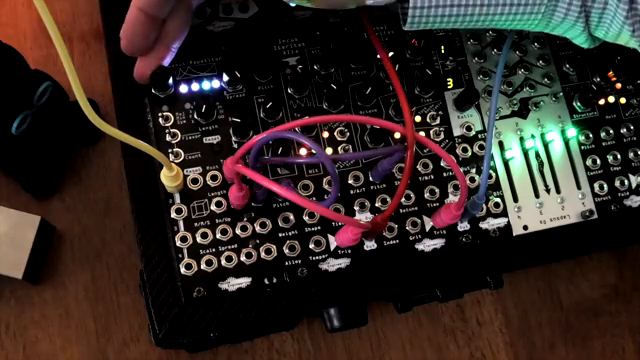
Noise Engineering’s Gamut Repetitor enters the scene as a four-channel quantized random voltage generator, expanding their Repetitor line with a focus on generative melodic sequences and beyond. Housed in a compact 10HP format, the module is designed to conjure up anything from hypnotic melodies to unruly voltage streams, all at the turn of a knob or the flick of a switch. The video wastes no time showing how Gamut transforms a simple trigger pattern into four distinct quantized outputs, each ready to drive oscillators, filters, or anything else in your rack that hungers for pitch or modulation. It’s a module that promises unpredictability, but always within a musical framework—ideal for those who want their patches to surprise them, but not derail the whole performance.
"Run the Gamut and transform your setup into a symphony of unpredictability."
© Screenshot/Quote: Noiseengineering (YouTube)
Looping, Octaves, and Keys: The Core Controls
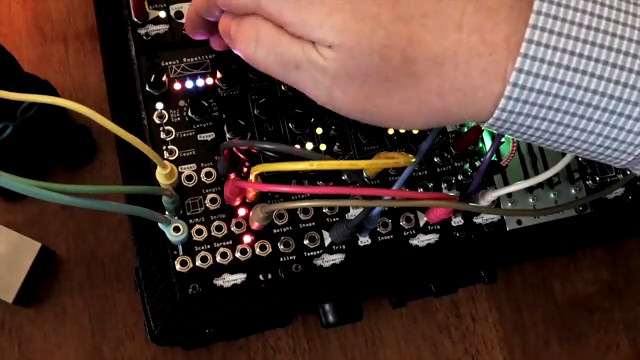
"Spread changes the amount of deviation from the root note up to a two octave range in semitones."
© Screenshot/Quote: Noiseengineering (YouTube)
Central to Gamut Repetitor’s appeal are its adjustable looping, octave spread, key, and scale settings, all of which are clearly laid out on the panel. The module offers four trigger inputs, normalled top to bottom, so a single clock can advance all channels or each can be clocked independently. Triggers are passed through to dedicated outputs, while the four CV outs deliver quantized voltages in the classic 1V/octave format. LEDs provide instant visual feedback on voltage changes per channel, making it easy to follow the action in a busy patch.
The root control sets the base note across a four-octave range, while the spread parameter determines the deviation from that root, up to two octaves in semitones. The length knob is particularly powerful, morphing the loop from a single step up to 32, or even into infinite random mode when fully clockwise. Meanwhile, the down/up parameter allows for creative shifting of voltage ranges above or below the root, and all these parameters can be modulated via CV. The reset button and rhythm mode toggle add further flexibility, letting users reset loops or generate randomized rhythm patterns at will.
Scale Selection and Pattern Manipulation: 27 Flavours of Random
Gamut Repetitor doesn’t skimp on musicality, offering 27 built-in scales accessible via three panel switches: major/minor/symmetric, flavor, and count. These switches, along with their CV inputs, allow for real-time changes to the harmonic landscape, making it easy to move between scales or experiment with new tonalities mid-patch. The MMS CV input controls the main scale type, while the scale CV input sweeps through flavor and note count, opening up a vast palette of quantized possibilities.
The video highlights that users can consult the manual or a handy scale chart for the full list of available modes, but the real fun is in hands-on exploration. Whether you’re after classic major/minor vibes or more exotic symmetric scales, Gamut’s scale section is designed for jamming and spontaneous composition. The ability to randomize patterns by tweaking note, spread, or down/up parameters—either by hand or with CV—means that evolving, non-repetitive sequences are always within reach.
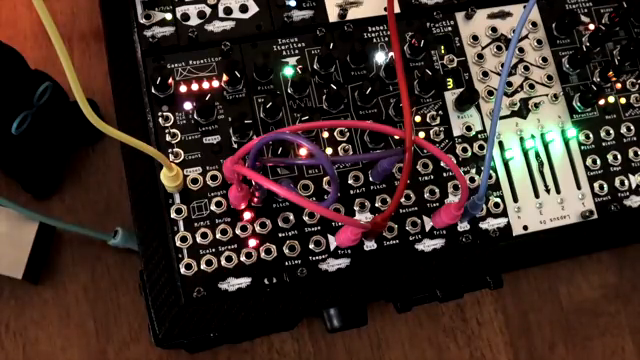
"For a complete list of all 27 possible scales that can be generated with Gamut Repetitor, screenshot this or check out the manual at noiseengineering.us."
© Screenshot/Quote: Noiseengineering (YouTube)
Patch Examples: Melodies, Counter-melodies, and Rhythmic Mayhem
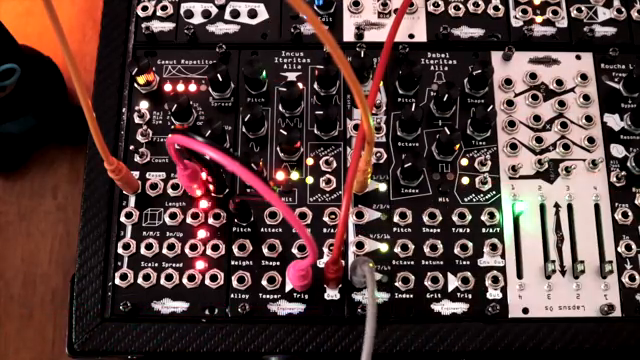
"When the gate sequence is high, the length becomes infinite. When the gate is low, it goes back to a single note loop."
© Screenshot/Quote: Noiseengineering (YouTube)
Noise Engineering demonstrates Gamut’s versatility with a series of patch examples, starting with a classic melody and counter-melody setup using two voices. By adjusting the length parameter, users can dial in anything from infinite evolving loops to tightly controlled phrases, while layering counter-melodies adds harmonic depth. The video then shows how modulating the length via gate patterns can create dynamic shifts between infinite randomness and single-note loops, perfect for generative textures or live improvisation.
Further patches use Gamut’s four outputs as both CV and pitch sources for a single oscillator, showcasing how the module can drive complex modulation or melodic lines from a single clock source. Rhythm mode is also explored, where holding the reset button transforms the trigger outputs into randomized repeating rhythmic patterns. By tweaking the scale switches, users can even restrict outputs to octaves, opening up new rhythmic and melodic possibilities for modular percussion or bass duties.
Performance Tools: From Triggers to Musical Chaos
Gamut Repetitor’s performance capabilities shine when transforming ordinary trigger patterns into unique, musical results. The module’s real-time manipulation options—CV control over key parameters, instant scale switching, and on-the-fly rhythm generation—invite experimentation and hands-on play. Whether you’re building generative soundscapes, evolving melodies, or unpredictable rhythms, Gamut rewards creative patching and rewards those willing to push beyond standard sequencing. In short, it’s a tool for turning modular chaos into structured, musical outcomes—just the sort of thing that keeps a rack fresh and a patch session unpredictable.
This article is also available in German. Read it here: https://synthmagazin.at/noise-engineering-gamut-repetitor-quad-quantisierter-zufallsspannungs-generator-entfesselt/
Watch on YouTube:
Latest articles
Watch on YouTube:
Visit the channel:
https://www.youtube.com/NoiseEngineering
https://www.youtube.com/NoiseEngineering
Links from NoiseEngineering:
website: https://noiseengineering.us
instagram: https://instagram.com/noiseeng
twitter: https://x.com/noiseeng
facebook: https://facebook.com/noiseeng
reason: https://bit.ly/noiseeng-reason
Sponsored links:
If you purchase via these links, we may earn a small commission – at no extra cost to you. The link opens an Amazon keyword search, and results may vary depending on availability.
Gamut Repetitor
🔗 Check price on Amazon
🔗 Check price on Amazon