Noise Engineering, the LA-based boutique known for their aggressive and innovative sound tools, presents Dystorpia—a digital fuzz and overdrive pedal that pushes the boundaries of distortion. This official walkthrough dives into the pedal’s digital architecture, highlighting its wavefolding and rectification engines, and a control set designed for both nuanced studio work and wild live performance. As with all things Noise Engineering, the focus is on immediate, hands-on sound shaping and a workflow that encourages creative exploration. Whether you’re after classic grit or dystopian sonic mayhem, Dystorpia promises a versatile palette for guitars, synths, and beyond.

23. August 2024
LYRA
Noise Engineering Dystorpia: Digital Fuzz and Overdrive Reimagined
A New Digital Fuzz Frontier
Noise Engineering’s Dystorpia enters the crowded world of fuzz and overdrive pedals with a distinctly digital approach. The video wastes no time establishing Dystorpia’s identity as a tool for both recording and live performance, promising a broad sonic palette that goes well beyond traditional analog distortion. From the outset, the focus is on versatility and the ability to morph between familiar and unconventional tones.
The presentation style is classic Noise Engineering: direct, a bit nerdy, and unapologetically focused on sound design potential. Dystorpia is positioned not just as a guitar pedal, but as a creative instrument for anyone seeking to inject character and aggression into their audio chain. The video sets the expectation that this is a pedal for those who want more than just another overdrive.
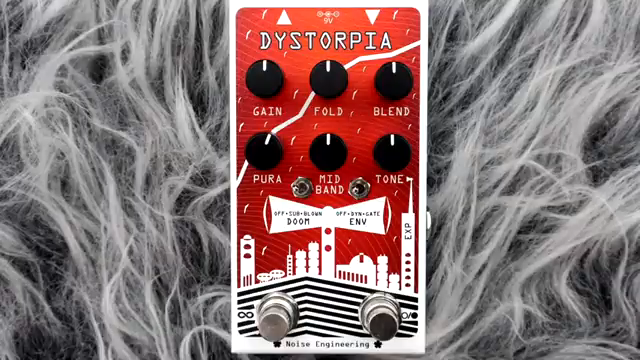
"Utilizing wave folding and rectification along with flexible tone controls, Distorpia offers up a diverse palette to work with for recording and live performance."
© Screenshot/Quote: Noiseengineering (YouTube)
Wavefolding and Rectification: The Digital Engine Room
"This unique effect imparts an intense, harmonically rich grinding buzzsaw type of sound."
© Screenshot/Quote: Noiseengineering (YouTube)
At the heart of Dystorpia’s sound is a combination of wavefolding and rectification—signal processing techniques more often associated with modular synthesis than with traditional stompboxes. Wavefolding introduces complex, harmonically rich overtones, while rectification delivers a grinding, buzzsaw-like edge to the signal. The video demonstrates how these elements can be dialed in for everything from subtle grit to full-on sonic chaos.
This digital architecture allows Dystorpia to cover a wide range of distorted textures, from classic fuzz to aggressive, modern timbres. The emphasis is on flexibility: users are encouraged to experiment with these parameters to discover unique blends of saturation and harmonic content. It’s a clear nod to Noise Engineering’s modular roots, bringing advanced DSP techniques into a pedalboard-friendly format.
Hands-On Control: From Gain to Doom
Dystorpia’s control panel is a playground for tone sculptors. The gain knob sets the input level, allowing users to push the effect from subtle coloration to heavy saturation. The fold control determines the amount of wavefolding, introducing everything from a gentle overdrive to a gritty, growling texture. Blend offers continuous control between dry and processed signals, with a clever twist: as you turn the blend knob, even the dry path gets a touch of saturation, ensuring a cohesive mix.
Pura, the rectification control, adds a harmonically rich, grinding character that can transform the signal into something truly aggressive. The mid-band and tone controls provide further shaping, with the tone knob offering a sweep from bass-heavy to bright, and even a mid-scoop at the top of its range. Notably, the tone parameter is mapped to the expression pedal input, enabling wah-like sweeps or dynamic timbral shifts on the fly.
Rounding out the feature set is the doom switch—a signature Noise Engineering flourish. This three-way toggle injects lower octave harmonics, with the rightmost “blown sub” setting delivering a pronounced, rumbling undercurrent. The video highlights how doom excels with single-note riffs, adding a subterranean depth that’s as musical as it is menacing.
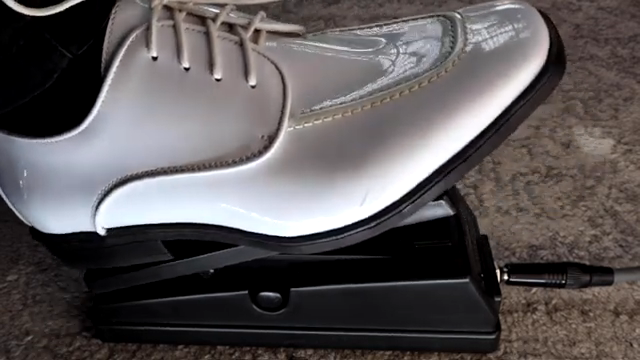
"The doom switch adds in lower octave harmonics."
© Screenshot/Quote: Noiseengineering (YouTube)
Envelope Switch: Intelligent Noise Suppression
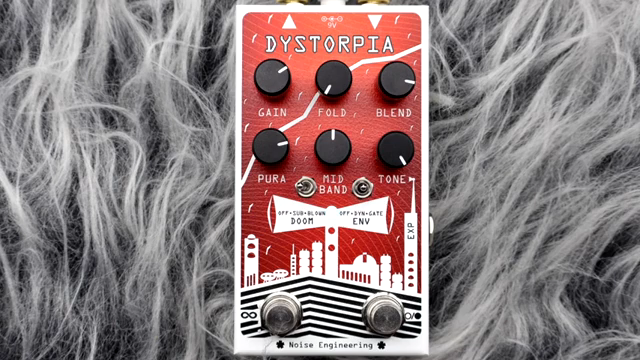
"This allows for soft to hard dynamic playing to determine the output level while retaining Distorpia's unique tonality."
© Screenshot/Quote: Noiseengineering (YouTube)
Noise suppression is often an afterthought in distortion pedals, but Dystorpia’s envelope switch brings a nuanced approach. The dyne setting applies noise suppression while allowing the dynamics of your playing to shape the output, preserving the pedal’s unique tonality. This means you can play softly or aggressively and the pedal responds musically, not just with blunt gating.
Switching to the gate mode, Dystorpia acts as a smart noise gate, drastically lowering the output when there’s no input signal. This is particularly useful for recording and live performance, as it allows for longer sustain and clean fade-outs without pedal noise—a thoughtful touch for real-world workflows.
Beyond Guitar: A Sonic Swiss Army Knife
While Dystorpia is clearly designed with guitarists in mind, the video makes it clear that its talents extend far beyond six strings. The pedal is shown to excel on bass, synths, keytars, and even theremins, making it a versatile tool for any sound explorer. This broad compatibility is a direct result of its digital engine and flexible controls.
Noise Engineering’s community-minded ethos shines through here: Dystorpia isn’t just a pedal, but an invitation to experiment with any audio source. Whether you’re mangling synth presets or adding grit to unconventional instruments, Dystorpia is positioned as a creative hub for those who want to push their sound in new directions.
This article is also available in German. Read it here: https://synthmagazin.at/noise-engineering-dystorpia-digitaler-fuzz-und-overdrive-neu-gedacht/
Watch on YouTube:
Latest articles
Watch on YouTube:
Visit the channel:
https://www.youtube.com/NoiseEngineering
https://www.youtube.com/NoiseEngineering
Links from NoiseEngineering:
website: https://noiseengineering.us
instagram: https://instagram.com/noiseeng
twitter: https://x.com/noiseeng
facebook: https://facebook.com/noiseeng
reason: https://bit.ly/noiseeng-reason
Sponsored links:
If you purchase via these links, we may earn a small commission – at no extra cost to you. The link opens an Amazon keyword search, and results may vary depending on availability.
Noise Engineering Dystorpia
🔗 Check price on Amazon
🔗 Check price on Amazon