Filter magic with MusoTalk: Exploring the FabFilter Pro-Q 4 and musical EQ.
1. November 2025
RAUMKLANG
musotalk’s Melody Metamorphosis: The FabFilter Pro-Q 4 at Work
The Musical EQ - A New Approach?
Musotalk dives into the world of the musical equalizer, an idea that initially seems curious. The YouTuber opens his video with the question of what a musical EQ actually is and presents a reinterpretation inspired by an Instagram short. We learn that the EQ can be set in a way to attenuate notes that aren’t part of the musical scale. Whether this is meaningful will be revealed throughout the video. Musotalk has created a special Synthwave project for this adventure to demonstratively explore the effect of the EQ.
The Idea Behind the Tonal Filter Approach
In this section, the patch geometry of the EQ setting unfolds. The creator explains that typical musical instruments use twelve semitones, while a diatonic scale only encompasses seven tones. Five tones are excluded, and it’s precisely these tones that should be attenuated using the special EQ preset to ensure purity in the sound image. Musotalk explains the mathematical and acoustic logic behind this decision and shows that reducing ‘unharmonic’ sub-tones can create a clean and clear sound. This idea seems almost like an origami that unfolds artfully and opens up new sound spaces. Yet, behind this technical whim, there’s also a certain skepticism — chaos aesthetes might find themselves almost lost in this reduction. Musotalk then presents the samples used in the rare key of D-sharp major, which poses an interesting musical challenge.
Practical Implementation in the FabFilter Pro-Q 4
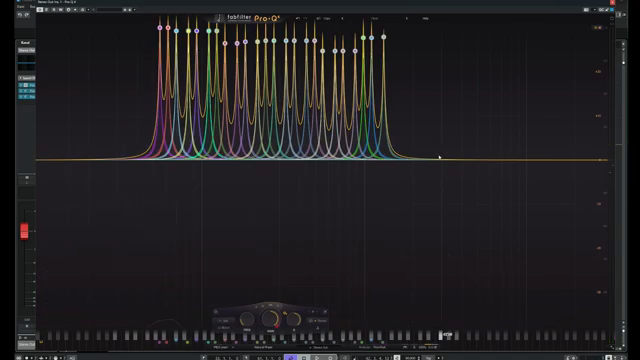
Sound architecture at its finest: The FabFilter Pro-Q 4 is used in detail to bring the musical EQ to life. Musotalk shows how he works with 24 bands and precise note referencing. Thanks to the Auto Gain function, the output level remains stable as he adjusts the bands. The YouTuber explains that the setup requires specific attenuations for non-tonal notes and, despite the copy-paste of Q-curves, requires fine-tuning by hand. This means patience and a good ear for unpredictable resonances. He demonstrates how he controls the EQ bands by removing unnecessary notes to explain the focused sound enabled by the preset. Here the machine shows its most demanding side — a setup for sound enthusiasts wanting to lose themselves in the technical depths of audio.
"We don't have the A, we don't have the B, we don't have the C sharp."
("Wir haben das A nicht, wir haben das H nicht, wir haben das Cis nicht.")© Screenshot/Quote: Musotalk (YouTube)
Listening Test Results and Analytical Consideration
"You can hear all the unharmonic resonances, and indeed, the whole thing becomes very dissonant."
("Da hört man alle unharmonischen Resonanzen und in der Tat wird das Ganze dann sehr dissonant.")© Screenshot/Quote: Musotalk (YouTube)
Horror or harmony: We listen to the comparison between original notes and the musically cleaned version. Listening alone reveals that the unharmonic resonances become clear as the affected tones are emphasized. This underscores the EQ’s acoustic effect and its ability to bring clarity. Musotalk weighs whether this plug-in approach is truly necessary, because even though the technology makes alluring promises, the question of practical relevance remains open. The historical possibilities of 70s record production worked without this targeted resonance correction. But with today’s tools, we now have the option to remedy any flaws that remain even after autotune. The creator remains skeptical whether it truly is a big game changer, questioning the method’s physical sensibility and inviting viewers to try it themselves.
Variations, Nuances, and Critical Review
In fine-tuning, Musotalk applies the final nuance of the musical EQ. He once again pulls all the stops of the FabFilter and shows how you can determine what’s preferable through the bypass comparison. Fine-tuning opens new discussion fuel: Is it ‘smoke and mirrors,’ or are there physical principles that justify its utility? A systematic test reveals the machine’s variability and introduces differentiated nuances into play. However, this requires skill and a trained ear. A certain level of skepticism remains: Perhaps the whole thing is a bit unnecessary?
Conclusion and Creative Application Areas
Musotalk’s final summary shows that the FabFilter Pro-Q 4 is indeed versatile in its application once one engages in experimentation. While the YouTuber casts a critical light on the immediate relevance in the production process, he admits there might be creative possibilities for this EQ — especially on complex tracks like vocals. The video ends with an appeal to viewers to try out how this technique might work for them. The Musotalk approach of playfully and analytically exploring technology remains consistent: We say goodbye with a wink and the invitation to explore one’s own sound spaces.

"Maybe you'll find a use case where this is totally awesome."
("Vielleicht fällt euch ja mal ein Anwendungsbeispiel ein, wo sowas total geil ist.")© Screenshot/Quote: Musotalk (YouTube)
Translated from German. Read the original here: https://synthmagazin.at/musotalks-melodie-metamorphose-der-fabfilter-pro-q-4-im-einsatz/
Watch on YouTube:
Latest articles
Watch on YouTube:
Visit the channel:
https://www.youtube.com/musotalk
https://www.youtube.com/musotalk
Sponsored links:
If you purchase via these links, we may earn a small commission – at no extra cost to you. The link opens an Amazon keyword search, and results may vary depending on availability.
FabFilter Pro-Q 4
🔗 Check price on Amazon
🔗 Check price on Amazon