20 years of MusoTalk – and not a bit quieter: The roundtable with Non-Erik, Mogulator and co. kicks off the year by dissecting the patch geometry of the Akai MPC XL, pondering the ethics of software subscriptions and AI in music production, and discovering Tonalic as a new approach for human accompaniment in the digital studio. Between workflow debates and machine ethics, there’s room for ironic asides and the realization that vintage synths at Berlin’s museum aren’t just behind glass, but right in the middle of the sound space. If you want to know how the future of music production unfolds between hardware, AI and real sessions, don’t miss this discussion – some details can only truly be experienced in the video itself.

16. January 2026
RAUMKLANG
musotalk deconstructed: Akai MPC XL, AI Collapse and the Return of Real Musicians
Big, Complex, MPC: The New XL as Groovebox Origami
The Akai MPC XL is presented as a monumental evolution of the MPC-X – a device positioning itself as the control center for modern studio and live production, with an 11-inch touchscreen, multi-zone pads, and step-sequencer architecture. The MusoTalk roundtable analyzes not only the hardware details but also the operating concept, which borrows from the Live 3 and promises an MPE-like playing feel with 64 pads and positional control. Integration of an audio interface, 16 CV/Gate outputs, and an 8-core CPU with 16 GB RAM blurs the line between classic groovebox and fully-fledged production computer – machine ethics in XXL format.
But as complexity grows, so does the patch geometry of operation: The hosts discuss whether the XL remains intuitive or already drifts into the depths of menu-diving. While some celebrate the standalone freedom and the possibility to realize complete productions without a computer as a dream for chaos aesthetes, skepticism remains: Is the XL still operable blind, or is it just a computer in a pad shell? The answer remains ambivalent – and the true workflow fetishist will likely continue to choose between hardware haptics and DAW comfort. If you want to experience the actual operating logic and sonic origami of the MPC XL, you shouldn’t miss the video.

"You can do 64 pads or with positional control, so it’s more of an MPE feeling."
("Du kannst halt 64 Pads oder somit mit Positionssteuerung machen, das heißt also mehr so MPE-Feeling.")© Screenshot/Quote: Musotalk (YouTube)
Subscriptions and AI: Machine Ethics in the DAW Age
"Apple is basically turning the entire Pro series into a subscription model."
("Apple kippt faktisch die komplette Pro-Serie und macht daraus ein Abo-Modell.")© Screenshot/Quote: Musotalk (YouTube)
The discussion about DAWs and their business models takes a critical tone at MusoTalk: Logic, Studio One, and Reason are changing hands and moving toward subscription models, while AI features are seeping ever deeper into production environments. The hosts examine how this development is changing the production landscape – from growing dependency on monthly payments to the question of whether creativity is being hollowed out by automation. The consolidation of the industry and the loss of independent developers are read as signals of a paradigm shift.
At the same time, the question remains: how much hands-on unpredictability is possible in an increasingly automated environment? While AI tools like Isotope or new features in Logic 12 and Reason speed up production, the longing for genuine, human processes grows. The hosts sum it up: the DAW becomes a machine room where the human must decide how much control to relinquish – and when to return to hardware or trust their own instincts.
Tonalic: Human Accompaniment Meets AI Intelligence
Tonalic, from the Celemony environment, is introduced as a new approach to musician accompaniment: Instead of generic loops or fully synthetic AI music, Tonalic relies on real session performances that are flexibly adapted to the user’s chords, tempo, and groove via AI. The platform provides access to professional musicians whose recordings are algorithmically transformed to fit seamlessly into your own song – a kind of patchwork of human and machine that blurs the lines between session player and AI companion.
The MusoTalk roundtable discusses how Tonalic, with its subscription model and personalized musician profiles, creates an alternative to purely AI-generated tracks. The combination of human warmth and algorithmic adaptability is seen as an exciting counterpoint to fully automated music production. If you want to know how this hybrid sound architecture feels in practice, you should check out the demo examples in the video – here, the sound truly folds like origami from tension and noise.
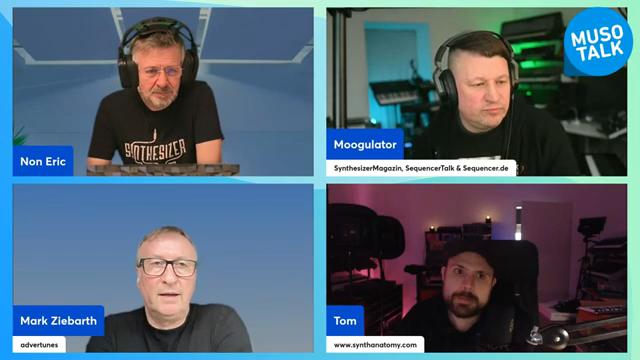
"The idea is that you have a musician by your side whom you can let play quite freely."
("Die Idee ist da ja, dass du halt quasi einen Musiker an deiner Hand hast, den du relativ frei machen lassen kannst.")© Screenshot/Quote: Musotalk (YouTube)
Vintage to Touch: The Synthesizer Museum Berlin
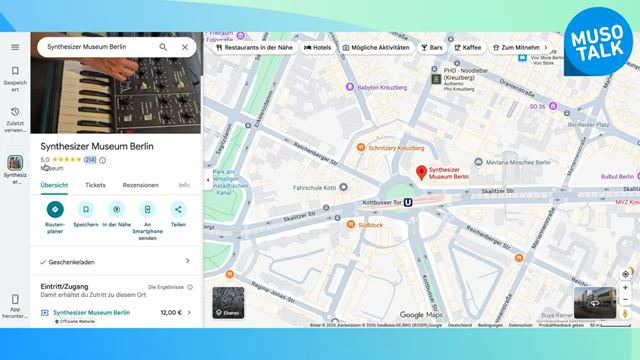
"You could say the enthusiasm is overflowing."
("Man kann sagen, die Begeisterung ist überbordend.")© Screenshot/Quote: Musotalk (YouTube)
A brief excursion leads to the Synthesizer Museum Berlin, which presents itself as a lively place for sound archaeologists and patch nerds. Here, vintage synthesizers aren’t just behind glass but invite active sessions – a space where machine ethics and sound history collide. With a 5.0 rating on Google Maps and open doors every day except Tuesday, the museum is recommended as a must-visit for anyone who wants to not only hear but also feel the sound of past decades.
The MusoTalk roundtable emphasizes that especially in times of digital automation, such places gain special significance: They offer the opportunity to physically experience sound spaces and connect with the history of electronic music. If you really want to grasp the atmosphere and variety of the exhibited devices, you should see it for yourself – some patch geometries simply can’t be put into words.
NAMM Outlook and Behringer Teaser: The Next Wave
In closing, the focus shifts to the future: NAMM is just around the corner, and Behringer is already teasing new products. The roundtable remains curious about what innovations and surprises manufacturers will bring from the machine room this time. The industry’s transformation is palpable, but the appetite for new patch geometries and sound spaces remains unbroken – all the more reason to keep a close eye on developments in the coming weeks.
Translated from German. Read the original here: https://synthmagazin.at/musotalk-dekonstruiert-akai-mpc-xl-ki-kollaps-und-die-rueckkehr-der-echten-musiker/
Watch on YouTube:
Latest articles
Watch on YouTube:
Visit the channel:
https://www.youtube.com/musotalk
https://www.youtube.com/musotalk
Sponsored links:
If you purchase via these links, we may earn a small commission – at no extra cost to you. The link opens an Amazon keyword search, and results may vary depending on availability.
Akai MPC Live 3
🔗 Check price on Amazon
🔗 Check price on Amazon
Akai MPC X
🔗 Check price on Amazon
🔗 Check price on Amazon
Akai MPC XL
🔗 Check price on Amazon
🔗 Check price on Amazon
Celemony Tonalic
🔗 Check price on Amazon
🔗 Check price on Amazon