Moog Music’s latest video dives into the new firmware v1.4 for the Muse, revealing how this update transforms the instrument’s diffusion delay into a playground for dynamic chorus and interactive soundscapes. With the addition of global modulation sources, Muse now invites deeper patching possibilities, letting you sculpt chorus effects and diffusion textures that respond to every nuance of your playing. The video, in classic Moog style, walks through modulation routing, expressive controls, and envelope-driven tricks—showing how Muse can become the centrepiece for evolving, tactile sonic adventures. If you’re keen on modulation matrices and hands-on control, this is a firmware update worth a closer look.
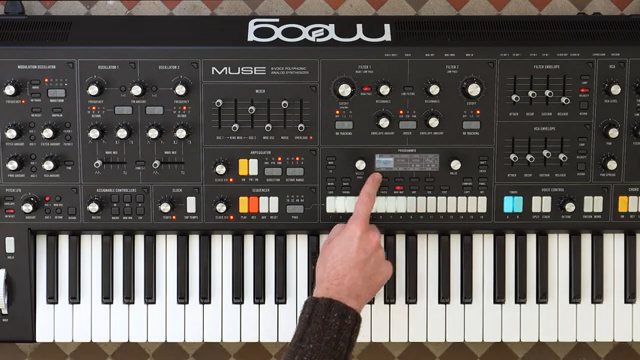
Firmware 1.4: A New Playground for Chorus and Diffusion
The video opens with a focus on Muse firmware version 1.4, which brings a significant expansion to the instrument’s modulation capabilities. Moog Music demonstrates how this update allows users to modulate every parameter of the diffusion delay using six global modulation sources. This is a notable shift, as previous versions limited modulation of global effects to per-voice sources, restricting the kinds of evolving textures one could achieve.
With these new global LFOs and envelopes, users can now sculpt the diffusion delay in ways that were previously impossible. The video sets the stage for a series of patching demonstrations, highlighting how firmware 1.4 turns Muse into a much more interactive and expressive tool for chorus and diffusion effects.
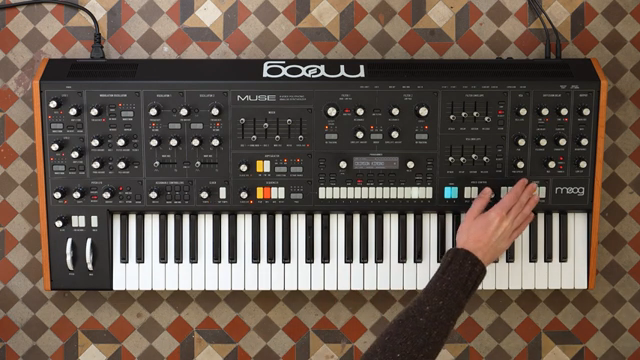
"We've added the ability to modulate all parameters of the diffusion delay using the six new global modulation sources."
© Screenshot/Quote: Moogsynthesizers (YouTube)
Global Modulation: LFOs and Depths in the Diffusion Delay
"Global LFO 1 is modulating the left channel of the delay and global LFO 2 is modulating the right channel of the delay and the mod wheel is raising the rate of both."
© Screenshot/Quote: Moogsynthesizers (YouTube)
Moog’s walkthrough reveals the heart of the update: global LFOs can now be assigned to modulate the left and right channels of the diffusion delay independently. By mapping Global LFO 1 to the left and Global LFO 2 to the right, the classic chorus shimmer is achieved, with the mod wheel acting as a macro control for the LFO rates. This setup enables real-time performance tweaks, letting players dial in subtle or dramatic chorus movement on the fly.
The depth of modulation is crucial here. The video demonstrates how shallow modulation depths yield that familiar chorus warble, while cranking up the depth leads to more extreme, less chorus-like effects. Moog also points out the importance of selecting “pitch shift” as the time mode in the diffusion delay’s menu, ensuring that the modulation introduces the pitch artifacts reminiscent of BBD or tape delays. This attention to detail lets users chase both vintage and modern chorus flavours within the same patch.
Expressive Controls: Mod Wheel, Aftertouch, and Macro Integration
The integration of expressive controls is where Muse’s new firmware really comes alive. The video shows how the mod wheel can be used to raise the rate of both LFOs, effectively morphing the chorus character in real time. Adjusting the modulation depth of the mod wheel changes the range of possible chorus rates, giving performers nuanced control over the effect’s intensity.
Beyond the mod wheel, Moog demonstrates the use of the macro knob to adjust diffusion time and aftertouch to simultaneously open the filter envelope sustain and increase the diffusion amount. A touch of slew is applied to aftertouch, smoothing transitions and making the response feel more organic. This multi-dimensional approach means that every gesture—be it a finger on the mod wheel or a press of aftertouch—can shape the diffusion delay in musically meaningful ways.

"We use aftertouch to not only open the filter envelope sustain stage, but also increase the diffusion amount."
© Screenshot/Quote: Moogsynthesizers (YouTube)
Envelope-Driven Patch Variations: Dynamic Chorusing in Action
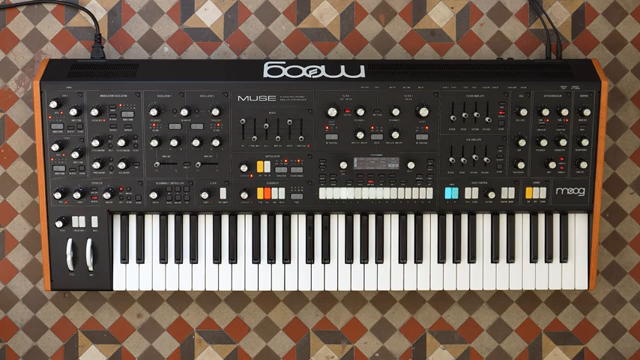
"As I add new notes the envelope generator will begin again."
© Screenshot/Quote: Moogsynthesizers (YouTube)
The video then explores alternative patching approaches using the global envelope generators. By routing a global envelope to modulate LFO rates, the chorus speed can increase dynamically as a note is held, adding a sense of motion that evolves over time. This technique is especially effective for creating patches that breathe and shift with the performer’s touch.
Moog highlights the impact of multi-trig mode on the global envelope generator. With multi-trig enabled, each new note retriggers the envelope, resulting in more pronounced dynamic modulation. Disabling multi-trig means the envelope only restarts when all keys are released, leading to a smoother, more legato response. This flexibility allows for both percussive and flowing chorus effects, depending on the desired musical context.
Muse as a Modulation Hub: Responsive Soundscapes Unleashed
Wrapping up, the video underscores how Muse, with its expanded global modulation and expressive control options, becomes a powerful centrepiece for interactive sound design. The firmware update enables complex, evolving soundscapes that respond directly to player input, making the instrument feel alive under your hands. For those who thrive on modulation routing and hands-on tweaking, Muse v1.4 offers a compelling new toolkit for both subtle chorus and wild, animated diffusion textures.
This article is also available in German. Read it here: https://synthmagazin.at/moog-music-muse-v1-4-dynamischer-chorus-und-diffusion-im-wandel/
Watch on YouTube:
Latest articles
Watch on YouTube:
Visit the channel:
https://www.youtube.com/MoogSynthesizers
https://www.youtube.com/MoogSynthesizers
Links from MoogSynthesizers:
website: https://moogmusic.com
instagram: https://instagram.com/moogsynthesizers
facebook: https://www.facebook.com/moogmusicinc
twitter: https://twitter.com/moogmusicinc
Sponsored links:
If you purchase via these links, we may earn a small commission – at no extra cost to you. The link opens an Amazon keyword search, and results may vary depending on availability.
Moog Muse
🔗 Check price on Amazon
🔗 Check price on Amazon