Moog Music steps into the modular ring with a demonstration of how Messenger and Labyrinth, two of their latest instruments, can be patched together for sonic results that go far beyond the sum of their individual circuits. In classic Moog style, the video walks through a series of interconnected patches, showing how generative sequencing, parameter randomization, and hybrid voice routing can transform a seemingly straightforward setup into a playground for complex musical ideas. If you’re the sort who thinks in patch cables and clock divisions, this is a showcase worth dissecting. The focus is on practical interconnectivity, creative sequencing, and the subtle art of making two synths dance together.
16. September 2025
MILES
Moog Music’s Messenger & Labyrinth: Modular Interplay in Action
Messenger Meets Labyrinth: The Modular Conversation Begins
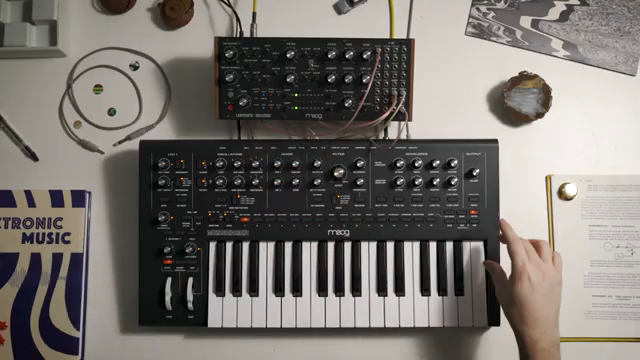
The video opens with Messenger front and centre, but it’s not long before Labyrinth joins the fray, setting the stage for a modular tête-à-tête. Moog Music positions Messenger as a dynamic synthesis instrument, but the real intrigue comes from how its capabilities expand when paired with Labyrinth. With six patch cables bridging the two, the intention is clear: this isn’t about isolated voices, but about creating a system where modules interact and influence each other.
From the outset, the focus is on how interconnectivity can turn a single instrument’s strengths into a much broader palette. Messenger’s oscillators are joined by Labyrinth’s unique voice, all routed through Messenger’s filter and VCA. This sets up a hybrid environment, where subtractive and additive elements can be blended, hinting at the sort of patching possibilities that make modular synthesis so addictive.
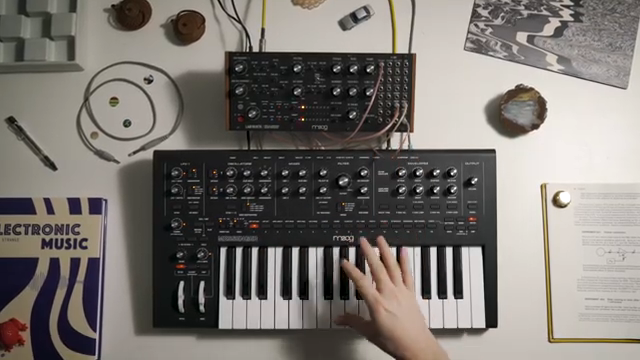
"We're going to focus on how we can use interconnectivity with the second instrument to enhance the functionality of Messenger."
© Screenshot/Quote: Moogsynthesizers (YouTube)
Sequencer Synergy: Pitch, Gates, and Controlled Chaos
"We're going to use all three for this example."
© Screenshot/Quote: Moogsynthesizers (YouTube)
Moog demonstrates how Labyrinth’s sequencers can be harnessed to drive Messenger’s melodic content and inject a dose of unpredictability. The first sequencer on Labyrinth is patched to Messenger’s CV and gate inputs, taking charge of pitch and note triggering. Meanwhile, the second sequencer’s CV output is routed to Messenger’s expression pedal input, opening the door to parameter modulation that’s anything but static.
The video walks through setting up these connections, syncing clocks, and even routing Messenger’s CV back to control Labyrinth’s main VCO. This circular patching allows both synths to move in parallel, with their oscillators tracking together. The result is a sequence where pitch permutations and transpositions are not just possible, but encouraged. By using the corrupt function on Labyrinth’s second sequencer, subtle randomization is introduced, keeping the melodic material fresh and evolving.
Hybrid Patching: Labyrinth’s Voice Through Messenger’s Filter
To highlight the creative potential of this pairing, the video routes Labyrinth’s audio output directly into Messenger’s external input. This means Labyrinth’s distinctive voice structure—complete with its own wave folding and filtering—can be mixed with Messenger’s oscillators and processed through Messenger’s filter and VCA. The result is a composite sound that blends the character of both instruments.
Fine-tuning the patch, the demonstrator adjusts tuning, filter settings, and wave folding on Labyrinth, ensuring the two synths are harmonically aligned. The band-pass filter, resonance tweaks, and sequencer-driven wave folder modulation on Labyrinth all feed into Messenger’s signal path, creating a layered, hybrid timbre that’s more than just the sum of its parts.
Performance Tools: Randomization, Modulation, and Layering Tricks
The video doesn’t just dwell on static patches—it dives into performance tools that make the system truly playable. Messenger’s keyboard is used to transpose Labyrinth’s sequence on the fly, demonstrating how real-time control can add musicality to generative patterns. Meanwhile, Messenger’s step sequencer is programmed with a 64-step pattern, introducing long-form transpositions that shift Labyrinth’s melodic material in unexpected ways.
Parameter control is taken further by assigning Labyrinth’s second sequencer to Messenger’s wave shape, resulting in randomized timbral shifts. The use of sample and hold, LFO modulation for oscillator levels, and the addition of sub-oscillator content all showcase how modulation sources can be layered for evolving textures. The corrupt knob acts as a creative wildcard, allowing the user to lock in a melody or let it mutate at will.
Building a Modular Ecosystem: Beyond Two Boxes
The closing moments of the video zoom out to consider the broader implications of this interconnected approach. Moog Music suggests that as more instruments are added, the system’s creative potential grows exponentially, evolving into a modular ecosystem. This isn’t just about Messenger and Labyrinth, but about the philosophy of modular synthesis—where each new connection opens up fresh compositional possibilities and the system itself becomes a collaborator in the creative process.

"This relationship can exponentially expand, developing into an ecosystem that offers you all sorts of ways to explore and might even surprise you with new ideas as you are writing songs and composing using these instruments."
© Screenshot/Quote: Moogsynthesizers (YouTube)
This article is also available in German. Read it here: https://synthmagazin.at/moog-music-messenger-labyrinth-modulare-interaktion-auf-neuem-niveau/
Watch on YouTube:
Latest articles
Watch on YouTube:
Visit the channel:
https://www.youtube.com/MoogSynthesizers
https://www.youtube.com/MoogSynthesizers
Links from MoogSynthesizers:
website: https://moogmusic.com
instagram: https://instagram.com/moogsynthesizers
facebook: https://www.facebook.com/moogmusicinc
twitter: https://twitter.com/moogmusicinc
Sponsored links:
If you purchase via these links, we may earn a small commission – at no extra cost to you. The link opens an Amazon keyword search, and results may vary depending on availability.
Moog Labyrinth
🔗 Check price on Amazon
🔗 Check price on Amazon
Moog Messenger
🔗 Check price on Amazon
🔗 Check price on Amazon