Moog Music, the storied American synth house, has dropped a substantial firmware update for their Muse, and it’s all about modulation on a grand scale. In this official walkthrough, the Moog team dives into the v1.4 firmware’s new global modulation sources, showing how they transform Muse’s already deep modulation architecture into a playground for sonic experimentation. From global LFOs to the long-awaited ability to modulate every delay parameter, this update is pitched as a game-changer for adventurous patchers and sound designers. We take a closer look at what’s actually on offer, how it’s accessed, and what this means for real-world modular workflows.
A New Era of Modulation for Muse
Moog Music opens this demo by spotlighting the v1.4 firmware update for Muse, with a clear focus on modulation. The video frames these enhancements as a direct response to user requests, particularly the desire to modulate the diffusion delay’s various parameters. This isn’t just a minor tweak—it’s a significant expansion of Muse’s modulation architecture, promising to unlock new creative territory.
The presenter sets the stage by contrasting the previous firmware’s per-timbre modulation approach with the new global paradigm. Previously, each timbre had its own set of LFOs, envelopes, and random triggers, all operating in isolation. Now, with v1.4, global modulation sources can be accessed from any timbre, paving the way for more interconnected and expressive sound design. It’s a move that hints at more complex, cross-timbre interactions and a step closer to modular-style modulation flexibility.
Six Global Modulation Sources: LFOs, Envelopes, and Random Triggers
The heart of the update is the introduction of six global modulation sources: two LFOs, two ADSR envelopes, and two random trigger generators. These are not tied to a specific timbre but are available across the entire instrument, operating monophonically with multi-trig behaviour. This means a single LFO can drive filter cutoff in opposite directions on two timbres simultaneously, or envelopes can shape parameters globally for more unified or contrasting results.
Accessing these global sources is straightforward via the new ‘gmod edit’ soft button in the mod map. When engaged, the relevant menu buttons pulse, indicating you’re editing the global versions of LFOs, envelopes, or random triggers. The interface mirrors the per-timbre controls, keeping things familiar for existing users. The only exception is that global LFOs can’t be set per timbre, reinforcing their role as shared modulation sources. This design choice keeps the workflow intuitive while greatly expanding modulation reach.
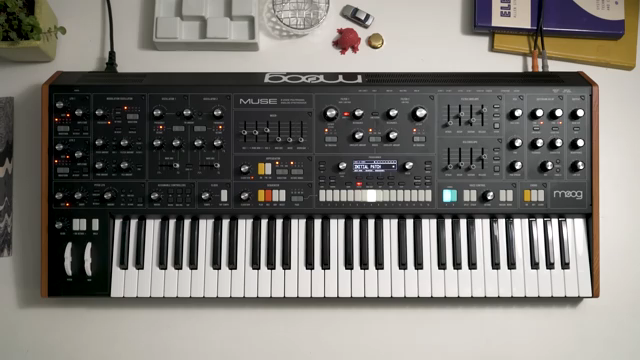
"When I say global what that means is that each timbre has access to them so I could use a single LFO for instance to modulate the cutoff of filter 2 so that on timbre A it modulates it upwards while on timbre B it modulates it downwards or any number of interesting sound design options."
© Screenshot/Quote: Moogsynthesizers (YouTube)
Every Delay Parameter, Now Modulate-able
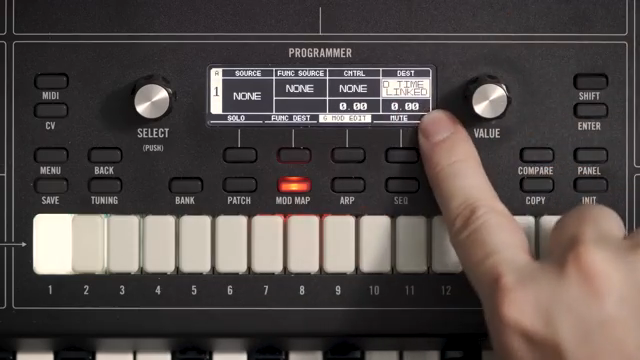
"I'll get to this destination called D time linked and that means that I'm going to modulate the delay times for both the left and right side at the same time and the same amount."
© Screenshot/Quote: Moogsynthesizers (YouTube)
One of the headline features is the newfound ability to modulate every parameter of the diffusion delay, down to the individual character functions. The video demonstrates how to assign a global modulation source, such as LFO 1, to delay time—either for both channels together or independently. The modulation source list is context-sensitive, showing only global sources when targeting global destinations.
The presenter walks through practical examples: modulating delay time with LFO 1 creates stuttered, suspended effects in crossfade mode, while pitch shift mode yields more dramatic, time-warped results. There’s also a demonstration of using global LFO 2 to modulate the filter cutoff on the wet delay signal, and global random triggers to vary diffusion amount per note. These examples show how the update enables intricate, evolving textures and dynamic effects that would have been laborious or impossible before.
Creative Workflows: Assigning Modulation to Performance Tools
Global modulation isn’t just about more sources—it’s about new performance workflows. The video highlights how users can assign global LFOs, envelopes, or random triggers to parameters like filter cutoff, diffusion amount, and delay mix, opening up a world of expressive possibilities. Assigning global LFO 2 to the character knob’s filter cutoff, for example, results in shifting high-pass and low-pass sweeps on the delay’s wet signal, all modulated by a user waveform.
The workflow is designed for hands-on control: entering global mod edit mode, assigning sources, and tweaking modulation amounts all happen from the panel, with clear visual feedback. The presenter also demonstrates stacking modulations—using random triggers for diffusion amount and LFOs for delay mix—resulting in patches where every note can sound different, with evolving delay and filter characteristics.
Performance tools like aftertouch are brought into the mix, controlling delay feedback for dynamic, touch-sensitive effects. The update encourages experimentation, letting users layer modulations and performance gestures for complex, responsive soundscapes. It’s a workflow that feels closer to modular patching, but with the immediacy of a dedicated instrument.
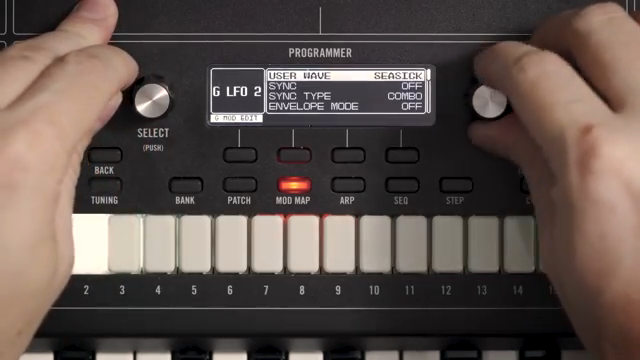
"Now you can hear I get this interesting filter movement on the wet signal out of the delay."
© Screenshot/Quote: Moogsynthesizers (YouTube)
Complex Patches and Expanding Sonic Horizons
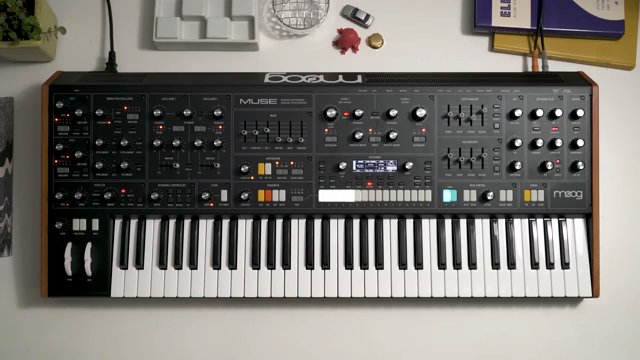
"The 1.4 firmware update opens a lot of new modulation possibilities that can get extremely interesting and we're just barely scratching the surface because we haven't incorporated in any of the per timbre mod sources."
© Screenshot/Quote: Moogsynthesizers (YouTube)
The video wraps up by emphasizing just how much the new global modulation sources expand Muse’s sonic palette. By combining global and per-timbre mod sources, users can craft patches of considerable complexity, with intricate modulation routings and evolving textures. The presenter notes that the examples shown only scratch the surface—there’s ample room for deeper exploration.
For patchers and sound designers, this update represents a substantial leap in creative potential. The ability to modulate every delay parameter, stack global and local mod sources, and integrate performance controls means Muse can now serve as the heart of more ambitious, modular-style setups. Moog’s approach here is both powerful and approachable, making advanced modulation accessible without sacrificing hands-on immediacy.
This article is also available in German. Read it here: https://synthmagazin.at/moog-music-praesentiert-muse-v1-4-globale-modulation-entfesselt/
Watch on YouTube:
Latest articles
Watch on YouTube:
Visit the channel:
https://www.youtube.com/MoogSynthesizers
https://www.youtube.com/MoogSynthesizers
Links from MoogSynthesizers:
website: https://moogmusic.com
instagram: https://instagram.com/moogsynthesizers
facebook: https://www.facebook.com/moogmusicinc
twitter: https://twitter.com/moogmusicinc
Sponsored links:
If you purchase via these links, we may earn a small commission – at no extra cost to you. The link opens an Amazon keyword search, and results may vary depending on availability.
Moog Muse
🔗 Check price on Amazon
🔗 Check price on Amazon