Moog Music’s Muse steps into the digital groovebox arena with an arpeggiator that’s anything but basic. In this official walkthrough, Moog demonstrates how Muse’s arpeggiator is engineered for creative depth, offering programmable rhythms, gate manipulation, and probabilistic patterning—all within a patch-centric architecture. The video is a focused dive into performance and compositional workflows, showing how Muse’s arp can morph from classic latching to intricate, evolving sequences. For those interested in how digital control meets hands-on immediacy, this is a revealing look at the Muse’s approach to arpeggiation and pattern capture.
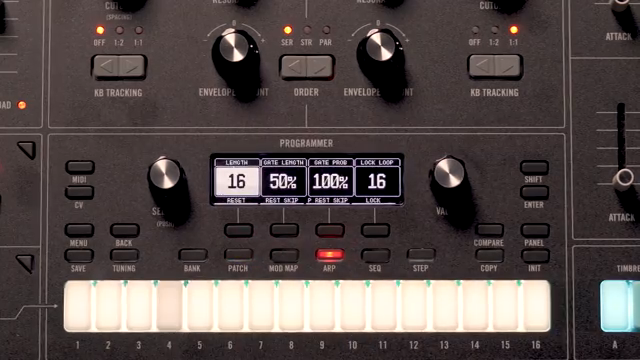
Patch-Centric Arpeggiation: Muse’s Creative Foundation
Muse’s arpeggiator is designed to be more than a simple note repeater—it’s a programmable engine that lives inside each patch. Unlike the sequencer, which sits outside the patch structure, every arpeggiator setting is saved per patch, allowing for unique rhythmic identities across your sound palette. This approach means you can tailor the arpeggiator’s style and rhythm to the specific needs of each sound, making it a flexible tool for both performance and sound design.
The video opens by highlighting how easy it is to activate the arpeggiator and latch patterns using the dedicated hold button. This latching function is essential for hands-free performance, letting players focus on tweaking other parameters or layering additional parts. Moog’s presentation style is clear and workflow-oriented, emphasizing how these features are meant to support real-time creativity in a variety of musical contexts.
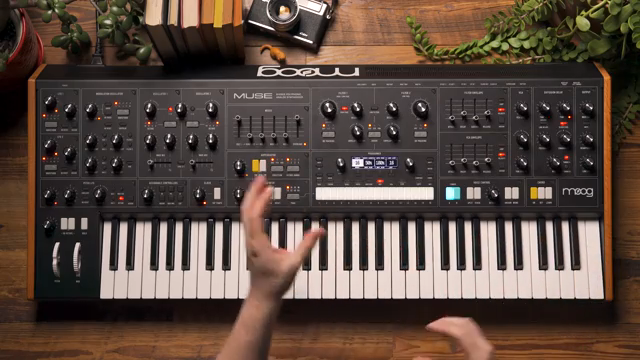
"The arpeggiator settings are stored per patch so that you can set a different arpeggiator style and rhythm for every patch that you store in Muse."
© Screenshot/Quote: Moogsynthesizers (YouTube)
Direction, Octaves, and Rhythmic Customization: The Arp Interface
Muse’s arpeggiator interface is built for hands-on exploration, offering immediate access to direction modes, octave ranges, and pattern types. Users can select from order, pattern, and random directions, each imparting a distinct musical feel. The order mode plays notes as entered, while pattern and random modes introduce ascending, octave-leaping, or unpredictable note sequences. Octave range is easily adjustable, with the arpeggiator smoothly extending patterns across up to four octaves for expanded melodic reach.
Pendulum motion is just a button press away, enabling forward-backward movement through the pattern—a classic trick for evolving, non-repetitive lines. The video demonstrates how these controls interact, showing that Muse’s arp is not just about static repetition but about shaping musical phrases in real time. The interface is designed to keep creative options close at hand, minimizing menu-diving and maximizing playability.
Advanced Programming: Clock Divisions, Gate Length, and Probability
"Here we can see that there's a chase light moving through the 16 steps, and what I can do here is actually create a rhythm for my arp to follow."
© Screenshot/Quote: Moogsynthesizers (YouTube)
Diving deeper, Muse’s arpeggiator offers granular control over rhythm and timing. The clock division knob lets users sync arpeggiation rates to musical subdivisions of the master clock, with options for straight, dotted, or triplet divisions configurable via the more menu. This flexibility ensures that arpeggiated patterns can lock tightly to any groove or swing, whether Muse is the tempo master or following external sync.
The arp view in the programmer reveals a step-based rhythm editor, complete with chase lights and the ability to add or remove rests. Patterns can be up to 64 steps long, with step length and page navigation handled intuitively. Gate length is globally adjustable, letting users dial in anything from staccato blips to sustained pulses, and the effect of gate length varies depending on the patch’s envelope settings.
Probability control introduces an element of chance, allowing for random note drops that add organic variation to otherwise rigid patterns. The rest behavior is also customizable: users can decide whether skipped notes are shifted to the next step or omitted entirely, with separate settings for programmed and random rests. This level of detail supports both predictable and generative workflows, making Muse’s arp a tool for both structured composition and happy accidents.
Lock Function: Capturing Lightning in a Bottle
The lock function is Muse’s answer to the perennial problem of capturing fleeting inspiration. By engaging lock, users can freeze the last 16 steps (or up to 64, thanks to an internal buffer) of an arpeggiated pattern, ensuring that a particularly compelling sequence is preserved—even if it was generated randomly or with probabilistic rests. This is especially useful in performance or improvisational settings, where great ideas can vanish as quickly as they appear.
While locked, users can experiment with new note inputs, direction changes, or octave shifts, knowing that the captured pattern will persist until lock is released. The workflow encourages iterative building: capture, tweak, release, and recapture, making the lock function a powerful scratch pad for developing sequences and compositional ideas.
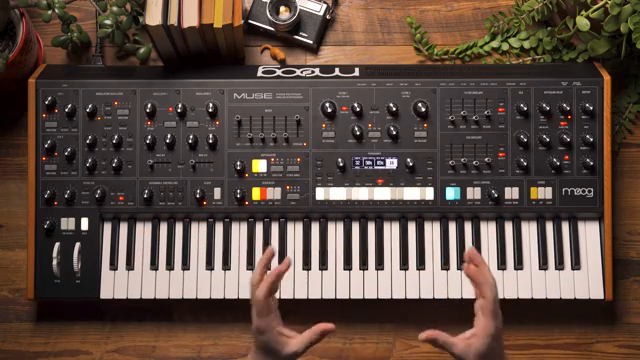
"The lock can actually serve as a really nice way to have a scratch pad to build up ideas for sequences."
© Screenshot/Quote: Moogsynthesizers (YouTube)
Deep Editing and Sequencer Integration: Muse for Composers and Sound Designers
Muse’s arpeggiator isn’t an isolated feature—it’s tightly integrated with the sequencer, allowing users to record arpeggiated patterns directly into sequences for further editing. This means that once a pattern is locked in, it can be transformed, extended, or harmonized within the broader compositional framework of Muse. The ability to add notes, chords, or other modifications post-recording makes the arpeggiator a starting point for complex arrangements rather than a creative dead end.
For composers and sound designers, this integration is crucial. It turns the arpeggiator from a performance tool into a compositional engine, supporting workflows that move seamlessly from improvisation to structured editing. Moog’s video makes it clear: on Muse, the arpeggiator is not just an effect, but a core part of the instrument’s creative architecture.
This article is also available in German. Read it here: https://synthmagazin.at/moog-music-muse-arpeggiator-workflows-entschluesselt/
Watch on YouTube:
Latest articles
Watch on YouTube:
Visit the channel:
https://www.youtube.com/MoogSynthesizers
https://www.youtube.com/MoogSynthesizers
Links from MoogSynthesizers:
website: https://moogmusic.com
instagram: https://instagram.com/moogsynthesizers
facebook: https://www.facebook.com/moogmusicinc
twitter: https://twitter.com/moogmusicinc
Sponsored links:
If you purchase via these links, we may earn a small commission – at no extra cost to you. The link opens an Amazon keyword search, and results may vary depending on availability.
Moog Muse
🔗 Check price on Amazon
🔗 Check price on Amazon