Moog Music’s Messenger isn’t just another analog-inspired synth—it’s a digital playground for sequence-driven creativity. In this official Moog demo, the Messenger’s built-in sequencer takes center stage, revealing a feature set that goes well beyond basic step entry. With tools like Note Pool, Note Probability, and Gate Probability, Messenger encourages users to break out of static patterns and embrace generative, evolving melodies. The video walks through both the architecture and hands-on workflow, showing how the sequencer’s design supports non-destructive editing, parameter automation, and spontaneous musical exploration. For those curious about how Moog is approaching modern sequencing in a hybrid instrument, this is a revealing look at their latest thinking.
15. November 2025
LYRA
Moog Music Messenger: Sequencer Deep Dive – Generative Power Meets Intuitive Workflow
Messenger’s Sequencer: A Playground for Melodic Exploration
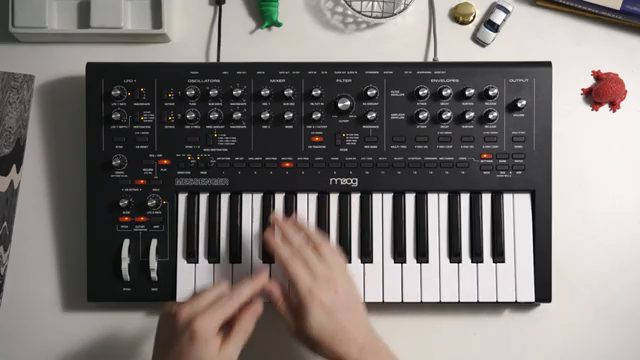
Messenger is introduced as a synthesizer that places its generative sequencer at the heart of the creative process. The video opens by distinguishing the sequencer mode from the arpeggiator, highlighting the dedicated panel controls and visual feedback provided by the 16-step button array. This immediate, tactile interface sets the stage for a workflow that feels both approachable and deep.
From the outset, it’s clear that Messenger’s sequencer is designed to encourage experimentation. Users can enter notes in real time or step-by-step, with up to 64 steps per sequence, though the demo focuses on a 16-step example. The system supports ties and rests, with intuitive button presses and LED feedback making it easy to visualize and manipulate the evolving pattern. Moog’s presentation style here is direct and practical, emphasizing hands-on interaction over menu-diving.
Probability and Complexity: Note Pool, Note Probability, and Gate Probability
The sequencer’s real power emerges with its probability-based features. Gate Probability allows users to introduce randomized rests into sequences, transforming static patterns into living, breathing lines. By selecting specific steps and dialing in probability values, it’s possible to control the likelihood of a note triggering or resting, injecting subtle or dramatic variation as desired.
Note Probability, paired with the Note Pool, takes things further. Each sequence can have its own Note Pool—a curated set of up to 16 pitches across the instrument’s range. When Note Probability is active, the sequencer can substitute programmed notes with alternatives from the pool, all within user-defined probability settings. This ensures that generative deviations remain musical and in-key, rather than random or jarring.
The workflow for setting these parameters is straightforward: users select steps, adjust probabilities with the tempo knob, and immediately hear the results. The video demonstrates how these features can be layered, allowing for evolving melodies that retain coherence. This approach to generative sequencing is both accessible and musically intelligent, reflecting Moog’s intent to make complexity inviting rather than intimidating.

"If I set it somewhere in the middle, it can be nice to just sometimes get rests on certain notes and sometimes not, so that you get a little bit of change in your sequence over time."
© Screenshot/Quote: Moogsynthesizers (YouTube)
Live Entry and Non-Destructive Editing: Flexibility in Action
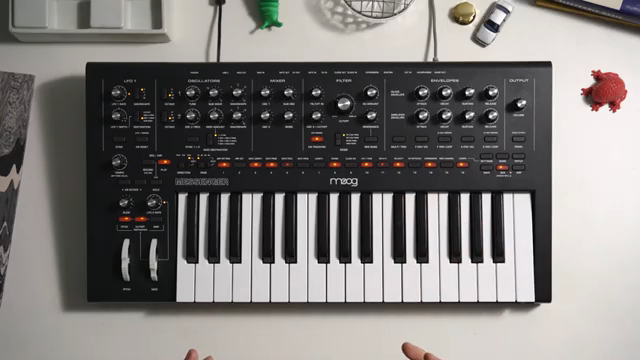
"But one nice thing about this is it's a non-destructive process."
© Screenshot/Quote: Moogsynthesizers (YouTube)
Messenger’s sequencer supports both live and stepwise note entry, catering to different creative approaches. Users can record notes in real time as the sequence runs, or enter them one by one with the sequencer stopped. The system’s visual feedback—blinking playheads, illuminated step buttons—makes it easy to track progress and spot ties or rests at a glance.
Editing is designed to be forgiving and non-destructive. Muting a step doesn’t erase its note data; turning the step back on restores the original note. Sequence length can be adjusted on the fly, and any notes beyond the current length are preserved for later recall. This flexibility encourages users to experiment without fear of losing their work, supporting an iterative, playful workflow that’s ideal for both studio sketching and live improvisation.
Parameter Recording: Breathing Life into Sequences
Performance tools on Messenger go beyond note and rhythm manipulation. The sequencer includes a parameter recording mode that lets users automate a wide range of synth parameters on a per-step basis. Unlike some systems with multiple automation lanes, Messenger offers a single lane, but each step can store a different parameter, from filter cutoff to oscillator shape or envelope settings.
The demo shows how easy it is to assign parameter changes: simply hold a step and tweak a knob. This allows for animated, evolving sequences where timbre, modulation, and dynamics shift across the pattern. The result is a sequencer that doesn’t just play notes, but actively shapes sound, making it a powerful tool for crafting intricate, expressive performances.
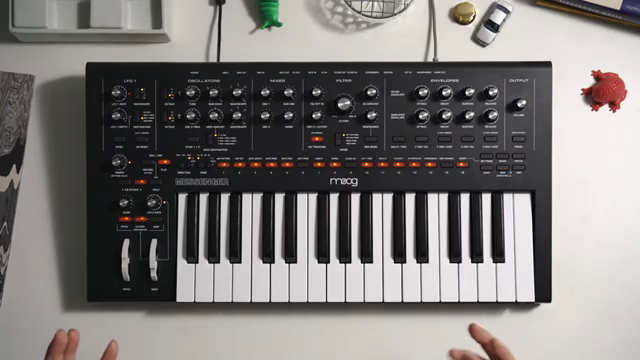
"With parameter automation and recording, we can get some really interesting results where we can add a lot of movement and animation for our sequences."
© Screenshot/Quote: Moogsynthesizers (YouTube)
Watch on YouTube:
Latest articles
Watch on YouTube:
https://www.youtube.com/MoogSynthesizers
Links from MoogSynthesizers:
Sponsored links:
If you purchase via these links, we may earn a small commission – at no extra cost to you. The link opens an Amazon keyword search, and results may vary depending on availability.
🔗 Check price on Amazon