Moog Music steps into the analog FM ring with Messenger, offering a hands-on look at how this instrument handles frequency modulation in a way that’s both classic and distinctly Moog. In this official demo, the manufacturer walks us through the patching possibilities, from subtle vibrato to full-on audio-rate FM textures, all with the signature focus on sound character and modulation depth. Expect a dry, technical tour of oscillator interactions, envelope tricks, and the kind of FM tones that make you want to reroute your patch cables. For those obsessed with how a synth actually behaves in a rack, this video is a revealing slice of Messenger’s sonic DNA.
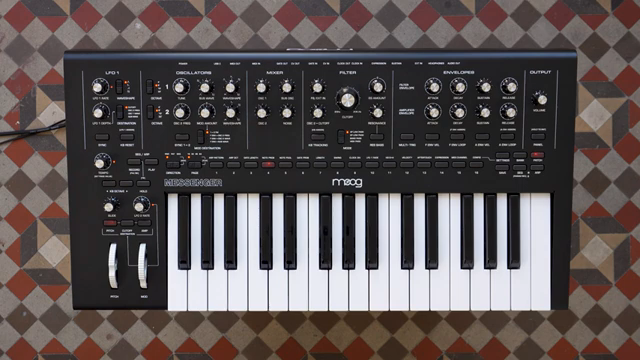
Messenger’s FM Mission Brief
Moog Music introduces Messenger as a platform for exploring analog FM synthesis, immediately framing the instrument as more than just another subtractive synth. The focus is on using Messenger’s architecture to generate a variety of FM textures, with a clear emphasis on hands-on modulation and real-time sound shaping.
The video sets the stage by assigning oscillator 2 as the carrier, with other sources—like LFOs or additional oscillators—serving as modulators. This approach highlights Messenger’s flexibility, allowing users to sculpt everything from gentle vibrato to harmonically rich FM tones, all within the analog domain.
From Vibrato to Audio-Rate Mayhem
The demo begins with the classic move: patching LFO2 to modulate the pitch of oscillator 2, yielding a familiar vibrato effect. But as the LFO rate increases, the result morphs from a simple wobble into a more complex, textural modulation—showcasing how Messenger blurs the line between LFO and audio-rate FM.
Switching gears, the video demonstrates using oscillator 1 as an audio-rate modulator for oscillator 2 via the 1-2 FM routing in the mod bus. This opens the door to a much broader FM palette, with the mod amount control acting as the gateway to everything from subtle shimmer to metallic clang.
Moog’s approach here is refreshingly direct: the user is encouraged to experiment with modulation sources and depths, making Messenger a tool for both traditional FM sounds and more experimental textures.
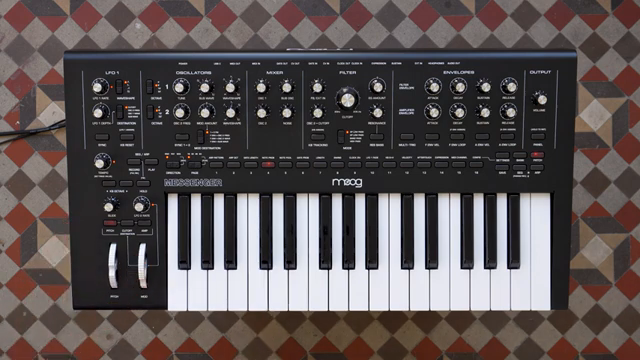
"But as we turn up the rate of LFO2 we stop perceiving vibrato and start perceiving something closer to texture."
© Screenshot/Quote: Moogsynthesizers (YouTube)
Triangle Tones and Timbral Tweaks
"Messenger uses linear through zero frequency modulation."
© Screenshot/Quote: Moogsynthesizers (YouTube)
A key takeaway from the video is the role of oscillator wave shapes in defining FM character. Messenger’s oscillators offer a range of waveforms, but the triangle wave is singled out for its ability to produce smoother, more controlled FM results compared to the harmonic-laden sawtooth.
Interestingly, while oscillator 2’s wave shape can be freely chosen for the carrier, Messenger always uses oscillator 1’s triangle wave for FM duties—regardless of its selected output shape. This design choice ensures a consistent FM response and keeps the timbral palette both wide and manageable.
Envelope Tricks and Multitrig Magic
The filter envelope is pressed into service as a dynamic modulator for FM depth, allowing users to sculpt evolving timbres and classic plucky FM attacks. Assigning the envelope to the mod amount is straightforward: hold the filter envelope assignment button, select the destination, and set the modulation depth with a twist of the knob.
With the filter envelope mapped to FM amount, the Messenger can deliver those archetypal percussive FM sounds, especially when tweaking envelope parameters for snappy attacks. Shifting oscillator octaves and adding the sub oscillator further expands the sonic range, making it easy to dial in everything from deep basses to shimmering leads.
The video also explores Messenger’s multitrig functionality, which ensures the filter envelope retriggers with every note—even in legato passages—unlocking consistent FM articulation. Velocity sensitivity is the final flourish, letting players inject dynamic expression into their FM patches, while manual tweaks of the mod amount control reveal yet more unexpected textures.
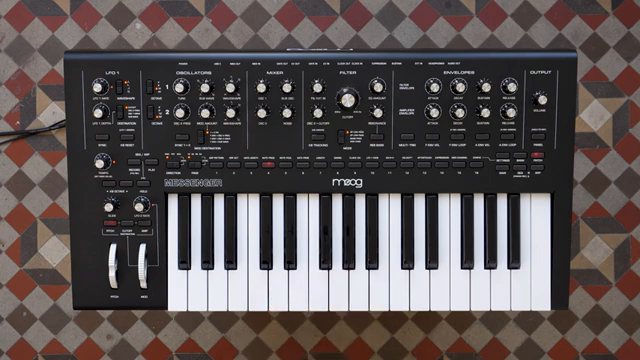
"If we turn on multi-trig then the filter envelope will re-trigger no matter how we're playing."
© Screenshot/Quote: Moogsynthesizers (YouTube)
This article is also available in German. Read it here: https://synthmagazin.at/moog-music-messenger-analoge-fm-synthese-entschluesselt/
Watch on YouTube:
Latest articles
Watch on YouTube:
Visit the channel:
https://www.youtube.com/MoogSynthesizers
https://www.youtube.com/MoogSynthesizers
Links from MoogSynthesizers:
website: https://moogmusic.com
instagram: https://instagram.com/moogsynthesizers
facebook: https://www.facebook.com/moogmusicinc
twitter: https://twitter.com/moogmusicinc
Sponsored links:
If you purchase via these links, we may earn a small commission – at no extra cost to you. The link opens an Amazon keyword search, and results may vary depending on availability.
Moog Messenger
🔗 Check price on Amazon
🔗 Check price on Amazon