Moog Music’s official channel wraps up its ‘Synthesizing with Moog’ series by zooming out from the single note and diving deep into the creation of musical patterns and phrases. This final lesson, hosted by Chris Miller, explores how sequencers, clock signals, and arpeggiators shape the temporal landscape of synthesis. With a nod to both historical and modern approaches, the video demonstrates how these tools transform voltage into evolving melodies, making the synthesizer not just an instrument, but a composer in its own right. Expect a blend of technical insight and musical context, all delivered with Moog’s signature educational flair.

20. November 2025
MILES
Moog Music and the Art of Patterns: Sequencers, Clocks, and the Pulse of Synthesis
From Notes to Patterns: Sequencers Take the Stage
The video opens by recapping the journey through sound synthesis, shifting focus from the fleeting moment of a single note to the broader canvas of musical patterns. Instead of just shaping pitch, amplitude, and timbre within a note, the lesson now explores how these parameters can be orchestrated over time, giving rise to phrases and forms that transcend the limitations of manual playing.
This approach is rooted in the modular tradition, where oscillators, envelopes, and random voltages interact not just within a note, but across sequences of notes. The host frames the sequencer as the bridge between sound design and composition, setting the stage for a deeper look at how voltage control can create evolving musical structures. It’s a classic modular move: using time as a compositional tool, not just a parameter to be modulated.
Clock Signals and the Mechanics of Sequencing
The heart of pattern creation lies in the sequencer, a module that originated as a bank of preset voltages to relieve the tedium of tape splicing. Early Buchla systems featured massive programmers, each stage offering dedicated knobs to send voltages to any parameter in the system. In the demonstration, row A of the sequencer controls oscillator frequency, while row B handles amplitude, with each stage updating these values as the sequence advances.
Central to this process is the clock signal—a low-frequency oscillator or pulse that steps the sequencer through its stages. The video draws a parallel between the oscillator-as-metronome and the traditional musician’s metronome, highlighting how square waves or pulses keep time in the modular environment. Gates and triggers are also explained, with gates determining note duration and triggers marking the onset of events, reinforcing the modular ethos of using simple signals to orchestrate complex behaviour.
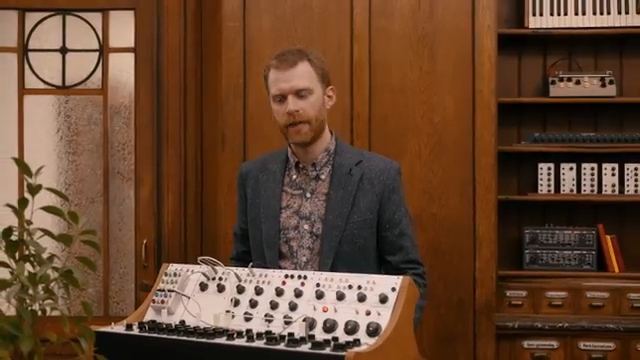
"In effect, this was the first bank of presets, preset voltages that could be sent anywhere in your system to recall a distinct sound."
© Screenshot/Quote: Moogsynthesizers (YouTube)
From Knobs to Memory: The Evolution of Sequencers
"The preset was born, and suddenly you could easily and instantly switch between sounds."
© Screenshot/Quote: Moogsynthesizers (YouTube)
The lesson traces the evolution of sequencers from the analog banks of knobs to the digital brains of modern synths. In the 1970s and 80s, digital storage began to supplement analog circuitry, leading to instruments like the Prophet 5, which introduced the concept of presets. No longer did musicians need to rely solely on physical controls; instead, digital memory could snapshot and recall entire panel states at will.
The Moog Messenger is cited as an example of this hybrid approach, with its ability to store and recall parameter values in banks of presets. The video demonstrates how calling up a preset overrides the physical knob positions, until a knob is moved and the control reverts to the current setting. This shift from tactile voltage control to digital recall marks a significant change in workflow, but the underlying principle—using stored information to shape sound over time—remains firmly rooted in the sequencer tradition.
Patterns in Practice: Phrases, Arpeggiators, and Creative Flow
The practical applications of sequencers and clocked control come to the fore as the video explores how these tools are used to craft musical phrases. By stepping through note information at a set tempo, the sequencer becomes a compositional partner, enabling everything from simple melodies to the cyclical cascades of Tangerine Dream and Kraftwerk. The analogy to player pianos and music boxes underscores the long lineage of automated pattern generation.
The arpeggiator emerges as a modern extension of this idea, allowing even monophonic synths to sketch out chord shapes by cycling through held notes at the clock rate. The Messenger and Minimoog are shown leveraging this feature, transforming simple input into evolving patterns. The arpeggiator, the video suggests, is not just a performance tool but a device for composition, expanding the creative possibilities of the synthesizer beyond what’s possible with manual playing alone.

"The sequencer in particular ushered in countless new genres."
© Screenshot/Quote: Moogsynthesizers (YouTube)
This article is also available in German. Read it here: https://synthmagazin.at/moog-music-und-die-kunst-der-patterns-sequencer-clocks-und-der-puls-der-synthese/
More articles about these products:
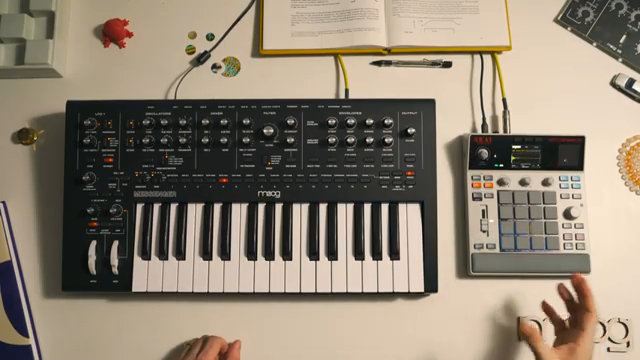 Moog Music: Layering the Messenger with Akai MPC Sample – A Workflow Deep Dive
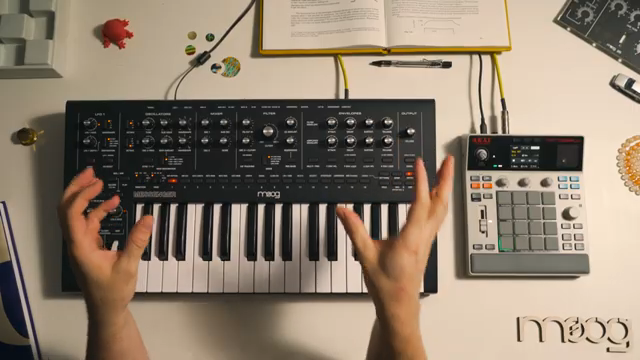 Moog Music: Analog Drum Synthesis Meets Modern Sampling with Messenger & MPC Sample
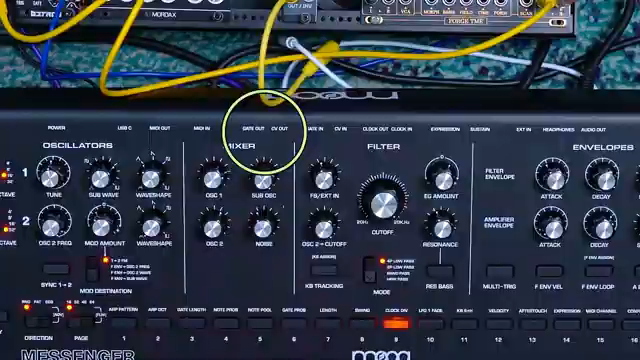 Metamyther’s Sonic Tag-Team: Vhikk X & Moog Messenger Go Full Outback Mayhem
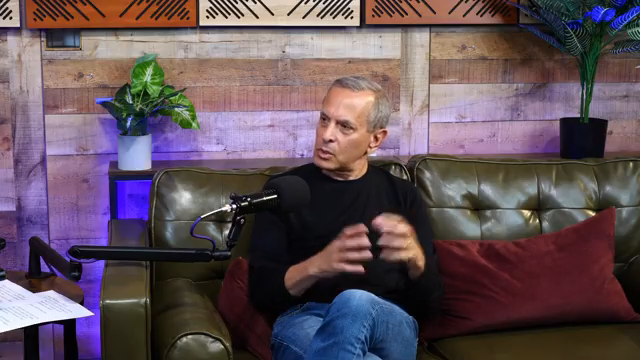 Metamyther Illuminates: Drew Schlesinger and the Sonic Cartography of Preset Design
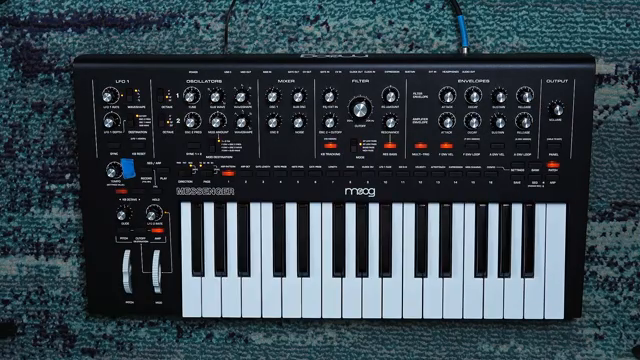 Moog Mayhem: Metamyther Throws Down Sub 37, Messenger, and Mariana
 Sanjay C’s Studio: Flock Audio, Stream Decks, and a Desk That Slaps
 AudioPilz vs. Moog Messenger: Santa’s Synth Sack Just Got Lighter
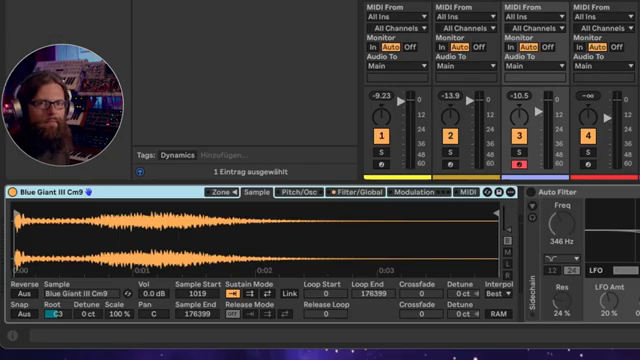 Martin Stürtzer’s Sonic Cartography: Mapping Dub Techno’s Echo System
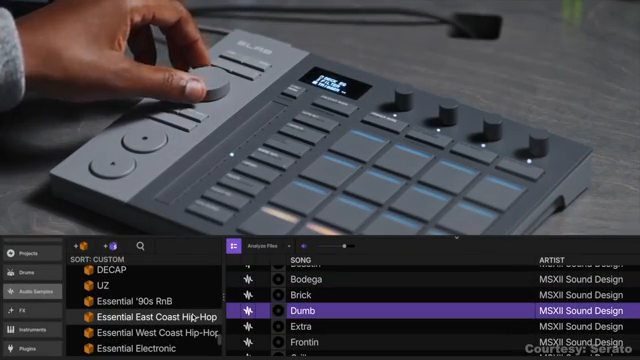 Sanjay C Drops the Absynth Bomb: Synth Legends, Reverb Wizards, and Gear for the Brave
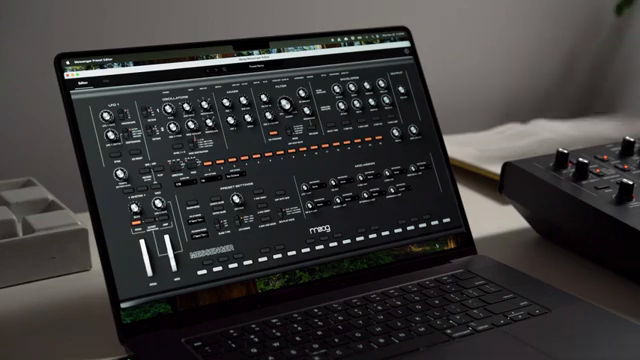 Moog Music Messenger Preset Editor: Digital Control Meets Analog Character
 Scott’s Synth Stuff: A Bodega of 2025’s Sickest Synths
 SanjayC’s Top Gear Picks for 2025
Watch on YouTube:
Latest articles
Watch on YouTube:
Visit the channel:
https://www.youtube.com/MoogSynthesizers
https://www.youtube.com/MoogSynthesizers
Links from MoogSynthesizers:
website: https://moogmusic.com
instagram: https://instagram.com/moogsynthesizers
facebook: https://www.facebook.com/moogmusicinc
twitter: https://twitter.com/moogmusicinc
Sponsored links:
If you purchase via these links, we may earn a small commission – at no extra cost to you. The link opens an Amazon keyword search, and results may vary depending on availability.
Minimoog
🔗 Check price on Amazon
🔗 Check price on Amazon
Moog Messenger
🔗 Check price on Amazon
🔗 Check price on Amazon