Ever wondered if you can actually bash out a proper tune on a modular rig, or is it all just cable spaghetti and existential dread? Monotrail Tech Talk, usually the king of modular tutorials, dives headfirst into the chaos with a new series: making a full track from scratch in just five days. No safety net, no endless tweaking—just raw patching, quick decisions, and a fair bit of self-critique. If you’re sick of modular chin-stroking and want to see someone actually finish a tune (warts and all), this one’s for you. Grab a pint, brace yourself, and let’s see if the modular beast can be tamed.
28. January 2026
JET
Monotrail Tech Talk Throws Down: Five Days, One Modular Track, No Nonsense
Five Days in the Modular Trenches
Monotrail Tech Talk, usually known for his crystal-clear modular tutorials, has decided to swap the whiteboard for the patchbay and see if he can actually crank out a track on his modular setup in just five days. No endless faffing about—just a hard deadline and a camera rolling. He admits he’s missed making music, and this series is his way of forcing himself back into the creative pit, all while letting us watch him sweat it out. There’s a refreshing honesty here; he’s not pretending to be some modular messiah, just a bloke with a rack and a plan (sort of).
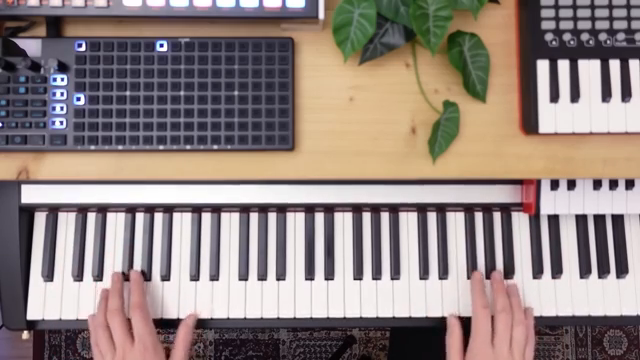
What’s brilliant is that he doesn’t start with a blank slate—because who does, really? Instead, he kicks things off with a rough sketch at the piano (no virtuoso nonsense, just enough to get the juices flowing). The challenge is simple: five days to go from nothing to a finished track and a full video about it. If you’ve ever stared at your modular and wondered if it’s possible to actually finish something, this is the series you didn’t know you needed.
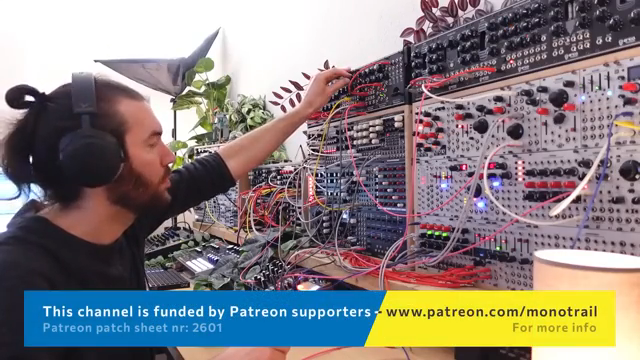
"I gave myself five days to make an entire track from scratch and finish this video about it."
© Screenshot/Quote: Monotrailtechtalk (YouTube)
Basslines, Arpeggios, and Evolving Ideas
"Because there are five chords over four bass notes the combination shifts which could keep things interesting."
© Screenshot/Quote: Monotrailtechtalk (YouTube)
The heart of the track is a four-note bassline and a five-chord arpeggio, with F# acting as the anchor point. It’s not rocket science, but the way the chords and bass notes shift against each other keeps things from getting stale. Monotrail sketches out variations—arpeggios that rise, get stuck, and then tumble back down—giving the track a sense of movement without turning it into a maths lesson.
He’s not precious about perfection, either. Some ideas get chucked, others get twisted until they fit. The result is a core musical idea that’s simple but flexible, ready to be mangled by the modular’s unpredictable nature. It’s a reminder that you don’t need a PhD in harmony to make something interesting—just a few good notes and the guts to mess with them.
Patchwork Mayhem: Oscillators and Modulation Madness
Here’s where things get tasty. Monotrail patches up two fusion oscillators through a stereo filter for the bass, modulated by a slow, rising envelope for that dark, brooding vibe. The lead is a single oscillator through a low-pass filter with a plucky envelope, spiced up with random modulation and a dash of noise on the frequency for extra grit. It’s not about pristine sound design—it’s about character, and this patch has plenty.
As the track evolves, he adds a third voice—a sine oscillator with wave folding, bandpass filtering, and enough random voltage to make the whole thing wobble in stereo. There’s a mixer, macro controls, and envelopes all over the shop. It’s a glorious mess, but it works. This is modular patching at its best: part science, part happy accident, and always a bit unpredictable. If you want the full patch breakdown, you’ll have to watch the video—words can’t do justice to the knob-twiddling chaos.
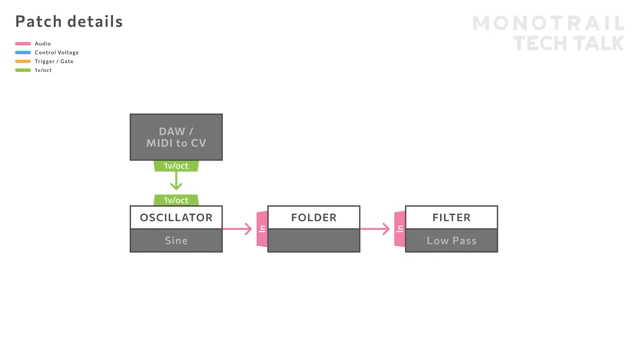
"A bandpass filter used as low pass behind it with an envelope modulating it. A random voltage is modulating the folding as well as a panner added behind the voice and the decay of the envelope for some movement."
© Screenshot/Quote: Monotrailtechtalk (YouTube)
Lessons Learned: Muddy Waters and Mixing Woes
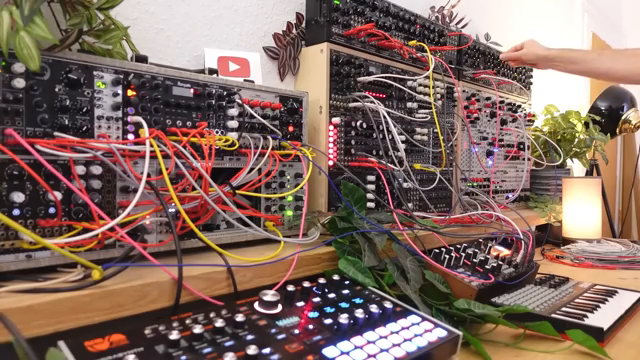
"But the track has a lot of problems. The intro would benefit from more detail in the parts and that made the bass and main lead sound rather quick and they sound nice on their own. But when it comes to melody and sound design, they're taking too much of the same space and make the result very muddy."
© Screenshot/Quote: Monotrailtechtalk (YouTube)
With the clock ticking, Monotrail moves to recording and a quick mix. He’s brutally honest about the results: the intro could use more detail, and the bass and lead sometimes trample all over each other, turning the mix into a muddy puddle. The random envelope on the lead gets a bit out of hand, and the ending lacks focus. It’s not a disaster, but it’s not a polished masterpiece either—and that’s the point.
He doesn’t hide behind fancy mastering tricks or endless tweaking. Instead, he slaps on some EQ, a hard limiter, and calls it a day. The process is more important than perfection, and the whole exercise leaves him more excited about making music than he’s been in ages. It’s a proper punk attitude: get it done, learn something, and move on. If only more modular heads had this much self-awareness.
Don’t Just Read—Go Watch the Chaos Unfold
Let’s be real: reading about modular patching is like describing a mosh pit to your nan. If you want to feel the tension, hear the grit, and see the happy accidents in action, you need to watch the video. Monotrail’s approach is raw, honest, and a bit messy—in the best possible way. So do yourself a favour: grab a cuppa, hit play, and witness the modular mayhem for yourself.
This article is also available in German. Read it here: https://synthmagazin.at/monotrail-tech-talk-im-haertetest-fuenf-tage-ein-modular-track-null-ausreden/
Watch on YouTube:
Latest articles
Watch on YouTube:
Visit the channel:
https://www.youtube.com/MonotrailTechTalk
https://www.youtube.com/MonotrailTechTalk
Links from MonotrailTechTalk:
Patreon: https://patreon.com/monotrail
Instagram: https://instagram.com/monotrail/
Sponsored links:
If you purchase via these links, we may earn a small commission – at no extra cost to you. The link opens an Amazon keyword search, and results may vary depending on availability.
Ableton
🔗 Check price on Amazon
🔗 Check price on Amazon
HydraSynth
🔗 Check price on Amazon
🔗 Check price on Amazon