Monotrail Tech Talk is back with a modular patching hack that’ll make your LFOs sweat. Forget stacking envelopes like a sandwich – this time, it’s all about sending one mod source to multiple targets for maximum movement. If you think patching an LFO to just one place is enough, you’re missing out on a rave bunker’s worth of sonic chaos. Monotrail’s signature deep-dives and animated clarity are in full force, showing how a single modulator can turn a polite patch into a street weapon. Ready to juice up your Eurorack with some proper modulation mayhem? Read on, then go watch the video for the gritty details and musical madness.
25. February 2026
SPARKY
Monotrail Tech Talk: One Mod to Rule Them All – Multi-Destination Modulation Tricks
One Mod, Many Mayhem: The Power Move
Monotrail kicks things off by calling out the rookie mistake: patching one modulator to one destination and calling it a day. That’s like bringing a butter knife to a toaster-fight. Instead, he flips the script and shows how sending a single modulation source to multiple destinations can inject serious depth and movement into your sound.
This isn’t just about making things wiggle for the sake of it. By routing one LFO (or whatever modulator you fancy) to several targets, you get a patch that breathes, morphs, and generally feels alive. The trick is simple, but the results are anything but – think expressive, dynamic voices and character changes that’ll make your next jam less predictable and way more fun.
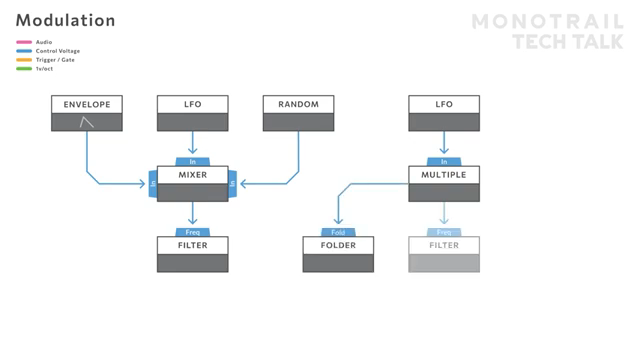
"And that's a powerful trick."
© Screenshot/Quote: Monotrailtechtalk (YouTube)
Direct Modulation: Double Trouble
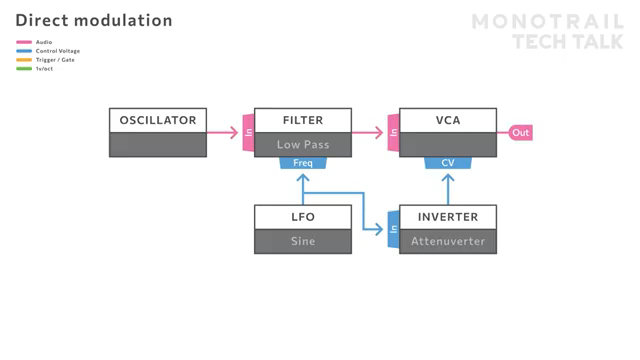
"In this case the LFO can be used to open the filter and close the VCA at the same time."
© Screenshot/Quote: Monotrailtechtalk (YouTube)
First up: direct modulation. Monotrail grabs a classic drone voice and shows how an LFO can hit both the filter and the VCA at the same time. The result? Dynamic audio effects that go way beyond the usual filter sweep. Toss in an attenuverter and you’re suddenly controlling not just the amount but the direction of each modulation, opening the filter while closing the VCA for a sound that’s stable yet full of character.
He doesn’t stop there. The patch gets juicier with dual oscillators, sequenced envelopes, and a single LFO pulling the strings on filter, VCA, pulse width, and resonance. Inversion and careful routing mean the filter closes as the resonance and volume rise, keeping things balanced but never boring. You can swap in envelopes for LFOs, too, if you want time-based movement instead of constant cycling. The possibilities are endless, but the point is clear: direct multi-destination modulation is a fast track to richer, more expressive patches.
Indirect Modulation: The Rube Goldberg of Patching
Now for the clever stuff: indirect modulation. Instead of just slapping an LFO on everything, Monotrail shows how routing a modulator through other modules (like attenuverters or even other LFOs) can create complex, evolving interactions. Suddenly, your patch has layers of character changes and subtle shifts that keep things interesting.
Examples fly thick and fast: LFOs modulating each other’s frequency, envelopes getting their attack and decay times twisted by inverted signals, and mixers bringing it all together. The result is a voice that’s not just moving, but morphing in ways that are hard to predict. If you want to hear how wild this can get, you’ll need to watch the video – describing every twist and turn would take longer than building the patch itself.
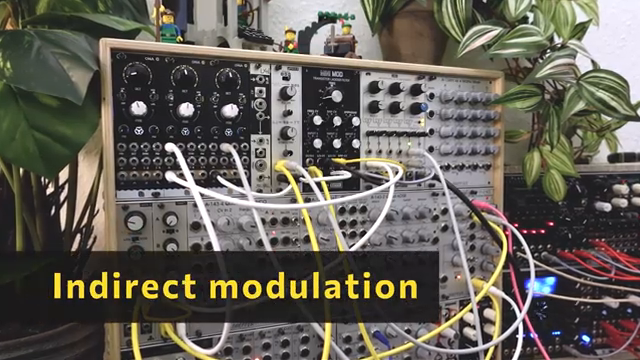
"Indirect modulation can add a lot of interest to a voice."
© Screenshot/Quote: Monotrailtechtalk (YouTube)
Modulation Amount: The Secret Sauce
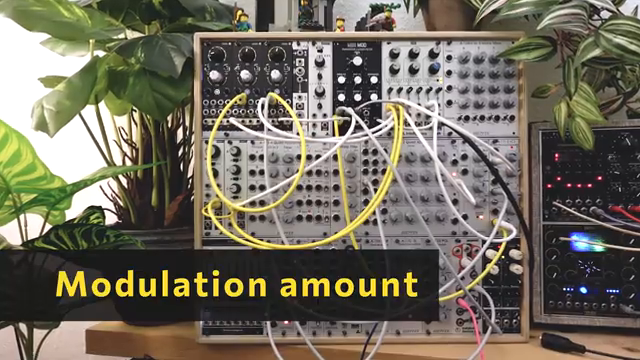
"This is a powerful trick in synthesis in general and even more so when effects are stacked."
© Screenshot/Quote: Monotrailtechtalk (YouTube)
Controlling how much modulation hits each destination is where the real magic happens. Monotrail demonstrates how tweaking the amount – with VCAs, attenuverters, or mixers – can make a patch go from subtle shimmer to full-on chaos. Stack up your effects, and suddenly every knob and cable matters twice as much.
He runs through patches where the modulation amount is itself modulated, leading to evolving, responsive sounds. Whether it’s ducking modulation as a filter opens or layering envelopes for extra pluck, these tricks let you fine-tune your patch’s response and vibe. The best part? You’re not locked into LFOs and envelopes – sequencers, random voltages, even mod wheels can join the party. The combinations are endless, and the video’s demos show just how deep this rabbit hole goes.
Real-World Demos: Patch, Play, Repeat
All theory and no play makes for a dull modular session. Monotrail wraps things up with real-world demos that put these tricks into action. From dual oscillator voices to keyboard-controlled patches, he shows how multi-destination modulation isn’t just a neat idea – it’s a practical tool for making your music more expressive and alive.
The musical results speak for themselves, but you’ll want to check out the video for the full sonic impact. There’s only so much you can get from words – the real juice is in hearing these patches twist, morph, and groove. So watch, patch, and don’t be afraid to experiment. Your modular deserves it.
This article is also available in German. Read it here: https://synthmagazin.at/monotrail-tech-talk-ein-modulator-viele-ziele-multi-destination-modulationstricks/
Watch on YouTube:
Latest articles
Watch on YouTube:
Visit the channel:
https://www.youtube.com/MonotrailTechTalk
https://www.youtube.com/MonotrailTechTalk
Links from MonotrailTechTalk:
Patreon: https://patreon.com/monotrail
Instagram: https://instagram.com/monotrail/
Sponsored links:
If you purchase via these links, we may earn a small commission – at no extra cost to you. The link opens an Amazon keyword search, and results may vary depending on availability.
Eurorack Modular Synthesizer
🔗 Check price on Amazon
🔗 Check price on Amazon