Arturia’s Astrolab 37 is what happens when you stuff the V Collection’s best bits into a compact slab of hardware and hand it to a synth fiend like Robin Vincent of Molten Music Technology. This isn’t your average plastic preset box—it’s a curated arsenal of over 40 modelled synths, all ready to be battered live or in the studio. But don’t get too excited about knob-twiddling: you get four main controls and a world of instant gratification. Is it a gigging weapon or a sound designer’s nightmare? Robin’s honest, hands-on review slices through the hype and gets right to the heart of this curious beast. If you want to know whether the Astrolab 37 slaps or just sits there looking pretty, read on.

26. November 2025
SPARKY
Molten Music Technology’s Astrolab 37: Software Synths Go Streetwise
Arturia Analog Lab, Arturia AstroLab 37, Arturia V Collection
From Plug-In Palace to Hardware Hustle
Arturia’s Astrolab 37 is the synth equivalent of dragging your entire V Collection out of the computer and slamming it into a portable, hands-on box. Robin Vincent wastes no time pointing out that this isn’t just another generalist keyboard—it’s a curated buffet of thousands of sounds, all drawn from Arturia’s legendary software suite. The Astrolab 37 aims to be the ultimate bridge between software and hardware, letting you play modelled classics like the ARP 2500, DX7, CS80, and Jupiter 8 without ever booting up your DAW.
But don’t expect a workstation dinosaur or a synth for endless menu-diving. Robin is clear: this is a player’s device, not a sound designer’s playground. You get a solid, compact build, a keybed that feels familiar (think Keystep with a posh felt touch), and a workflow that’s all about instant access to great sounds. The Astrolab 37 is less about deep tweaking and more about getting lost in a sea of presets—perfect for those who want to play, not program. If you’re after a synth that’s ready to gig straight out of the box, this little slab might just be your new best mate.

"It's both brilliant and slightly baffling."
© Screenshot/Quote: Moltenmusictech (YouTube)
Forty Synths, One Box: The Sonic Arsenal
"You always have to do that when you play a lead. It's the rules."
© Screenshot/Quote: Moltenmusictech (YouTube)
With over 40 modelled synths from the Arturia V Collection under its hood, the Astrolab 37 is a sonic street weapon. Robin dives into the sheer range: pianos, electric pianos, organs, basses, leads, pads, strings, brass, sequenced sounds, and more—all instantly accessible via dedicated buttons. It’s not just quantity, either; the quality is top-notch, thanks to Arturia’s meticulous emulations. Pigments, CS-80, Juno 106, and even some lo-fi oddities are all here, ready to be mashed up or layered.
The bitimbral (or as Arturia awkwardly calls it, “multi”) setup means you can stack or split two sounds for even more versatility. Robin’s not shy about praising the seamless preset switching and the clever background loading—no awkward gaps, just smooth transitions. If you’re a cover band, live player, or just someone who wants every classic sound at your fingertips, this thing delivers in spades. But let’s be real: the only way to truly appreciate the depth and vibe of these sounds is to hear them in action, so don’t skip Robin’s video jams.
Four Knobs and a Dream: The Art of Limitation
Here’s where the Astrolab 37 gets cheeky. For all its versatility, you’re locked down to just four main controls: brightness, timbre, time, and movement. Robin calls out the slightly vague naming—these are macro knobs, often mapped to filter, resonance, envelope, or LFO, but it’s not always obvious what’s actually being tweaked. Preset makers could’ve been clearer, but hey, at least you get some hands-on action.
This limitation is both a blessing and a curse. On one hand, it forces you to focus on performance and makes the Astrolab 37 a preset-driven machine—ideal for gigs, not for endless sound design sessions. On the other, if you’re the type who wants to modulate every parameter under the sun, you’ll hit a wall fast. Robin’s honest: the four-knob setup is probably enough for most live situations, but hardcore tweakers will be left hungry. Still, the effects section is surprisingly flexible, with assignable slots and stompbox-style options that add a bit more spice to your patches.
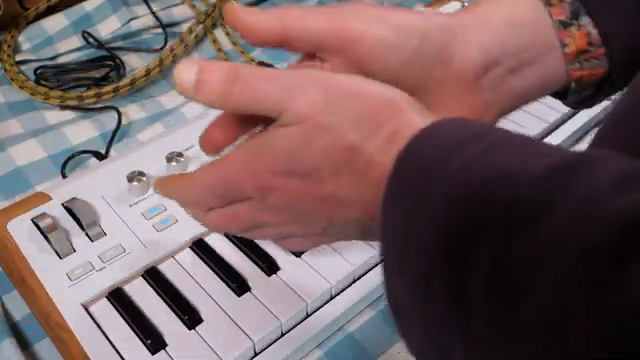
"They can be tied to whatever the heck you like if you get into editing your own presets in Analog Lab."
© Screenshot/Quote: Moltenmusictech (YouTube)
Analog Lab Integration: Power or Puzzle?
Plugging the Astrolab 37 into Analog Lab opens up a new world of possibilities—and a few headaches. Robin shows how the hardware and software can work together, letting you edit presets more deeply (if you actually own the relevant V Collection instruments). But don’t expect a seamless experience: sometimes the connection is laggy, sometimes the controls don’t talk to each other as you’d hope, and the workflow can get muddled if you’re not careful.
The big win is the ability to drag new sounds from Analog Lab into the Astrolab 37, expanding your arsenal beyond what’s preloaded. But serious sound designers will notice the limits: you can only go deep if you own the full software, and even then, editing is best done on the computer before sending patches to the hardware. Robin’s verdict? The integration is useful, but not always intuitive—and if you’re after hands-on, real-time sound sculpting, you’ll find yourself reaching for your mouse more than your knobs.
Live Weapon or Studio Sidekick? The Verdict
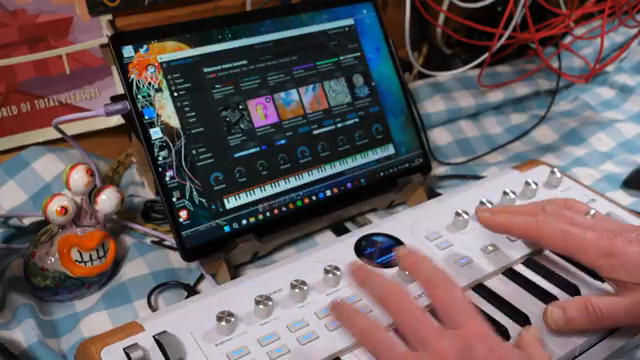
"The thing you have to wrestle with is whether the direct access to presets is what you want or not."
© Screenshot/Quote: Moltenmusictech (YouTube)
For live performers, cover bands, and anyone who needs instant access to classic sounds, the Astrolab 37 is a no-brainer. Robin highlights the playlists, artist presets, and seamless patch changes as killer features for gigging. You can load up your setlist, step through sounds in order, and never worry about menu-diving mid-song. It’s a dream for those who want to focus on playing, not programming.
But let’s not sugar-coat it: if you’re a hardcore sound designer, the Astrolab 37’s limitations will drive you mad. You get two layers, four knobs, and no deep editing on the hardware itself. For studio use, Robin suggests you’ll probably end up using Analog Lab as a plug-in anyway, since it offers the same sounds with more flexibility. Bottom line: the Astrolab 37 is a brilliantly playable, great-sounding synth for performers, but if you want to get your hands dirty with patch cables and parameter maps, look elsewhere. For everyone else, it’s a portable rave bunker in a box.
This article is also available in German. Read it here: https://synthmagazin.at/molten-music-technology-und-das-astrolab-37-software-synths-auf-der-ueberholspur/
Watch on YouTube:
Latest articles
Watch on YouTube:
Visit the channel:
https://www.youtube.com/MoltenMusicTech
https://www.youtube.com/MoltenMusicTech
Links from MoltenMusicTech:
website: https://moltenmusictechnology.com
twitter: https://x.com/MoltenMusicTech
Sponsored links:
If you purchase via these links, we may earn a small commission – at no extra cost to you. The link opens an Amazon keyword search, and results may vary depending on availability.
Arturia Analog Lab
🔗 Check price on Amazon
🔗 Check price on Amazon
Arturia AstroLab 37
🔗 Check price on Amazon
🔗 Check price on Amazon
Arturia V Collection
🔗 Check price on Amazon
🔗 Check price on Amazon