Molten Music Technology’s Robin Vincent is back, and this time he’s got his hands on a device that’s as mad as a bag of frogs: the Korg microAUDIO 722. Forget your average, snooze-worthy audio interface—this one’s packing a vintage analog filter ripped straight from the miniKORG 700s, and it’s here to turn your studio workflow upside down. Robin’s honest, gear-obsessed style cuts through the noise, showing us why this hybrid box is more than just a gimmick. If you think audio interfaces can’t be fun, prepare to have your cynicism filtered out.
16. January 2026
SPARKY
Molten Music Technology Unleashes the Korg microAUDIO 722: Filter Mayhem in Your Interface
Filter in the Frontline: Korg’s Mad Mashup
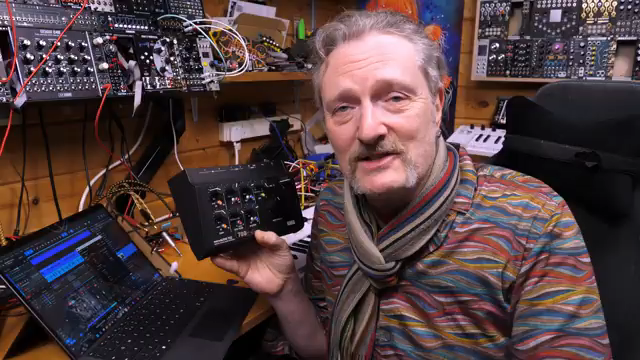
Korg’s microAUDIO 722 is what happens when someone spikes the punch at the audio interface party. Instead of just shuffling audio from A to B, this box drops a genuine analog filter—the same circuit from the miniKORG 700s—right into your signal path. Robin Vincent, never one to pass up a bit of sonic mischief, dives straight in, admitting he’s not sure why Korg did this, but he’s glad they did. The result is a desktop filter arrangement that’s as much about play as it is about practicality.
The concept is delightfully bonkers: an interface that begs you to mangle, sweep, and abuse your audio in real time. It’s not just a nod to vintage gear—it’s a full-on bear hug. Robin’s enthusiasm is infectious, and you can see why: having a filter always at hand turns even the dullest source into a playground for the sonically adventurous. If you’re tired of interfaces that do nothing but behave, this one’s ready to misbehave.
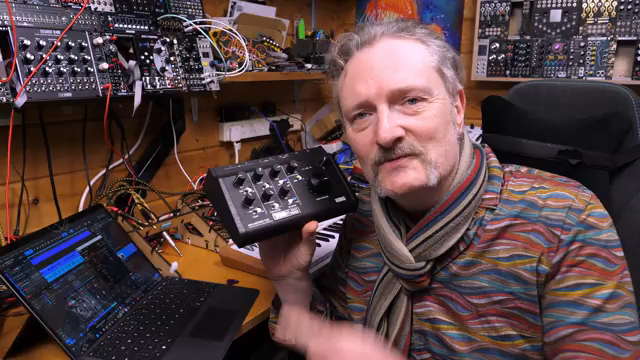
"They've stuck a filter in it. Why you may ask? I have no idea but heck it's fun and it's there."
© Screenshot/Quote: Moltenmusictech (YouTube)
Solid Build, No-Nonsense Layout
"No no no it is it is really quite good."
© Screenshot/Quote: Moltenmusictech (YouTube)
The microAUDIO 722 doesn’t just rely on its filter party trick. It’s got a practical, workmanlike design that feels solid despite its plastic shell—think more Moog Grandmother than cheap toy. Robin points out the satisfying switches and that weighty, rigid feel, helped by a metal base. The control layout is refreshingly direct: big knobs for volume, clear switches for monitoring, and a chunky headphone output. No menu-diving, no faff.
Inputs and outputs are kept to a bare minimum—just stereo in and out, plus MIDI via those ever-annoying TRS sockets (at least there’s an adapter). Robin’s not shy about calling out the laughably short USB-C cable, but otherwise, he’s into the straightforward approach. Everything you need is up front, and the filter controls are right where you want them. If you want a box that’s easy to use and hard to break, this one’s got the right attitude.
Routing Mayhem: Filter as Studio Weapon
Here’s where things get spicy. The analog filter isn’t just a bolt-on effect—it’s woven into the routing, letting you process inputs, USB playback, or even loop tracks through the filter and back into your DAW. Robin demonstrates how you can slap the filter on anything: synth strings, modular VCOs, guitars, or even full mixes. The envelope follower and LFO open up real-time modulation, turning the interface into a performance tool, not just a recording box.
It’s not all smooth sailing—some sources (like guitar) take a bit of wrangling, and the envelope follower can be fiddly. But that’s the price of admission for this kind of hands-on chaos. The real fun is in the experimentation: routing audio out, back in, and mangling it live. Robin’s workflow tips and honest commentary make it clear—this isn’t just a filter slapped on for show. It’s a proper studio trickster, ready to shake up your sessions. For the full flavour, though, you’ll want to see (and hear) the wild patching in the video itself.

"Let me show you how you imprint the filter onto an audio track you've recorded because that I think is is quite an important factor."
© Screenshot/Quote: Moltenmusictech (YouTube)
Filter Ark: Software Playground for Filter Freaks
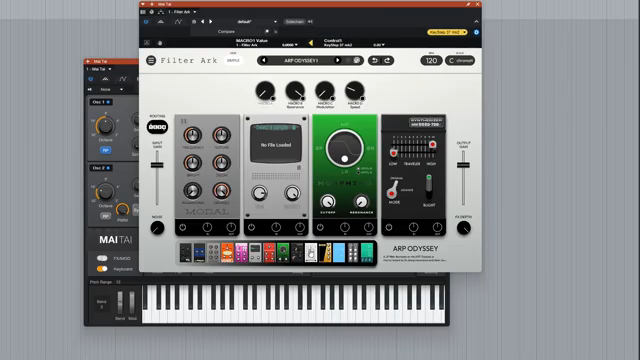
"It's all about filters now."
© Screenshot/Quote: Moltenmusictech (YouTube)
If the hardware filter wasn’t enough, Korg throws in the Filter Ark plugin—a standalone or DAW-based playground packed with authentically modelled filters. Robin dives into its interface, showing off four slots for stacking filters, wild routing options, and a buffet of classic circuits: MS-20, Polysix, Odyssey, and more. It’s a filter nerd’s fever dream, with macros, modulation, and a spectral view for the visually inclined.
The plugin isn’t tied to the microAUDIO 722, but it’s a killer bonus. Robin’s only real gripe is the slightly ropey front panel graphics, but the sound and versatility more than make up for it. You get LFOs, envelope followers, sequencers, and a modulation matrix that’s deep enough to lose a weekend in. If you want to go beyond the hardware filter’s limitations, Filter Ark is your ticket to filter chaos.
Robin makes it clear: this plugin alone could justify the price of admission. But don’t take our word for it—watch the video to see (and hear) just how far you can push your sound with this digital filter arsenal. It’s a rave bunker for your DAW.
Limitations and the Real Audience
For all its filter-fuelled fun, the microAUDIO 722 isn’t going to replace a full-featured interface. Robin’s blunt: if you need more ins and outs, digital connectivity, or pristine preamps, look elsewhere. The stereo-only I/O is a real constraint for multi-source setups, and some controls (like compressor/limiter toggles) are annoyingly buried in software rather than on the front panel.
But if you’re the kind of producer who values hands-on sound mangling over endless connectivity, this box is a minor stroke of genius. The analog filter is dripping with character, and the Filter Ark plugin is a monster. For the right user—someone who wants a studio street weapon, not just a utility box—the microAUDIO 722 is a bonkers, brilliant choice. Just bring your own USB cable.
This article is also available in German. Read it here: https://synthmagazin.at/molten-music-technology-entfesselt-das-korg-microaudio-722-filter-chaos-im-interface/
Watch on YouTube:
Latest articles
Watch on YouTube:
Visit the channel:
https://www.youtube.com/MoltenMusicTech
https://www.youtube.com/MoltenMusicTech
Links from MoltenMusicTech:
website: https://moltenmusictechnology.com
twitter: https://x.com/MoltenMusicTech
Sponsored links:
If you purchase via these links, we may earn a small commission – at no extra cost to you. The link opens an Amazon keyword search, and results may vary depending on availability.
Filter Ark Plugin
🔗 Check price on Amazon
🔗 Check price on Amazon
Korg microAUDIO 722
🔗 Check price on Amazon
🔗 Check price on Amazon
Korg miniKORG 700s
🔗 Check price on Amazon
🔗 Check price on Amazon