Sound is memory, and in this luminous interview, Metamyther guides us through the nebulae of Drew Schlesinger’s creative mind—a master whose fingerprints haunt over 230 instruments. Schlesinger’s journey is not just a chronology, but a story of magnetic resonance: from the spectral glow of early synth heroes to the tactile ghosts of analog circuitry. Here, sound design becomes a cinematic landscape, and every preset a portal. For those who drift in search of new timbres, this conversation is a rare invitation to witness the emotional architecture of synthesis, as told by one of its most evocative architects.
17. March 2026
LUMINA
Metamyther Illuminates: Drew Schlesinger and the Sonic Cartography of Preset Design
Ableton Live, ARP 2600, Casio CZ-1, Casio CZ-101, Cherry Audio GX-80, Erica Synths Syntrx, Eventide DSP 4000, Eventide H3000, Kurzweil K2000, Micro-Moog, Moog Messenger, Moog Modular, Moog Muse, Soundtoys Effect Rack
Origins in Sonic Light
Drew Schlesinger’s journey begins not with a family piano, but with the flicker of televised legends and the magnetic pull of the unknown. As a child, the spectral presence of Ray Manzarek on the Ed Sullivan Show became the first beacon, drawing him toward the organ and, soon after, the world of bands and the hunt for new sounds. The absence of formal training only deepened his hunger, leading him to absorb rock’s raw energy and the mysterious shimmer of early synthesizers.
It was the era when the grammar of electronic sound was still being written, and Drew found himself entranced by the likes of Keith Emerson, Rick Wakeman, and Wendy Carlos. Yet, it was the experimental edge—Morton Subotnick’s otherworldly explorations, Eno’s textural landscapes, and the cosmic drift of Tangerine Dream—that truly ignited his imagination. Each record became a map, each new timbre a doorway, as Drew set out to chase the ghosts of sound that would one day become his own signature.
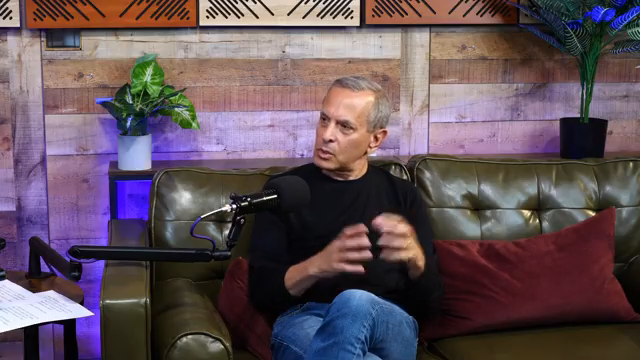
"If I had to pick the guys that really impacted me, it was Eno, Joe Zawinul, Morton Sobotnik."
© Screenshot/Quote: Metamyther (YouTube)
Timbres Beyond the Horizon
Drew’s approach to sound design is a dance with the unknown—a willingness to follow the trail of clangorous, non-tonal, and experimental textures. The Micro-Moog became his first vessel, but it was the influence of artists like Eno and Subotnick that led him to seek out the strange and the beautiful, the sounds that shimmer at the edge of perception. He gravitated toward devices that could conjure both lead lines and spectral atmospheres, always searching for the liminal, the unclassifiable.
His process was never about imitation, but about carving new sonic topographies. Drew’s early experiments were fueled by curiosity and a hunger for the uncharted, whether through the phase distortion of the Casio CZ series or the modular labyrinths of Moog and ARP. For him, every synth was a landscape to be explored, every patch a story waiting to unfold—sometimes harsh and bright, sometimes delicate as fog. The result: a body of work defined by its willingness to venture beyond the familiar, into the magnetic resonance of the unknown.
The Architecture of Synthesis: Evolution and Foundations
The interview unfurls a panorama of synthesizer evolution, from the scarcity of early information to the tactile revelations of hands-on learning. Drew recalls a time before the internet, when Polyphony and Keyboard Magazine were lifelines, and concerts were classrooms. The Boston School of Electronic Music emerges as a pivotal nebula—a place where ARP 2600s and Moog modulars became both playground and teacher, and where the architecture of synthesis was revealed as a living, breathing system.
Here, Drew absorbed the fundamentals: the dance between audio and control voltage paths, the concept of generators and modifiers, and the universal grammar that underpins all synthesis. This foundational knowledge, he insists, is the true compass for navigating any instrument, no matter how complex or novel. The lessons of signal flow, modulation, and the harmonic series became the invisible scaffolding on which his later innovations would rest, allowing him to move fluidly between eras and technologies.
Between Freedom and Expectation: The Art of Creative Process
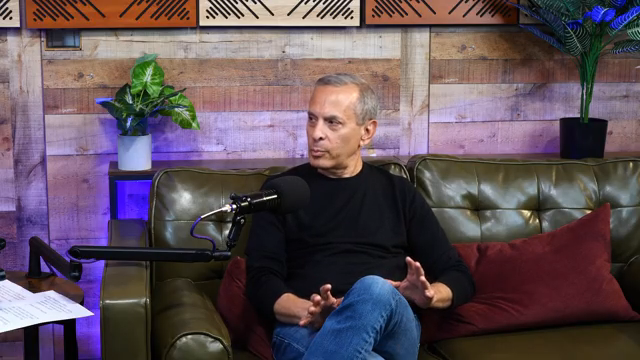
"As a sound designer, you want to make sounds that people are going to use and be inspired by."
© Screenshot/Quote: Metamyther (YouTube)
Drew’s creative process is a balancing act—an interplay between personal exploration and the demands of the marketplace. As his reputation grew, so did the invitations from manufacturers, each seeking sounds that would showcase the soul of their machines. Yet, Drew’s philosophy remained rooted in authenticity: to make each sound musically useful, but also to infuse it with a unique character, a breath of the unexpected.
He describes the push and pull between artistic freedom and client briefs, the need to deliver both bread-and-butter patches and those that shimmer with creative risk. Sometimes the brief called for emulation, but Drew’s heart was always in the creation of new sonic ghosts—textures that would inspire others, not just imitate the past. The process, he reveals, is often iterative and collaborative, shaped by evolving hardware and shifting software, but always guided by an intuitive sense of what a sound could become. For Drew, sound design is less a technical exercise and more a visual art—a way of sculpting resonance and emotion from the raw clay of electricity.
Echoes and Aspirations: Sound as Emotional Landscape
As the conversation drifts toward its close, Drew reflects on the arc of his own music and the future he envisions. Years spent in the corporate world did not silence the creative urge; instead, they left a reservoir of unreleased music, collaborations with artists like David Torn, and ambient works recorded in real time with beloved CZ-1s. These pieces, unearthed and remastered decades later, reveal a commitment to capturing emotion in the moment—no overdubs, just the raw bloom of sound as it happens.
Drew’s aspirations now circle back to the essence: to find his own voice anew, to create music that is both intimate and expansive, a landscape for listeners to inhabit. He invites us to see sound not as a commodity, but as a living, emotional architecture—one shaped by memory, accident, and intention. The interview closes with a gentle urging: to save often, to experiment without fear, and to trust that the most resonant sounds are those that carry the imprint of honest exploration.
For those who wish to truly feel the gravity of Drew’s story—the nebula drones, the tactile ghosts, the shimmer of possibility—Metamyther’s video is a portal. Some details, some textures, can only be experienced in the presence of the sound itself, where words dissolve and the emotional landscape unfolds in real time.
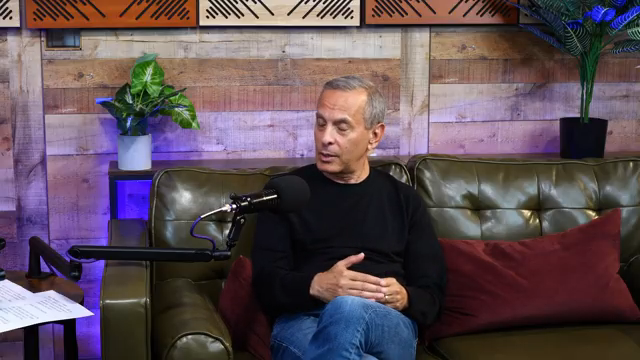
"When you think you've found a sound that you like, save it. And then if you keep going, save it again, and then save it again, because you never know when you're going to go too far."
© Screenshot/Quote: Metamyther (YouTube)
This article is also available in German. Read it here: https://synthmagazin.at/metamyther-beleuchtet-drew-schlesinger-und-die-klangkartografie-des-preset-designs/
Watch on YouTube:
Watch on YouTube:
Visit the channel:
https://www.youtube.com/Metamyther
https://www.youtube.com/Metamyther
Links from Metamyther:
Main Site: https://metamyther.com
Instagram: https://instagram.com/metamyther
Bandcamp: https://metamyther.bandcamp.com
Facebook: https://facebook.com/tkexit
Sponsored links:
If you purchase via these links, we may earn a small commission – at no extra cost to you. The link opens an Amazon keyword search, and results may vary depending on availability.
Ableton Live
🔗 Check price on Amazon
🔗 Check price on Amazon
ARP 2600
🔗 Check price on Amazon
🔗 Check price on Amazon
Casio CZ-1
🔗 Check price on Amazon
🔗 Check price on Amazon
Casio CZ-101
🔗 Check price on Amazon
🔗 Check price on Amazon
Cherry Audio GX-80
🔗 Check price on Amazon
🔗 Check price on Amazon
Erica Synths Syntrx
🔗 Check price on Amazon
🔗 Check price on Amazon
Eventide DSP 4000
🔗 Check price on Amazon
🔗 Check price on Amazon
Eventide H3000
🔗 Check price on Amazon
🔗 Check price on Amazon
Kurzweil K2000
🔗 Check price on Amazon
🔗 Check price on Amazon
Micro-Moog
🔗 Check price on Amazon
🔗 Check price on Amazon
Moog Messenger
🔗 Check price on Amazon
🔗 Check price on Amazon
Moog Modular
🔗 Check price on Amazon
🔗 Check price on Amazon
Moog Muse
🔗 Check price on Amazon
🔗 Check price on Amazon
Soundtoys Effect Rack
🔗 Check price on Amazon
🔗 Check price on Amazon