Make Noise returns with an exploratory dive into the world of alternative tunings, using the MultiWAVE module as a launchpad for sonic adventures beyond the standard 12-note scale. In this video, the team demonstrates how MultiWAVE, in tandem with GTE, can unlock a universe of equal division of the octave (EDO) tunings, including the mathematically intriguing 31 EDO and the legendary Wendy Carlos scales. Expect a patch-driven journey through gestural controls, MIDI MPE integration, and the historical context of tuning systems—all delivered in Make Noise’s signature avant-garde style. If you’ve ever wondered what happens when you squeeze more notes into an octave or break free from the tyranny of perfect octaves, this is your ticket to the outer limits of modular pitch.
MultiWAVE: A Gateway to Unconventional Tunings
The video opens with Make Noise positioning the MultiWAVE as a tool for venturing into the lesser-trodden paths of modular tuning. Rather than sticking to the familiar 12-note equal temperament, the focus shifts to exploring equal divisions of the octave (EDO) and how these can be accessed and manipulated through patching. The integration with GTE (Gestural Time Extractor) is highlighted as a key part of this process, allowing for dynamic and performative control over tuning systems.
By combining MultiWAVE’s flexibility with GTE’s gestural approach, the patcher is encouraged to break away from standard scales and experiment with new harmonic territories. This approach is emblematic of Make Noise’s ethos: modules are not just about function, but about opening up new creative workflows and sonic possibilities. The video sets the stage for a journey through alternative tunings, with the promise of both mathematical intrigue and musical discovery.
Gestural Pitch Manipulation: The Space Control in Action
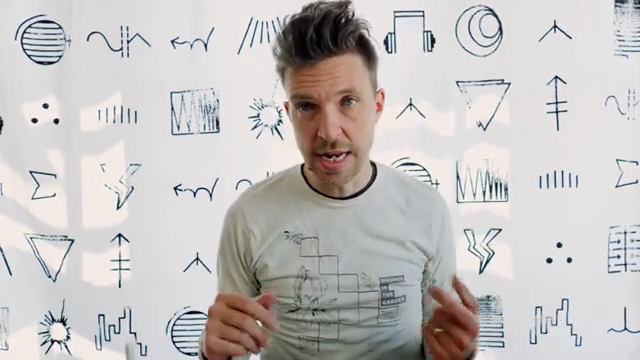
Central to the demonstration is the use of gestural controls to manipulate pitch, particularly through the space control on GTE. The presenter employs a metaphor comparing GTE’s channels to stripes on a shirt, where the span control selects stripes and the space control alters their size. This analogy helps demystify how gestural input can translate into nuanced pitch changes within a modular patch.
As the space control is adjusted, the number of steps or notes that fit within a given voltage range changes, effectively squeezing more or fewer notes into the same physical gesture. This hands-on approach to tuning measurement and output is a departure from menu-diving or static quantization, instead favouring a tactile, patch-based workflow. The result is a system where pitch divisions become performable parameters, inviting experimentation and real-time modulation.

"Let's consider the channels of GTE as something like the stripes on a shirt."
© Screenshot/Quote: Maken0Isemusic (YouTube)
MIDI MPE and the 31 EDO Frontier
The video moves on to demonstrate how MultiWAVE can be interfaced with MIDI in MPE mode to access alternative tuning files, such as 31 EDO. This method sidesteps the limitations of attenuating sequencer outputs, which can be imprecise and reduce the playable range. By loading a 31 EDO tuning file, the MultiWAVE is able to map smaller intervals across the keyboard, offering a distinctly different melodic landscape.
The presenter notes that while 31 EDO allows for more harmonically accurate thirds and fifths compared to 12 EDO, it can also be configured so that only 12 of the 31 pitches are mapped to the keyboard. This hybrid approach maintains familiar melodic and harmonic motions, but with a subtle shift towards purer intervals. The workflow exemplifies how MultiWAVE’s MIDI capabilities open up a playground for exploring microtonal and alternative tuning systems without sacrificing playability.
A Brief History of Tunings and the Maths Behind the Octave
"Changing the number of divisions in the octave keeps the octave itself the same size, while changing the number of possible notes that can be played within it."
© Screenshot/Quote: Maken0Isemusic (YouTube)
The presenter takes a detour into the historical and mathematical context of alternate tunings, referencing figures like John Coltrane and Wendy Carlos. Coltrane’s diagram, as discussed, represents an attempt to logically overlap all possible note collections, while other musicians have chosen to divide the octave into numbers other than 12 for different harmonic results.
The rationale for higher divisions, such as 31 EDO, is explained as a way to get closer to pure intervals like thirds and fifths, while maintaining symmetry across keys. The video also recommends Kyle Gann’s ‘The Arithmetic of Listening’ for those interested in the deeper theory behind these systems, noting that changing the number of divisions alters the available notes within the same octave span.
Wendy Carlos’s alpha, beta, and gamma scales are introduced as examples of dividing intervals other than the octave—specifically, the perfect fifth. These scales result in non-octave repeating structures and unfamiliar intervallic relationships, further expanding the palette of possible sounds. The gamma scale, for instance, divides the fifth into 20 parts, creating dense clusters and new harmonic textures. This context enriches the viewer’s understanding of why and how MultiWAVE can be used for such explorations.
Patching Techniques: New Patterns from Unfamiliar Scales
The latter part of the video is devoted to patching techniques that leverage these alternative tunings for creative expression. By routing MultiWAVE’s channel index output to GTE’s span input, and using GTE to trigger other modules like Polymaths in binary counter mode, the system generates complex, unpredictable patterns. The presenter experiments with distributing notes in macro ways, modulating parameters like fall time and output strength based on channel activity.
This patch-based workflow embraces the unpredictability and unfamiliarity of non-standard tunings. The performer relinquishes some control over which notes appear on which channels, instead focusing on feeling out the system and discovering new ways of playing. The video encourages viewers to explore their own favourite tunings on MultiWAVE, suggesting that the real magic lies in the interplay between patching, performance, and the mathematical structure of sound.
Watch on YouTube:
Latest articles
Watch on YouTube:
https://www.youtube.com/MAKEN0ISEMUSIC
Links from MAKEN0ISEMUSIC:
Sponsored links:
If you purchase via these links, we may earn a small commission – at no extra cost to you. The link opens an Amazon keyword search, and results may vary depending on availability.
🔗 Check price on Amazon