Make Noise, never one to shy away from unconventional design, brings us the XPO—a stereo oscillator with not one, but two 1v/oct inputs. In this official video, the Make Noise team dives into the practical and creative implications of this rare feature, exploring everything from exponential FM to hands-on transposition and evolving sequences. For those who like their oscillators to do more than just drone in tune, this walkthrough offers a patch-oriented look at how the XPO’s dual pitch inputs can unlock new layers of control and musicality. If you’re curious about stacking sequences, dynamic key shifts, or just want to see what happens when you patch voltages where they “shouldn’t” go, this is essential viewing.
17. April 2025
MILES
Make Noise XPO: Dual 1v/Oct Inputs—A Patchable Playground
Two Paths to Pitch: The XPO’s Dual 1v/Oct Inputs
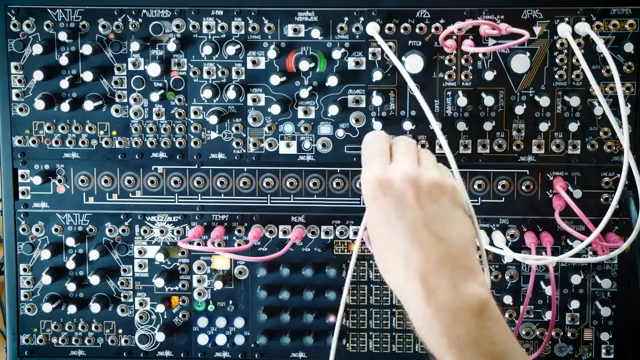
The Make Noise XPO stands out in the oscillator landscape by offering not just one, but two 1v/oct inputs—a feature that’s far from standard fare in Eurorack. Right from the start, the video frames this as a deliberate design choice, inviting patchers to think beyond the usual single-pitch control. The second input isn’t simply a copy; it’s an exponential frequency modulation input, summed with the primary pitch CV, and crucially, it’s unattenuated, meaning it responds directly to whatever voltage you throw at it.
This opens up a world of possibilities for creative patching. The presenter suggests thinking of the second input as a transpose control, but it’s equally at home as a source for audio-rate FM or stepped voltages. By patching in an attenuated audio signal, you can achieve classic exponential FM effects, with the depth scaling as the input amplitude increases. The XPO’s architecture encourages experimentation, making it a playground for those who want to push their oscillator’s pitch control into new territory.
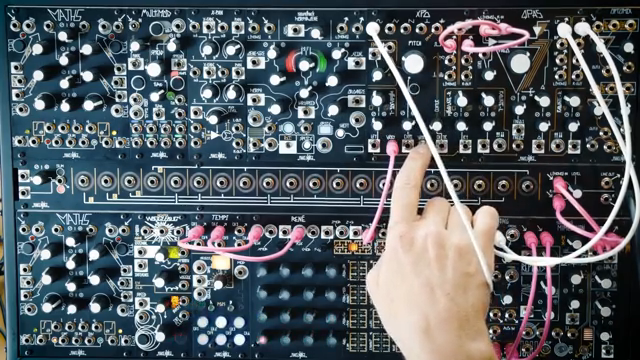
"This of course is a relatively unusual feature on a single oscillator, so what's it for?"
© Screenshot/Quote: Maken0Isemusic (YouTube)
Exponential FM and Dynamic Pitch: A Dual Approach
"An important difference between exponential and linear FM is that with XPO we can hold a value by sending a DC voltage such as random stepped CV or a sequencer."
© Screenshot/Quote: Maken0Isemusic (YouTube)
With both 1v/oct inputs available, the XPO lets users blend traditional pitch sequencing with exponential FM in a single module. The video demonstrates how sending a DC voltage—like a random stepped CV or a sequencer—into the second input allows the oscillator to hold a static pitch, thanks to the DC-coupled design. This is a key distinction from linear FM, where static voltages become transients rather than steady shifts.
The ability to combine sequenced pitch with FM opens up dynamic sound manipulation. For instance, you can sequence the main pitch while using the second input for transposition or additional modulation. The result is a more expressive oscillator, capable of both precise melodic control and wild, evolving timbres, depending on how you patch it. The XPO’s dual-input design encourages users to explore the grey area between stable pitch and controlled chaos.
Manual Transposition and Tonal Variation in Practice
The video moves from theory to practice by showcasing how the dual 1v/oct inputs can be used for hands-on transposition and tonal variety. Using a Make Noise René sequencer, the presenter patches the X channel for the main sequence and employs the Y CV for transposition duties. By manually selecting transpositions on the René’s latch page, it’s possible to inject key changes and interval jumps exactly when desired, adding a performative element to sequencing.
This approach isn’t just about shifting pitch for the sake of it. The video points out that the rate and interval of transposition can dramatically affect the musical outcome. Fast, arbitrary transpositions can dissolve a sense of tonality, while restricting transpositions to octaves or simple intervals keeps the sequence grounded. The quantize page on René is used to limit transpositions to specific notes, demonstrating how even rapid octave shifts can maintain musical coherence, while adding more notes introduces a sense of key changes and harmonic movement.
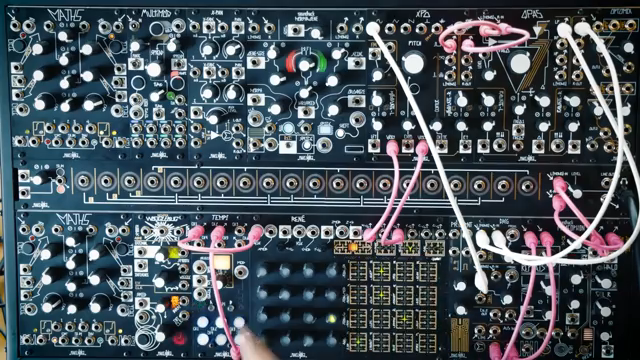
"One thing you might notice is if you sequence your transposing voltage at a similar rate to the main sequence, the interval adding may start to become arbitrary and any sense of tonality may start to be lost."
© Screenshot/Quote: Maken0Isemusic (YouTube)
Sequence Stitching and Creative Interactions
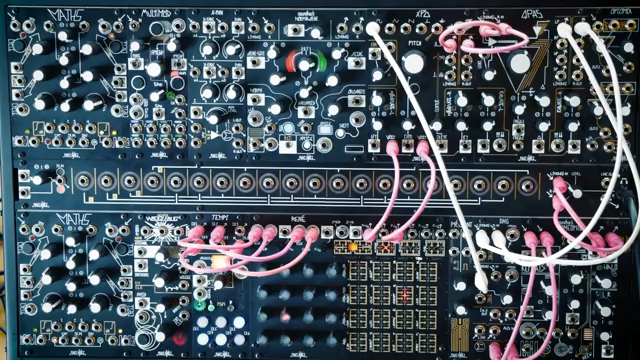
"But here's the thing, whichever note a given sequence stops on will still be added as a transposition note for the other sequence."
© Screenshot/Quote: Maken0Isemusic (YouTube)
Pushing further, the video explores how alternating and stacking sequences through the XPO’s dual inputs can yield intricate, evolving patterns. By clocking two René channels at the same rate but out of phase, each sequence takes turns running while the other is paused. The clever twist is that the last note of the stopped sequence acts as a transposition source for the active one, effectively stitching two melodic lines into a single, longer sequence with built-in variation.
Varying the lengths of the two sequences introduces continual shifts in transposition, creating a self-modulating patch that evolves over time. The result is a set of melodic variations that remain related to the original material but never quite repeat in the same way. This technique highlights the creative potential of the XPO’s dual 1v/oct inputs—not just for FM or transposition, but as a means to interweave multiple musical ideas into a richer, more textured performance.
This article is also available in German. Read it here: https://synthmagazin.at/make-noise-xpo-zwei-1v-oct-eingaenge-ein-patch-paradies/
Watch on YouTube:
Latest articles
Watch on YouTube:
Visit the channel:
https://www.youtube.com/MAKEN0ISEMUSIC
https://www.youtube.com/MAKEN0ISEMUSIC
Links from MAKEN0ISEMUSIC:
website: https://www.makenoisemusic.com
instagram: https://www.instagram.com/makenoisemusic
twitter: https://twitter.com/makenoisemusic
facebook: https://www.facebook.com/makenoiseco
Sponsored links:
If you purchase via these links, we may earn a small commission – at no extra cost to you. The link opens an Amazon keyword search, and results may vary depending on availability.
Make Noise Rene
🔗 Check price on Amazon
🔗 Check price on Amazon
Make Noise XPO
🔗 Check price on Amazon
🔗 Check price on Amazon