Make Noise, the Asheville-based modular mavericks, are back with a firmware update for their Spectraphon resynthesizer, and it’s not just a bug fix. This release introduces linear array modulation to the Spectral Array Oscillation (SAO) mode, giving patchers a new way to traverse and manipulate spectral arrays. Alongside this, Make Noise has added a ramp LFO shape for sub-CV outputs and extended the minimum clock rate for LFOs, opening up slower, evolving modulations. The focus control also gets a new lease on life, now shaping spectral compression and expansion for even more nuanced timbral sculpting. True to Make Noise’s exploratory ethos, this update invites users to rethink how they interact with spectral data in their racks.
7. November 2024
MILES
Make Noise Spectraphon Firmware Update: Linear Arrays and Spectral Adventures
Linear Array Modulation: Scrubbing the Spectra
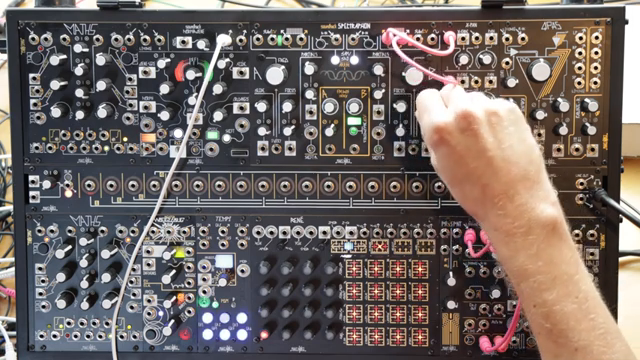
The headline feature in this Spectraphon firmware update is the introduction of linear array modulation for the Spectral Array Oscillation (SAO) mode. Previously, the Slide and Focus controls allowed users to morph between different spectra in a two-dimensional fashion, effectively offering a coarse and fine selection across the spectral array. With the new linear mode, Slide now sweeps through all spectra in the array in their original order, making it possible to “scrub” from beginning to end and back again, much like scanning through a tape reel of spectral snapshots.
This approach fundamentally changes how users interact with stored arrays. The video demonstrates the process: creating an array in SAM mode by patching in audio, then switching to SAO to traverse the array using the Slide control. Modulating Slide with an upward ramp wave produces a forward playback effect, while a falling saw shape gives the impression of reversing through the array. It’s a more direct and performative way to animate spectral content, opening up new possibilities for dynamic timbral movement in patches.
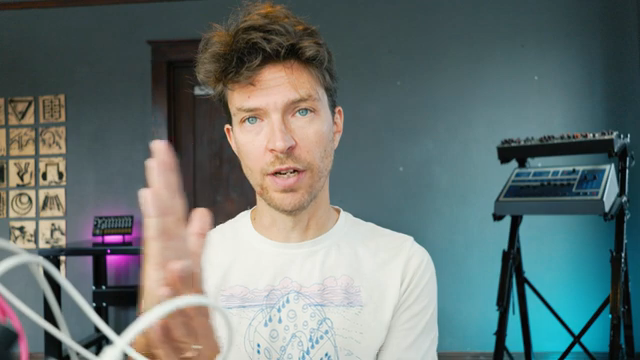
"Now we can use slide to select from all the spectra in the array arranged in their original order."
© Screenshot/Quote: Maken0Isemusic (YouTube)
Ramp LFOs on Sub-CV: Slope for Days
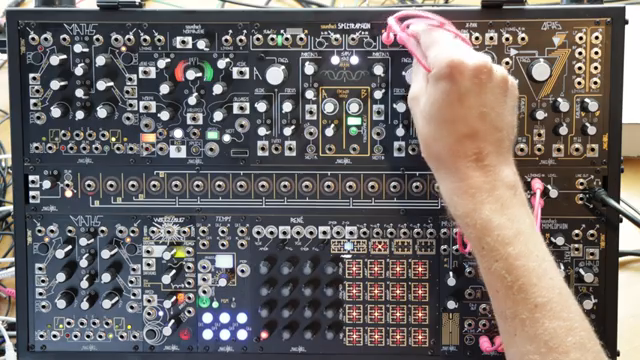
"It is, in fact, a ramp wave, very useful for linear array modulation."
© Screenshot/Quote: Maken0Isemusic (YouTube)
Another notable addition is the ramp wave LFO shape now available on the sub-CV outputs. By holding Shift and pressing CV, users can cycle through the available LFO shapes, with the ramp being particularly well-suited for linear array modulation. This shape provides a steady, predictable slope—ideal for driving the Slide parameter and achieving those smooth, tape-like spectral scans. The update makes it easier to pair internal modulation sources with the new linear Slide behaviour, streamlining patching for evolving textures or rhythmic spectral shifts.
Slower LFOs: Eight-Second Cycles for Deep Modulation
The firmware also extends the minimum clock rate for the CV output LFOs, allowing cycles as slow as one every eight seconds. This is accessible via tap tempo on the Shift button or by feeding a clock into the relevant input. For those who revel in glacial modulations and evolving soundscapes, this opens up a new realm of slow-motion spectral movement. Whether you’re after subtle undulations or want to stretch a modulation over an entire phrase, the Spectraphon now accommodates these slower, more deliberate gestures.
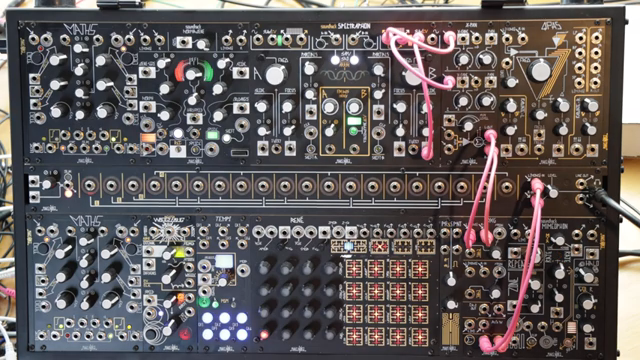
"It's now possible to create sub-CV LFO outputs that go as slow as one cycle per eight seconds."
© Screenshot/Quote: Maken0Isemusic (YouTube)
Focus Control: Compression and Expansion in the Spectral Domain
Perhaps the most intriguing change is the redefinition of the Focus control in linear modulation mode. Instead of acting as a spectrum selector, Focus now governs spectral compression and expansion—a new timbral axis for the oscillator. Turning Focus up compresses the loudest and quietest harmonics, bringing them closer together in level. This tends to brighten the sound and even out perceived loudness, which can be especially useful when using SAO as a more traditional VCO.
Conversely, turning Focus down expands the spectrum, making the loudest harmonics even louder and the quietest even quieter. This darkens the sound and accentuates differences as Slide is modulated, making transients stand out more. The video demonstrates these effects in context, showing how the Focus parameter can dramatically reshape the tonal character of the Spectraphon’s output, adding another layer of expressive control for adventurous patchers.
This article is also available in German. Read it here: https://synthmagazin.at/make-noise-spectraphon-firmware-update-lineare-arrays-und-spektrale-abenteuer/
Watch on YouTube:
Latest articles
Watch on YouTube:
Visit the channel:
https://www.youtube.com/MAKEN0ISEMUSIC
https://www.youtube.com/MAKEN0ISEMUSIC
Links from MAKEN0ISEMUSIC:
website: https://www.makenoisemusic.com
instagram: https://www.instagram.com/makenoisemusic
twitter: https://twitter.com/makenoisemusic
facebook: https://www.facebook.com/makenoiseco
Sponsored links:
If you purchase via these links, we may earn a small commission – at no extra cost to you. The link opens an Amazon keyword search, and results may vary depending on availability.
Spectraphon
🔗 Check price on Amazon
🔗 Check price on Amazon