Make Noise returns to its roots of sonic experimentation with the Bruxa, a module that channels the heart of the Strega into Eurorack form. In this video, James Cigler demonstrates how Bruxa is far more than a lo-fi delay: it’s a shapeshifting sound manipulator that thrives on creative patching and modulation. From smeared arpeggios to howling feedback and rhythmic destabilisation, Bruxa’s filtering and feedback architecture invite the adventurous to sculpt textures that mutate and evolve. If you’re after a module that rewards hands-on exploration and patching outside the box, this Make Noise walkthrough is a must-watch.

24. October 2024
MILES
Make Noise Bruxa: A Patchable Pathogen in the Modular Ecosystem
Make Noise Bruxa, Make Noise Mimeophon, Make Noise QPAS, Make Noise Rene, Make Noise Spectraphon, Make Noise Strega, Make Noise Tempi
Bruxa: The Strega’s Heart Unleashed
The Make Noise Bruxa arrives as a modular incarnation of the Strega’s core, promising a new context for its unique sonic DNA. James Cigler opens the video by reflecting on how the essence of Strega, previously locked into a semi-modular box, now finds itself adapting to the wider world of Eurorack. This transplantation isn’t just about moving circuits—it’s about seeing how the module interacts with a new ecosystem of signals and patch possibilities.
Rather than pigeonholing Bruxa as a mere lo-fi delay, the presentation quickly pivots to its broader creative potential. The module’s behaviour is described as pathogen-like, integrating itself into a patch and evolving the sound in unexpected ways. This sets the stage for a series of patches that highlight Bruxa’s ability to morph and adapt, depending on what you feed it and how you modulate its parameters.
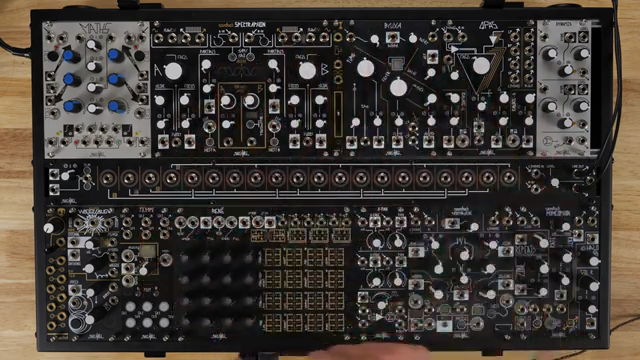
"It operates the exact same, but under the influence of totally different signals it shapeshifts and adapts to its new surroundings."
© Screenshot/Quote: Maken0Isemusic (YouTube)
Patch Alchemy: Analog Granular and The Howler
"What Brusa is going to do is just smear it all over the place, kind of like a harmonic reverb."
© Screenshot/Quote: Maken0Isemusic (YouTube)
Cigler’s first patch, dubbed “analog granular,” isn’t granular in the digital sense, but it borrows the approach of smearing and stretching arpeggiated patterns into lush, harmonic pads. By carefully balancing the timing of arpeggios with Bruxa’s delay, and introducing clock divisions from modules like Tempi, the result is a pad that feels both washed out and harmonically rich. The blend control allows the original sequence to peek through, while post-processing with a filter such as QPAS accentuates the evolving character.
The next demonstration, “the howler,” explores Bruxa’s self-oscillation. By pushing the decay to its limits and injecting small inputs, the module begins to howl—its feedback loop shaped by a filter that isn’t simply tacked onto the end, but woven into the feedback path itself. This design means that tweaking filter, time, and absorb parameters yields complex, noise-laden textures. Feeding this chaos through QPAS further sculpts the sound, and Cigler notes that some of his favourite modular snare sounds have emerged from using Bruxa as a noise source.
Throughout these patches, modulation is key: time divisions, gating, and feedback manipulation all contribute to Bruxa’s evolving timbres. The video makes it clear that this is a module for those who enjoy hands-on exploration and aren’t afraid to destabilise their patches in pursuit of new textures.
Filtering, Feedback, and Sonic Mutation
Bruxa’s true power lies in its ability to transform even the simplest input into something unrecognisable. In the “beat destabilizer” patch, Cigler sends percussive patterns—or even just short impulses—into Bruxa, setting delay times to medium and using clock divisions for modulation. The result is a rhythmic output that’s far more complex than the sum of its parts, especially when self-patching CV outputs back into the module to introduce further instability.
The module’s filter and absorb controls play a central role in shaping these textures, acting as more than just tone shapers—they’re active participants in the feedback and mutation process. The output is often routed through additional filtering (again, QPAS is a favourite), and sometimes paired with tempo-synced delays like Mimeophon to push the rhythmic complexity even further.
Layering, Stereo Tricks, and Contextual Flexibility
Cigler’s “Double Witch” patch demonstrates Bruxa’s adaptability in more elaborate setups. Here, Bruxa is paired with Strega, running in stereo, with cross-patched CV outputs and audio-rate modulation of both filters. The result is a stereo field that’s anything but static—modulations and manual tweaks create a swirling, immersive texture that highlights Bruxa’s suitability for layered and spatial sound design.
The video underscores that Bruxa isn’t limited to a single role. Whether used for pads, noise-driven percussion, or as part of a stereo processing chain, its behaviour is shaped by context and patching choices. This flexibility makes it a compelling tool for those who want their modules to adapt and evolve within a larger system.
Spicing Up Bruxa: Modulation and Output Tricks
The final segment offers practical tips for getting the most out of Bruxa. Sub-octave or audio-rate modulation of the filter is highlighted as a way to emphasise lo-fi character and add growl to the fundamental, depending on the input signal. Modulating the time parameter with short pulses or envelopes introduces further instability, lending a wobbly, unpredictable edge to the sound.
Cigler also recommends creative use of Bruxa’s CV outputs—not just for post-processing, but for altering the input timbre itself. The interplay between absorb, filter, and external modulation is presented as a recipe for discovering new resonant peaks and textures, especially when working with sequenced material. The message is clear: Bruxa rewards those who experiment with its outputs as much as its inputs.
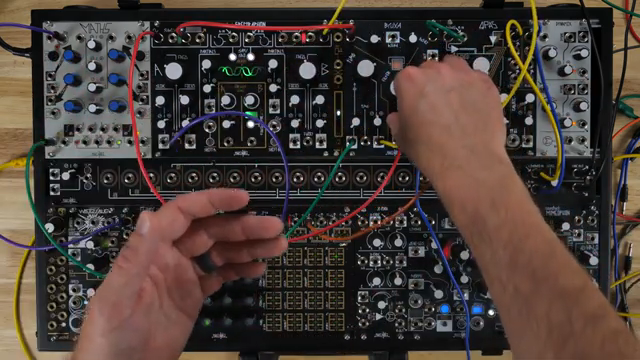
"You could end up with this sort of growly emphasis on the fundamental."
© Screenshot/Quote: Maken0Isemusic (YouTube)
This article is also available in German. Read it here: https://synthmagazin.at/make-noise-bruxa-ein-patchbares-pathogen-im-modular-oekosystem/
Watch on YouTube:
Latest articles
Watch on YouTube:
Visit the channel:
https://www.youtube.com/MAKEN0ISEMUSIC
https://www.youtube.com/MAKEN0ISEMUSIC
Links from MAKEN0ISEMUSIC:
website: https://www.makenoisemusic.com
instagram: https://www.instagram.com/makenoisemusic
twitter: https://twitter.com/makenoisemusic
facebook: https://www.facebook.com/makenoiseco
Sponsored links:
If you purchase via these links, we may earn a small commission – at no extra cost to you. The link opens an Amazon keyword search, and results may vary depending on availability.
Make Noise Bruxa
🔗 Check price on Amazon
🔗 Check price on Amazon
Make Noise Mimeophon
🔗 Check price on Amazon
🔗 Check price on Amazon
Make Noise QPAS
🔗 Check price on Amazon
🔗 Check price on Amazon
Make Noise Rene
🔗 Check price on Amazon
🔗 Check price on Amazon
Make Noise Spectraphon
🔗 Check price on Amazon
🔗 Check price on Amazon
Make Noise Strega
🔗 Check price on Amazon
🔗 Check price on Amazon
Make Noise Tempi
🔗 Check price on Amazon
🔗 Check price on Amazon