Liam Killen’s spent three months locked in a groove bunker with the Roland TR-1000, and he’s finally surfacing to spill the beans. This isn’t your average drum machine review – it’s a deep dive into the twisted, tweakable world of the TR-1000, with all the knob-fiddling, macro-mangling, and workflow head-scratching you’d expect from a box this complex. Liam’s signature clarity meets a machine that’s anything but straightforward, and the result is a tour for producers who want more than just another 4/4 banger. If you think you know drum machines, think again – this one’s got more directions than a rave map at 4am.
30. January 2026
SPARKY
Liam Killen’s TR-1000: Three Months in the Drum Matrix
Into the Drum Labyrinth
Liam Killen kicks things off by admitting the TR-1000 is a proper mind-bender – not the sort of box you master in a weekend. He’s blunt: don’t expect to crank out a chart-topper straight out of the packaging. Instead, he advocates diving in with presets and templates, using them as a launchpad to unravel what’s really happening under the hood.
This approach is all about learning by doing, not by reading the manual cover to cover. Liam’s honesty about the learning curve is refreshing – he’s not pretending this is a plug-and-play groovebox. If you want to unlock the TR-1000’s creative potential, you’ll need to get your hands dirty, dissecting patterns and figuring out what those endless rows of knobs actually control. It’s a machine that rewards curiosity and punishes laziness – exactly how we like it.

"Although it's a bit of a mind bender at first just because it's such a complex unit, kinda to be expected."
© Screenshot/Quote: Liamkillen (YouTube)
Workflow Wars: TR-1000 vs The World
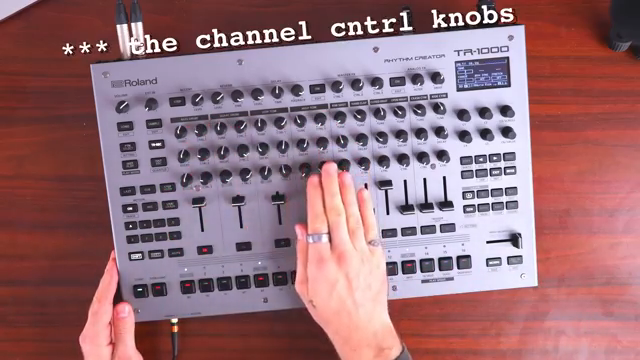
"With the TR-1000, especially with these knobs here, there's a lot that you could do with them."
© Screenshot/Quote: Liamkillen (YouTube)
Liam draws battle lines between the TR-1000, Elektron boxes, and even Ableton. Where Elektron gear is rigid – the template is the instrument, end of story – the TR-1000 is a playground for knob-twiddlers. The interface, with its faders and colour scheme, even gives off a whiff of Ableton Live, but don’t be fooled: this is hardware through and through.
He zeroes in on the first four channels, showing how each has three control knobs plus a mix knob, letting you blend layers and twist parameters in real time. The result? A workflow that’s both flexible and a bit bonkers. If you’re used to Elektron’s locked-down approach, the TR-1000 feels like someone left the back door open and let the chaos in. It’s not for the faint-hearted, but if you want to sculpt your own drum universe, this is your playground.
Knobs, Macros, and Templates: The Power Trio
The real magic of the TR-1000 lies in its control knobs and macro assignments. Liam breaks down how each channel can have up to twelve parameter assignments, thanks to four effects per knob. This means you can dial in your sound with surgical precision or go full mad scientist, stacking effects and warping layers at will. The ability to build and customise your own templates is a game-changer for anyone who’s bored of factory presets. It’s a deep system, and Liam makes it clear: if you want to stand out, this is where you start carving your signature.

"It's functioning as a macro for effects is a lot."
© Screenshot/Quote: Liamkillen (YouTube)
Morph Mayhem: Shapeshifting the Groove

"It's very clear if I have everything playing here, that everything is being sucked in so that this snare drum here gets a little bit more play."
© Screenshot/Quote: Liamkillen (YouTube)
Liam dives into the sequencer’s alternate realities – different play directions, step lengths, and the all-important rotate function. You can bounce, randomise, or permutate your patterns until your head spins. Swapping out sounds and kits is powerful, but beware: you can lose your precious parameter tweaks if you’re not careful. The TR-1000 rewards those who pay attention to detail.
Then comes the morph section – the real party trick. Morphing lets you suck sounds in, push them out, and spotlight whatever element you want to hype. It’s not just a gimmick; it’s a tool for building tension and drama in a track. Liam’s explorations show how morph can transform a pattern from subtle to savage, and if you want to hear the full effect, you’ll need to watch the video. Trust me, text can’t do the sonic chaos justice.
Pattern Transcription: Burial in a Box
To wrap things up, Liam plugs his ongoing hardware transcription series, where he decodes legendary drum patterns for use on any sequencer. This time, it’s Burial’s “Shutta” getting the TR-1000 treatment. It’s a practical demonstration of how the machine isn’t just for noodling – it’s a serious tool for recreating and reimagining classic rhythms. If you’re stuck in a creative rut, these transcriptions might be the kick you need. And if you want the nitty-gritty details, you’ll have to check out Liam’s Patreon or, better yet, watch him break it down in the video.
This article is also available in German. Read it here: https://synthmagazin.at/liam-killen-und-die-tr-1000-drei-monate-im-drum-labyrinth/
Watch on YouTube:
Latest articles
Watch on YouTube:
Visit the channel:
https://www.youtube.com/LiamKillen
https://www.youtube.com/LiamKillen
Links from LiamKillen:
Orbit Music: https://orbitmusic.store
Patreon: https://patreon.com/liamkillenmusic
Instagram: https://instagram.com/liamkillenmusic/
Sponsored links:
If you purchase via these links, we may earn a small commission – at no extra cost to you. The link opens an Amazon keyword search, and results may vary depending on availability.
Roland TR-1000
🔗 Check price on Amazon
🔗 Check price on Amazon