In the hands of Josh Lucan, Tangerine Dream’s “Exit” becomes more than a song—it’s a labyrinth of spectral layers and magnetic pulses. Lucan, a Los Angeles media composer with a taste for the cinematic, guides us through the fog and circuitry, revealing the hidden machinery behind this iconic 1981 track. Each instrument and texture is a character in a story of analog ghosts and digital dawns. Prepare to drift through nebula drones and fractured light as we unravel the architecture of a synth classic, one shimmering layer at a time.

20. December 2025
LUMINA
Josh Lucan Peels Back the Sonic Veil: Dissecting Tangerine Dream’s “Exit”
Nebula Foundations: Unraveling the Layers of "Exit"
Josh Lucan invites us to step inside the swirling architecture of Tangerine Dream’s “Exit,” where every layer is a corridor, every sound a shifting shadow. The journey begins with a careful listening—an immersion into the track’s intense, cinematic presence. Lucan’s reconstruction isn’t just technical; it’s a guided meditation through the song’s elemental forces, beckoning us to hear not just notes, but the emotional gravity binding them together.
We’re introduced to the foundational bass line, a dark river flowing in B-flat Phrygian, its intervals bending the light into something menacing and mysterious. Each ascent and descent is a brushstroke of tension, painting the undercurrent that supports the entire piece. Lucan’s approach is less about dissecting and more about revealing—like peeling mist from a hidden landscape, letting us glimpse the bones beneath the fog.
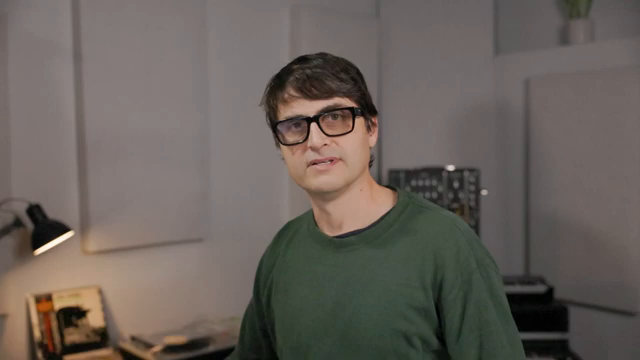
"That's giving us that really kind of evil, you know, dark sound, that Phrygian menacing sound."
© Screenshot/Quote: Joshlucan3512 (YouTube)
Machines of Memory: Synclavier, Emulator II, and the Art of Sonic Alchemy
"I think this is the most famous factory preset, the phased gong that we hear at the beginning of Beat It."
© Screenshot/Quote: Joshlucan3512 (YouTube)
In this segment, Lucan reveals the spectral machinery animating “Exit.” The Synclavier emerges first, its phased gong preset shimmering like a metallic apparition—a sound immortalized in pop history, now woven into Tangerine Dream’s tapestry. Lucan’s use of software recreations pays homage to the original’s grandeur, conjuring the magnetic resonance of an era when hardware was both instrument and oracle.
Layered atop are the Oberheim SEM’s sweeping filters and the unmistakable timbres of the Emulator II, each sample a ghostly fingerprint of vintage innovation. The Emulator’s mallet cymbals and reversed textures crash and recede like waves against a digital shore, while mechanical blasts and percussive clicks punctuate the soundscape. Through Lucan’s lens, these machines are not relics—they are storytellers, each voice a fragment of the era’s restless experimentation.
Interwoven Currents: Melodic and Bass Dialogues
Lucan’s analysis dives into the interplay between melody and bass, where lines entwine like strands of DNA. The main bass motif, with its lowered second and flattened sixth, is a gravitational anchor, pulling us into the track’s shadowy orbit. Above it, arpeggiated synths flicker—subtle, almost hidden—adding rhythmic pulse and spectral color.
The melodic lead, introduced later, is a beacon cutting through the haze. Lucan demonstrates how these elements converse, sometimes merging, sometimes diverging, always maintaining a delicate tension. It’s a dance of contrasts: the mechanical with the organic, the insistent with the ephemeral. This harmonic complexity is the heart of “Exit’s” enduring allure, a reminder that true depth lies in the spaces between the notes.
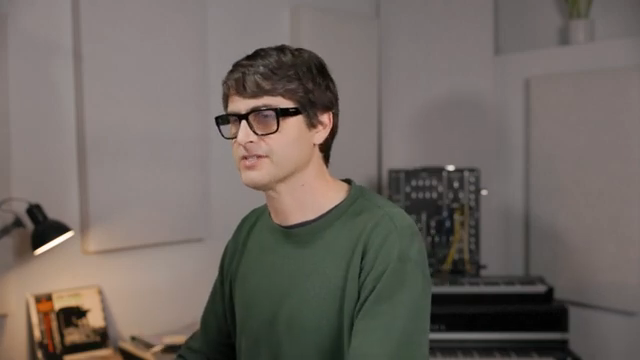
"It just gives a little extra flavor, a little extra texture to this dun-dun-dun-dun, which is really the main line that's creating that kind of driving pulse."
© Screenshot/Quote: Joshlucan3512 (YouTube)
Textural Ghosts: The Atmosphere Between the Notes
Beyond melody and rhythm, Lucan urges us to listen for the ghosts in the machine—the subtle textures that haunt the edges of perception. The arpeggios, tucked just beneath the surface, add a shimmer that’s more felt than heard. Emulator II samples—crashes, reverses, and blasts—become sonic apparitions, their presence fleeting yet essential.
It’s in these details that “Exit” breathes: the click of a hidden drum, the sweep of a filter, the resonance of a reversed cymbal. Lucan’s reconstruction is an invitation to attune our ears to these microcosms, to appreciate how atmosphere is conjured not just by what is played, but by what lingers in the spaces between. For those who crave the full immersion, the video’s sound examples are a must—no written word can capture the spectral bloom of these textures as they unfold in real time.
Echoes for the Future: Inspiration for the Modern Alchemist
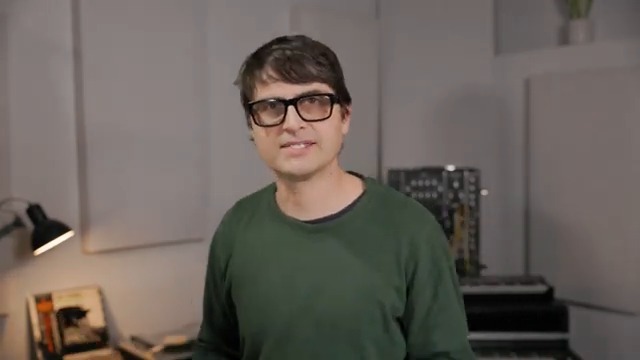
"Come up with my own thing that has some of that same vintage character from back in the day."
© Screenshot/Quote: Joshlucan3512 (YouTube)
Lucan’s deconstruction is more than a historical exercise—it’s a toolkit for sonic explorers. By stripping away the original patterns and reimagining the instruments, he demonstrates how vintage timbres can seed new creations. The video stands as a beacon for those who wish to channel the magnetic ghosts of the past into their own nebulae of sound, inviting us all to experiment, reinterpret, and drift inside the machinery of memory.
This article is also available in German. Read it here: https://synthmagazin.at/josh-lucan-hebt-den-schleier-tangerine-dreams-exit-in-schichten-zerlegt/
Watch on YouTube:
Latest articles
Watch on YouTube:
Visit the channel:
https://www.youtube.com/joshlucan3512
https://www.youtube.com/joshlucan3512
Sponsored links:
If you purchase via these links, we may earn a small commission – at no extra cost to you. The link opens an Amazon keyword search, and results may vary depending on availability.
Emulator II
🔗 Check price on Amazon
🔗 Check price on Amazon
Moog
🔗 Check price on Amazon
🔗 Check price on Amazon
Oberheim SEM
🔗 Check price on Amazon
🔗 Check price on Amazon
Synclavier
🔗 Check price on Amazon
🔗 Check price on Amazon