Randomness is all well and good, but in modular, chaos without a clock is just anarchy. In this latest Joranalogue Audio Design video, Simon dives into the art of generating random gates that remain obediently tethered to your rhythmic grid. Using a backbone of classic Joranalogue modules—Orbit 3, Compare 2, and Step 8—he demonstrates how to wrangle chaos and probability into musically useful, quantized triggers. If you’ve ever wondered how to inject controlled unpredictability into your patches, this is a deep, patch-oriented exploration that’s sure to inspire both seasoned Eurorack heads and curious tinkerers alike.

20. April 2024
MILES
Joranalogue Audio Design: Patch Experiments with On-Grid Random Gates
Quantized Chaos: The Quest for On-Grid Random Gates
The video opens with Simon laying out the perennial modular challenge: how to create random gates that are not just wild, but also quantized to a rhythmic grid. In the Joranalogue ecosystem, this means harnessing modules that can inject probability into your clocking, rather than just spewing out untethered chaos. The distinction is subtle but crucial—random gates that follow the tempo of your sequence, rather than firing off at will, are far more musically useful for evolving patterns and generative patches.
Simon sets up a backbone patch using a non-Joranalogue sequencer to drive Generate 3 and Filter 8, with additional percussion for rhythmic context. The goal is to move beyond simply pinging a filter or triggering an envelope every beat. Instead, he’s after that sweet spot where randomness is present, but always in step with the clock—a technique that opens up a world of dynamic, yet controlled, modular rhythms.
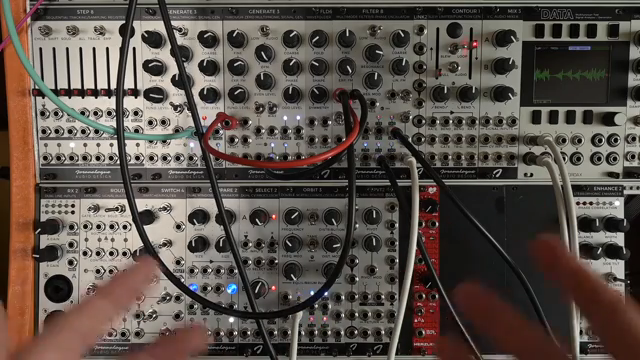
"I want something a little bit random, but I just don't want it to be this random. I want it to be quantized to the rhythm."
© Screenshot/Quote: Joranalogue (YouTube)
Orbit 3 and Compare 2: Logic Meets Chaos
"This will only trigger or fire a gate when both the clock is high and this random source is high."
© Screenshot/Quote: Joranalogue (YouTube)
The first major technique involves the Orbit 3 chaos module and the Compare 2 logic module. Simon demonstrates how Orbit 3’s chaotic outputs can be wrangled into rhythmic submission by combining them with a steady clock signal using Compare 2’s AND logic output. By patching a chaotic voltage from Orbit 3 into one input of Compare 2 and a clock (in this case, a triangle core from Generate 3) into the other, he creates a gate that only fires when both signals are high. This effectively gates the chaos to the rhythm, producing random but quantized triggers.
He notes that the frequency of the chaotic source is key: if it’s too high relative to the clock, you might get multiple gates per clock pulse, which can be either a feature or a bug, depending on your intentions. The oscilloscope reveals that the resulting gates are not consecutive, but remain tightly grid-locked. This approach is a classic example of using Boolean logic to sculpt randomness into something musically coherent.
Simon also points out that, in a pinch, a VCA can be pressed into service as a crude AND gate, opening up this technique to those without a dedicated logic module. The flexibility here is emblematic of the Joranalogue ethos—precise, but always open to clever patching.
Step 8: Sampling Chaos with Rhythmic Discipline
Next, Simon turns his attention to the Step 8 module, exploring how it can be used to sample random or chaotic voltages in time with a clock. By patching a clock signal into Step 8’s step input and feeding it a source of randomness—be it Orbit 3, white noise, or even a VCO—he demonstrates how each clock pulse samples a new value. The result is a sequence of random voltages that are always tied to the grid, thanks to the timing of the sampling action.
He experiments with different Step 8 modes, such as shift and cycle, and shows how the analog outputs can be used as gates or triggers. Resetting Step 8 at strategic points can further shape the density and distribution of gates, allowing for anything from sparse, unpredictable rhythms to more regular, grid-bound patterns. The key takeaway is that Step 8 offers a versatile platform for controlled randomness, especially when combined with other modules in the system.
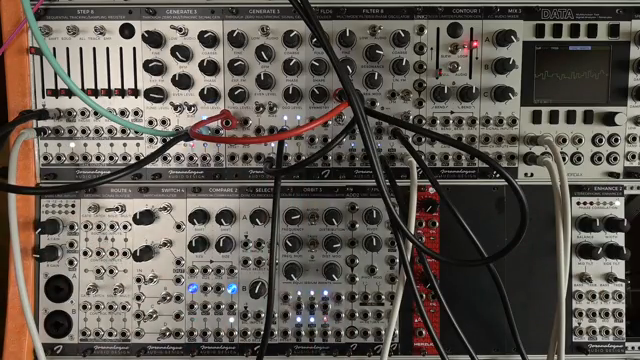
"The values coming in are not tied to the clock, so they appear to be random. But this will always be somewhat tied to the grid, simply because the timing of the sampling action of step 8 is decided by the clock source going into the step input."
© Screenshot/Quote: Joranalogue (YouTube)
Alternative Routes: VCAs, Feedback, and Hybrid Approaches
Simon doesn’t stop at the obvious solutions. He highlights how a VCA can function as a makeshift AND gate, broadening the palette for those without Compare 2. By merging gate and analog outputs, or mixing different sources before logic processing, it’s possible to fine-tune the balance between order and chaos in your gate streams. This approach encourages a bit of lateral thinking—sometimes the best logic is improvised from what’s already in your rack.
He also hints at the possibilities of patching feedback or integrating additional modules, like looping envelopes or other modulation sources, to further diversify the randomness. The message is clear: the tools are there, but the real magic comes from creative patching and a willingness to experiment beyond the manual.
Patch, Listen, Repeat: Embracing Modular Flexibility
In closing, the video underscores the flexibility and open-endedness of modular patching. Whether you’re using dedicated logic modules, clever VCA tricks, or the sampling power of Step 8, there’s no single right way to generate on-grid random gates. Each approach offers its own flavour of unpredictability, and the best results often come from combining techniques and tweaking parameters in real time.
Simon encourages viewers to take these ideas as a starting point, not a prescription. The beauty of modular is in the endless permutations—so patch, listen, and repeat until you find the sweet spot between chaos and control. As always with Joranalogue, the focus is on elegant solutions that invite further exploration.
This article is also available in German. Read it here: https://synthmagazin.at/joranalogue-audio-design-patch-experimente-mit-quantisierten-zufallsgates/
More articles about these products:
 Joranalogue Flow 3: A Patch-Driven Dive into Auto-Dynamic Filtering
 Frap Tools: Sam Sakr on Modular Textures, Noise, and the Art of Patchwork
 Joranalogue Audio Design: Random Steps the Lab-Grade Way with STEP 8 & SELECT 2
 Joranalogue Audio Design: Sequencing Alchemy with STEP 8 and ROUTE 4
 Joranalogue Audio Design’s STEP 8: One Sequencer, Many Voices – A Patch Walkthrough
Watch on YouTube:
Latest articles
Watch on YouTube:
Visit the channel:
https://www.youtube.com/joranalogue
https://www.youtube.com/joranalogue
Links from joranalogue:
website: https://joranalogue.com
facebook: https://facebook.com/joranalogue
twitter: https://twitter.com/joranalogue
soundcloud: https://soundcloud.com/joranalogue
modulargrid: https://www.modulargrid.net/e/vendors/view/578
instagram: https://instagram.com/joranalogue
Sponsored links:
If you purchase via these links, we may earn a small commission – at no extra cost to you. The link opens an Amazon keyword search, and results may vary depending on availability.
COMPARE 2
🔗 Check price on Amazon
🔗 Check price on Amazon
Filter 8
🔗 Check price on Amazon
🔗 Check price on Amazon
Generate 3
🔗 Check price on Amazon
🔗 Check price on Amazon
Orbit 3
🔗 Check price on Amazon
🔗 Check price on Amazon
STEP 8
🔗 Check price on Amazon
🔗 Check price on Amazon