Pittsburgh Modular Synthesizers, known for their explorative and hands-on approach to analog modular design, take us into the heart of their Voltage Lab 2 Touch Controller in this detailed walkthrough. The video, fronted by Starsky Carr, delves into the controller’s multi-output architecture, CV integration, and performance-focused controls, all aimed at modular users who thrive on tactile interaction and flexible patching. Expect a deep dive into the device’s workflows, modulation tricks, and creative routing—presented in the brand’s signature, no-nonsense style. For those curious about how this controller can slot into both classic and experimental setups, this is an essential watch.
17. July 2024
MILES
Hands-On with the Pittsburgh Modular Voltage Lab 2 Touch Controller: A Patchable Playground
A New Touch in the Lab
The Voltage Lab 2 Touch Controller is introduced as a central tool for modular synthesis, immediately establishing its role as more than just a sequencer or keyboard. Pittsburgh Modular’s approach is, as always, hands-on and exploratory, focusing on how the device can be used to manipulate sound in real time. The presentation style is direct and practical, with an emphasis on what the controller does in a patch rather than abstract features.
From the outset, the video makes clear that this isn’t a one-trick pony. The controller is shown as a versatile interface for both note and modulation duties, with a layout that encourages experimentation. The focus is on how the touch surface and its outputs can be harnessed for a range of musical and sonic manipulations, making it a flexible addition to any modular rig.
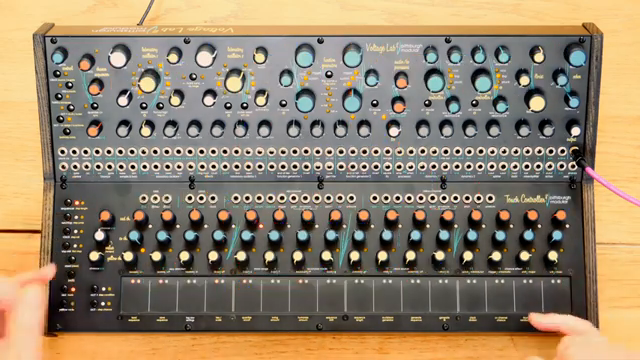
"It's a 16-stage touch controller."
© Screenshot/Quote: Pittsburghmodular (YouTube)
Outputs, CV, and Functional Controls: The Modular Swiss Army Knife
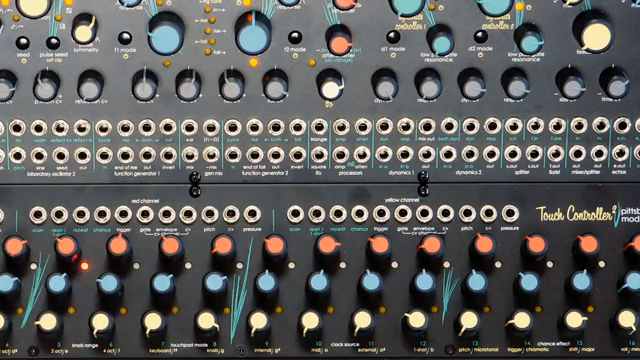
"So from each of those outputs, we've got six different output points."
© Screenshot/Quote: Pittsburghmodular (YouTube)
A key part of the Voltage Lab 2 Touch Controller’s appeal lies in its array of outputs and CV integration. The video highlights multiple output types—red, blue, and grey—each serving different patching purposes. The blue output, for instance, is dedicated to CV, allowing for direct modulation of other modules. Meanwhile, the red and grey outputs provide further routing options, giving users the ability to send signals to different destinations within their system.
The walkthrough demonstrates how each output can be used independently or in combination, opening up a host of creative possibilities. There’s a clear emphasis on flexibility: users can assign outputs for pitch, gate, or modulation duties, and the controller’s architecture supports complex routing schemes. This modular mindset is at the core of Pittsburgh’s design philosophy, and it’s evident in the way the controller invites users to experiment with signal flow.
Workflow in Action: Building Complex Patches
The video moves into practical territory, showing how the controller fits into different modular workflows. Multiple outputs are patched to various modules, demonstrating how the device can drive both melodic and percussive elements. The presenter highlights the ability to use the controller for sequencing, modulation, and even triggering events, all from the same touch interface.
By patching outputs to different destinations, users can create layered and evolving soundscapes. The controller’s design encourages a patch-and-play mentality, where experimentation leads to unexpected results. This section underscores the importance of hands-on interaction—touching, tweaking, and rerouting on the fly—to achieve complex, dynamic patches that go beyond static patterns.
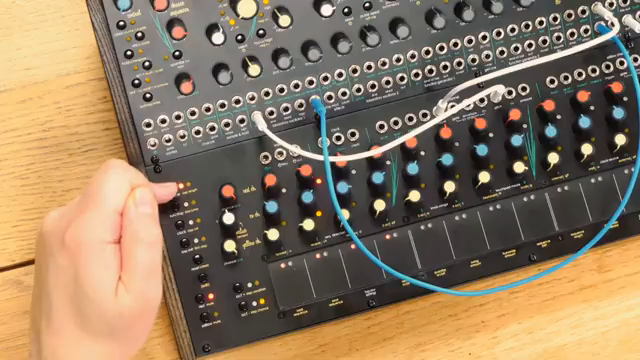
"So then we've got the melodic and the percussive outputs."
© Screenshot/Quote: Pittsburghmodular (YouTube)
Modulation and Performance: Tools for Sonic Exploration

"So then we've got the melodic outputs and the percussive outputs covered."
© Screenshot/Quote: Pittsburghmodular (YouTube)
Modulation is where the Voltage Lab 2 Touch Controller really comes into its own. The video details how the device’s outputs can be used for intricate modulation tasks, from subtle parameter shifts to dramatic, performance-driven changes. The touch interface allows for real-time control, making it possible to inject human nuance into otherwise mechanical sequences.
Performance tools, such as Euclidean pattern generation and step editing, are also discussed, showing how the controller can be used to build evolving rhythms and textures. The ability to assign different outputs to different modulation targets means users can sculpt sound in a highly interactive way. This is classic Pittsburgh Modular: prioritising tactile engagement and sonic exploration over menu-diving and presets.
Adaptable by Design: Studio and Beyond
The closing section reinforces the controller’s adaptability. Whether in a traditional studio setup or a more experimental environment, the Voltage Lab 2 Touch Controller is presented as a tool that can morph to fit the user’s workflow. Its combination of multiple outputs, CV integration, and performance features make it suitable for a wide range of use cases, from structured composition to freeform improvisation. The video leaves no doubt: this is a controller built for those who value flexibility and hands-on control in their modular systems.
This article is also available in German. Read it here: https://synthmagazin.at/hands-on-mit-dem-pittsburgh-modular-voltage-lab-2-touch-controller-ein-patchbares-spielzimmer/
Watch on YouTube:
Latest articles
Watch on YouTube:
Visit the channel:
https://www.youtube.com/pittsburghmodular
https://www.youtube.com/pittsburghmodular
Links from pittsburghmodular:
website: https://pittsburghmodular.com
instagram: https://instagram.com/pghmodular
facebook: https://facebook.com/pghmodular
linktree: https://linktr.ee/pghmodular
Sponsored links:
If you purchase via these links, we may earn a small commission – at no extra cost to you. The link opens an Amazon keyword search, and results may vary depending on availability.
Voltage Lab 2 Touch Controller
🔗 Check price on Amazon
🔗 Check price on Amazon