Frap Tools, the Italian maestros of modular design, take us on a deep dive into the world of triggers and clock bursts—showing there’s far more to these pulses than just driving a step sequencer. In this video, Giovanni demonstrates how modules like Bagài, Cunsa, and Falistri can transform simple triggers into dynamic, melodic elements and textural bursts. Expect clever patching, filter pinging, and envelope trickery, all delivered with Frap Tools’ signature attention to sonic detail. If you thought triggers were just for starting envelopes, prepare to have your patch cables untangled.
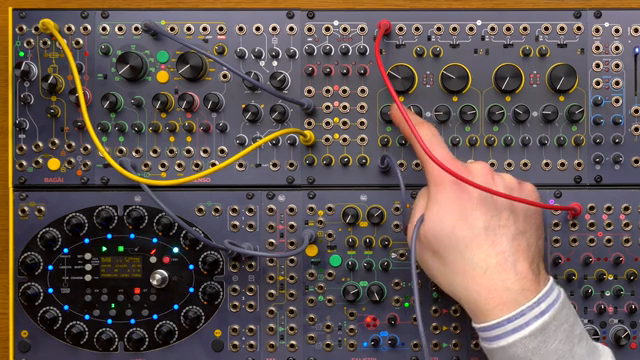
Triggers: Not Just for Sequencing
The video opens with Giovanni from Frap Tools laying out the premise: triggers and clocks aren’t just for launching sequences—they can be harnessed for melodic and timbral manipulation. Instead of the usual role of simply stepping through a pattern, triggers are shown as tools for adding movement and unpredictability to a patch. This approach is a subtle but significant shift in modular thinking, inviting us to see timing pulses as active sound-shapers rather than mere event markers.
Frap Tools’ patch bench features Bagài, Cunsa, Falistri, and a supporting cast including the USTA sequencer and Brenso oscillator. The first technique, which can also be replicated on Sapèl, focuses on using triggers to modulate filter behaviour and inject life into a basic subtractive patch. The setup is classic Frap Tools: thoughtful, practical, and ready to be repurposed across a variety of modular rigs.
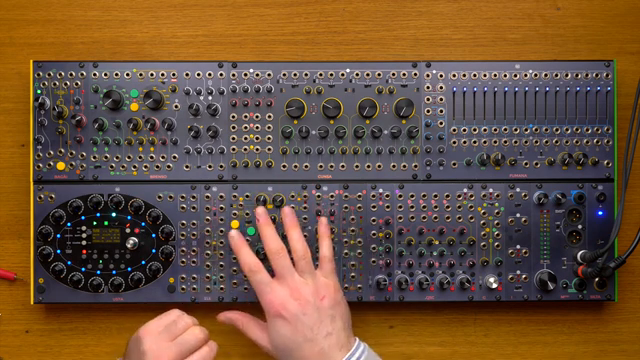
"There are two different ways to use triggers and the clock in a melodic way or to add some spice to our sound's character instead of using them to drive a sequence."
© Screenshot/Quote: Fraptools (YouTube)
Speed-Changing Triggers and Filter Pings
"So thicker clocks in the upper range and sparser clocks in the lower kind of frequency range."
© Screenshot/Quote: Fraptools (YouTube)
The first technique demonstrated involves programming a gate pattern on the USTA sequencer to trigger an envelope, which then modulates the cutoff of the Cunsa filter. Rather than driving the filter hard, Giovanni opts for a more liquid, resonant sweep, keeping input gain and saturation low. The real twist comes when Bagài’s clock output is patched to ping the filter, with the clock speed itself modulated in tandem with the resonance sweep. This results in denser clock pulses at higher cutoff frequencies and sparser ones as the filter closes, creating a dynamic interplay between rhythm and timbre.
A clever use of the bipolar output and attenuverter allows fine control over the modulation amount, letting the user sculpt the density of filter pings. There’s also a practical workaround for stopping the clock when the sequence halts—using Falistri’s end-of-fall gate to mute the clock, albeit with the occasional quirky spike. The patch is then extended by pinging a second filter in parallel, showing how these ideas scale up for more complex, multi-filter soundscapes.
Envelopes, Gating, and Dynamic Filter Control
The second technique shifts focus to Bagài’s clock burst section, which offers a more erratic, design-oriented approach to timing pulses. Here, envelopes and gates are combined to modulate the filter’s cutoff, but instead of a steady clock, bursts of triggers are used to inject random, liquid textures. The clock burst is described as a sum of the straight clock and additional random triggers, with their density and frequency shaped by fluctuating random voltages.
This method allows for precise control: gates can be used to turn bursts on or off, and the bursts themselves can be overridden or combined with other gate patterns. The result is a patch where the filter’s motion is sculpted by both predictable envelopes and unpredictable bursts, offering a rich palette of dynamic modulation. Scaling and attenuating the triggers with the 321 module further refines the filter response, keeping the modulation musical and under control.
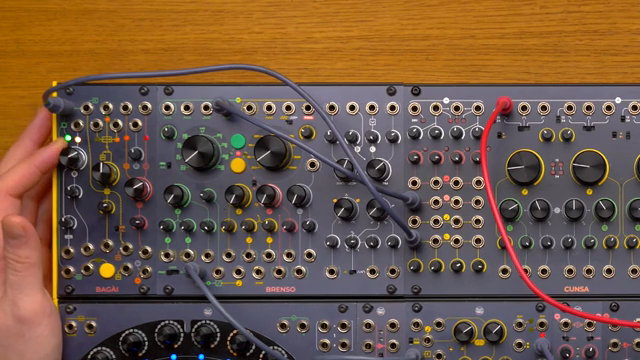
"We have much more control over the clock burst than we have on the random clocks."
© Screenshot/Quote: Fraptools (YouTube)
Patch Recipes and Modular Takeaways
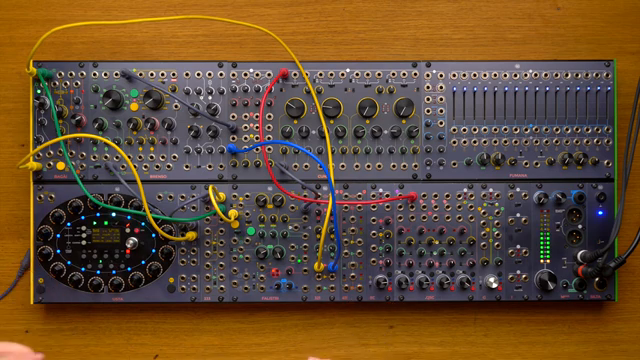
"Those were a couple of techniques on how to use clocks, gates and the timing pulses in general to add some texture to the sound and as a part of the sound synthesis path as opposed to just using them to trigger musical events like envelopes or driving sequences."
© Screenshot/Quote: Fraptools (YouTube)
Throughout the video, Giovanni highlights how these techniques are not tied to specific modules—they can be adapted to any system with similar functions. The practical examples show how envelopes, gates, and bursts can be patched together to create evolving textures and rhythmic accents, moving beyond the standard envelope-trigger paradigm. By deconstructing the clock burst circuit and experimenting with gate lengths, users can exclude bursts from certain stages or layer them for added complexity.
The editorial takeaway is clear: triggers and bursts are not just for starting events—they’re integral to the sound design process itself. Frap Tools’ approach encourages modularists to see timing pulses as creative modulation sources, capable of adding depth and unpredictability to any patch. Whether you’re working with Bagài, Sapèl, or any other module with clock and burst outputs, these techniques invite you to rethink the humble trigger as a source of musical inspiration.
This article is also available in German. Read it here: https://synthmagazin.at/frap-tools-trigger-und-bursts-mehr-als-nur-sequenzen/
Watch on YouTube:
Latest articles
Watch on YouTube:
Visit the channel:
https://www.youtube.com/FrapTools
https://www.youtube.com/FrapTools
Links from FrapTools:
website: https://frap.tools
instagram: https://instagram.com/fraptools
facebook: https://www.facebook.com/fraptools
twitter: https://twitter.com/fraptools
soundcloud: https://soundcloud.com/fraptools