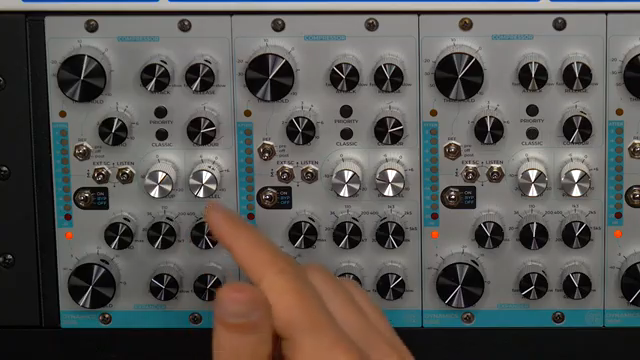
Frap Tools, the Italian modular maestros, step into the studio spotlight with their Dynamics 2806 compressor, aiming it squarely at the nuanced world of acoustic guitar processing. In this detailed walkthrough, the team explores how the 2806 shapes, controls, and enhances guitar tracks—without sacrificing their natural character. From classic and post modes to creative parallel processing, the video demonstrates both technical finesse and sonic artistry. For anyone obsessed with signal flow and the subtleties of compression, this is a revealing look at what the 2806 brings to a real-world studio patch.
26. June 2024
MILES
Frap Tools Tames the Studio: Acoustic Guitar Compression with the Dynamics 2806
First Patch: Acoustic Guitars Meet the 2806
The video opens with Frap Tools and Federico Ascari introducing the Dynamics 2806 as a go-to solution for processing acoustic guitars in a studio context. Rather than diving straight into heavy-handed compression, the approach here is subtle—using the 2806 to control peaks and add body without overwhelming the instrument’s natural tone.
Listeners are treated to an A/B comparison, with the unit engaged and bypassed, revealing how the 2806 gently reins in transients while enhancing midrange presence. The focus is on maintaining the guitar’s organic character, a nod to Frap Tools’ design philosophy of sonic transparency paired with musical enhancement.

"It's really controlling those peaks as well as adding some body and mid frequencies to the overall sound."
© Screenshot/Quote: Fraptools (YouTube)
Classic and Post Modes: Two Sides of Compression
"So really fast time constants and classic mode disengaged."
© Screenshot/Quote: Fraptools (YouTube)
The Dynamics 2806 offers both classic and post modes, giving users a choice between different compression behaviours. In classic mode, the time constants are intentionally slower, which helps avoid aggressive distortion and keeps the sound smooth—ideal for transparent control.
Switching off classic mode and opting for faster time constants, the compressor begins to introduce harmonic distortion and a more pronounced effect on the signal. This flexibility allows the 2806 to move from subtle peak control to creative, characterful compression, depending on how adventurous you want your patch to be.
Shaping Tone: Time Constants, Harmonics, and Dynamic Control
The video demonstrates how tweaking the attack, release, and ratio settings—alongside the choice of mode—directly shapes the guitar’s sonic footprint. With fast time constants and classic mode disengaged, the 2806 imparts a noticeable harmonic saturation, pushing the sound into more colourful territory.
Interestingly, the classic mode introduces a touch of pumping, especially after strong strumming, while faster settings trade this for a grittier, harmonically rich response. The team highlights how these artefacts can be harnessed creatively, giving the user a palette ranging from transparent control to overt coloration.
For arpeggiated passages, the post mode comes into play, where makeup gain influences the control signal, allowing for even more body and harmonic content. This section underscores the 2806’s versatility in both subtle and bold applications.

"This is another way to add some harmonic distortion to the original signal."
© Screenshot/Quote: Fraptools (YouTube)
Parallel Processing: Colour Without Compromise
Frap Tools showcase the power of parallel processing with the 2806, blending the compressed and dry signals to taste. This approach enriches the harmonic spectrum while letting the guitar’s natural dynamics breathe, sidestepping the lifelessness that can plague heavy compression.
By dialling in just the right amount of unprocessed signal, the result is a sound that’s both colourful and authentic. The video makes it clear that parallel compression isn’t just a technical trick—it’s a workflow that can preserve the instrument’s soul while delivering studio polish.
Mono Mindset: Dual Mono for True Stereo Imaging

"Having two separate units sharing the same settings helps retaining the stereo image and having the same dynamic processing without any unwanted artifacts of one channel over the other."
© Screenshot/Quote: Fraptools (YouTube)
The Dynamics 2806 is strictly a mono unit, and the video doesn’t shy away from this limitation—instead, it turns it into a feature. By processing left and right guitar tracks separately in dual mono, each channel retains its unique dynamics and character, avoiding the phase issues or artefacts that can arise from linked stereo compression.
This approach is especially effective when the stereo image is built from two distinct performances. Matching settings across two units ensures cohesion, while the independence of each channel preserves the integrity of the original takes. For modular-minded engineers, it’s a practical solution that respects both the gear and the music.
This article is also available in German. Read it here: https://synthmagazin.de/frap-tools-baendigt-das-studio-akustikgitarren-kompression-mit-dem-dynamics-2806/
Watch on YouTube:
Latest articles
Watch on YouTube:
Visit the channel:
https://www.youtube.com/FrapTools
https://www.youtube.com/FrapTools
Links from FrapTools:
website: https://frap.tools
instagram: https://instagram.com/fraptools
facebook: https://www.facebook.com/fraptools
twitter: https://twitter.com/fraptools
soundcloud: https://soundcloud.com/fraptools
Sponsored links:
If you purchase via these links, we may earn a small commission – at no extra cost to you. The link opens an Amazon keyword search, and results may vary depending on availability.
Frap Audio Dynamics 2806
🔗 Check price on Amazon
🔗 Check price on Amazon