In this episode of Frap Tools’ ‘Let’s Talk Music’ podcast, German scholar and modular musician Lukas Hermann takes centre stage. Known for weaving literary inspiration into modular soundscapes, Hermann discusses his journey from classical guitar to the ever-evolving world of Eurorack. The conversation explores his patching philosophy, the dynamic interplay of voices and modulation, and his commitment to making modular synthesis accessible through education and community events. Expect a deep dive into the art of balancing structure with creative chaos, all underpinned by Frap Tools’ signature focus on thoughtful design and sonic exploration.
28. March 2024
MILES
Frap Tools Podcast: Lukas Hermann on Modular Synthesis, Community, and Sonic Rupture
Buchla LXD, Frap Tools 321, Frap Tools 333, Frap Tools BLISS I/O, Frap Tools Brenso, Frap Tools CGM, Frap Tools Falistri, Frap Tools Fumana, Frap Tools GROUP, Frap Tools KUNZSA, Frap Tools QSC, Frap Tools Sapèl, Frap Tools USTA, Happy Nerding FX Aid, Harmonic Oscillator, Make Noise Just Friends, Make Noise Sisters, XAOC Devices Sarajevo
From Literature to LFOs: Hermann’s Modular Journey
Lukas Hermann’s musical path began with classical guitar, but a restless curiosity soon led him beyond the confines of traditional repertoire. As he recounts, the transition from guitar to synthesizers—and ultimately to modular—was driven by a desire for an instrument that could constantly challenge and evolve with him. Modular synthesis, with its open-ended architecture and endless patching possibilities, provided the perfect antidote to creative stagnation.
Hermann’s background in literature seeps into his approach to sound, resulting in compositions that oscillate between lyrical motifs and abstract sonic sculptures. He describes his modular system not as a static instrument, but as a living entity—one that invites perpetual reinvention through both improvisation and deliberate technique. This ethos is reflected in his preference for stable instrument setups, allowing him to focus on developing new patching strategies rather than endlessly swapping modules.

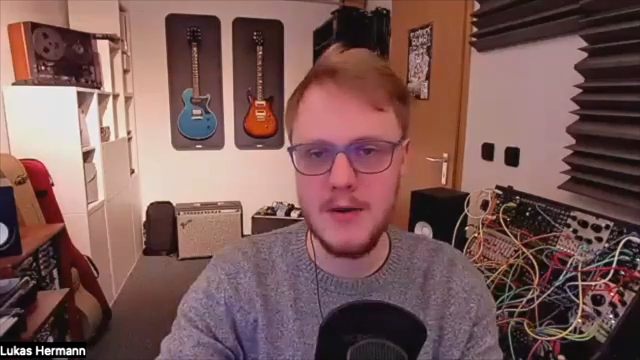
"The process of interacting with the instrument is part of my composition as improvisation."
© Screenshot/Quote: Fraptools (YouTube)
Patchwork Narratives: Techniques and Sound Design
The heart of the video lies in Hermann’s detailed walkthrough of his current patch, a sprawling landscape built from Frap Tools modules and select companions. His setup, housed in a Nono Lander case, features a blend of sequencers, oscillators, and a carefully curated array of effects. Hermann demonstrates how he leverages the interplay between melodic sequencing and abstract timbral manipulation, using tools like the USTA sequencer, BRENSO, Harmonic Oscillator, and SAPÈL for both structure and unpredictability.
A hallmark of his approach is the ability to morph between conventional melodic lines and chaotic textures, often by modulating parameters such as clock speed, filter resonance, and feedback paths. He emphasizes the importance of hands-on control and real-time modulation, using touch strips and random sources to inject instability and surprise. The resulting soundscape is both complex and malleable, with voices that can shift from harmonious to abrasive at a moment’s notice.
Education and Accessibility: Demystifying Modular
"You cannot show these instruments off as a luxury item or as something to be worshipped in a way but you need to invite people just to try it out."
© Screenshot/Quote: Fraptools (YouTube)
Beyond his own artistic pursuits, Hermann is deeply invested in education, striving to make modular synthesis approachable for all. He teaches both privately and through public courses, targeting a diverse range of students from children to adults. His philosophy is to strip away the aura of exclusivity that often surrounds modular gear, presenting it as an instrument for exploration rather than a collector’s luxury.
By bringing synthesizers into schools and community spaces, Hermann encourages hands-on experimentation. He notes that children, unburdened by preconceptions, dive straight into knob-twiddling and sonic discovery. This fresh perspective, he argues, is something seasoned musicians can learn from, using naivety as a tool to break through creative plateaus and rediscover the endless possibilities within a patch.
Community Building: Breaking Down Barriers
Hermann’s commitment to community is embodied in his role as co-founder of Eurorack Ruhr, a collective dedicated to fostering electronic music culture in western Germany. Through regular session evenings, workshops, and festivals, the group creates spaces where musicians and listeners alike can connect, collaborate, and share ideas. Hermann highlights the importance of maintaining open, accessible events that welcome both seasoned patchers and curious newcomers.
He also addresses the challenge of reaching non-musicians, advocating for a focus on music and social interaction rather than technical minutiae. By hosting concerts in unconventional venues like his own bookstore, Hermann aims to bridge gaps between artistic disciplines and local communities, making modular synthesis a shared cultural experience rather than an insular hobby.

"This kind of connection, this kind of event is for me the most important one."
© Screenshot/Quote: Fraptools (YouTube)
Startling Cracks: Artistic Evolution and the Power of Rupture

"Startling cracks was something that resonated with me, and that I found that maybe shows the approach I am having the most."
© Screenshot/Quote: Fraptools (YouTube)
Hermann’s latest album, ‘Startling Cracks’, serves as a sonic diary of his creative process. The release is characterized by short, distinct pieces that each embody a sense of rupture—moments where the music breaks away from expectation and ventures into new territory. Rather than presenting a collection of sketches, Hermann seeks to capture the tension between continuity and surprise, mirroring the unpredictability of live modular performance.
He describes the album’s title as a reflection of his artistic philosophy: embracing the anxiety and excitement of the unknown, and allowing cracks between pieces to reveal new possibilities. For Hermann, both in the studio and on stage, the value lies not in flawless execution but in the willingness to be startled by one’s own creation—and to invite listeners along for the ride.
This article is also available in German. Read it here: https://synthmagazin.at/frap-tools-podcast-lukas-hermann-ueber-modular-synthese-community-und-klangliche-brueche/
Watch on YouTube:
Latest articles
Watch on YouTube:
Visit the channel:
https://www.youtube.com/FrapTools
https://www.youtube.com/FrapTools
Links from FrapTools:
website: https://frap.tools
instagram: https://instagram.com/fraptools
facebook: https://www.facebook.com/fraptools
twitter: https://twitter.com/fraptools
soundcloud: https://soundcloud.com/fraptools
Sponsored links:
If you purchase via these links, we may earn a small commission – at no extra cost to you. The link opens an Amazon keyword search, and results may vary depending on availability.
Buchla LXD
🔗 Check price on Amazon
🔗 Check price on Amazon
Frap Tools 321
🔗 Check price on Amazon
🔗 Check price on Amazon
Frap Tools 333
🔗 Check price on Amazon
🔗 Check price on Amazon
Frap Tools BLISS I/O
🔗 Check price on Amazon
🔗 Check price on Amazon
Frap Tools Brenso
🔗 Check price on Amazon
🔗 Check price on Amazon
Frap Tools CGM
🔗 Check price on Amazon
🔗 Check price on Amazon
Frap Tools Falistri
🔗 Check price on Amazon
🔗 Check price on Amazon
Frap Tools Fumana
🔗 Check price on Amazon
🔗 Check price on Amazon
Frap Tools GROUP
🔗 Check price on Amazon
🔗 Check price on Amazon
Frap Tools KUNZSA
🔗 Check price on Amazon
🔗 Check price on Amazon
Frap Tools QSC
🔗 Check price on Amazon
🔗 Check price on Amazon
Frap Tools Sapèl
🔗 Check price on Amazon
🔗 Check price on Amazon
Frap Tools USTA
🔗 Check price on Amazon
🔗 Check price on Amazon
Happy Nerding FX Aid
🔗 Check price on Amazon
🔗 Check price on Amazon
Harmonic Oscillator
🔗 Check price on Amazon
🔗 Check price on Amazon
Make Noise Just Friends
🔗 Check price on Amazon
🔗 Check price on Amazon
Make Noise Sisters
🔗 Check price on Amazon
🔗 Check price on Amazon
XAOC Devices Sarajevo
🔗 Check price on Amazon
🔗 Check price on Amazon