In this episode from Frap Tools, we’re treated to a deep dive with Jerome Begin, a seasoned composer whose journey from piano lessons in Ohio to modular synth performances for contemporary dance is anything but ordinary. Begin unpacks his approach to integrating modular synthesis into choreography, revealing the practical and philosophical intersections between music, movement, and technology. The conversation is as much about patch cables and filters as it is about the expressive potential of live electronics alongside acoustic instruments. For anyone curious about how modular rigs can underpin hour-long dance pieces—or what happens when you let a Kunis filter ring in a theatre—this is a must-watch.
10. September 2025
MILES
Frap Tools: Modular Choreography with Jerome Begin – A Composer’s Patchwork for Dance
Frap Tools 321, Frap Tools 333, Frap Tools Brenso, Frap Tools CGM, Frap Tools Cunsa, Frap Tools Falistri, Frap Tools Kunis, Frap Tools Morphagene, Frap Tools USTA
From Piano to Patch Cables: Jerome Begin’s Modular Journey
Jerome Begin’s musical trajectory is a patchwork of improvisation, classical training, and a healthy dose of serendipity. Growing up in Ohio, he began with piano lessons but found true inspiration in playing by ear and composing from a young age. His early exposure to improvisation—thanks to a musically inclined babysitter—set the stage for a lifelong fascination with making music outside the lines of traditional notation. As Begin moved through school bands and eventually into university, his curiosity led him from audio production into formal composition, always with a foot in both the acoustic and electronic worlds.
The transition into composing for dance was, by his own account, a series of happy accidents. Begin’s improvisational skills landed him a gig accompanying dance classes, which in turn opened doors to composing for choreographers and eventually led to his current role at Juilliard. What stands out in his narrative is the organic way in which modular synthesis entered his toolkit—not as a replacement for traditional instruments, but as a means to expand the dialogue between movement and sound. For Begin, modular isn’t just about sound design; it’s about creating systems that can respond to and shape the energy of live performance, especially in the context of choreography where the music must both support and interact with the dancers.
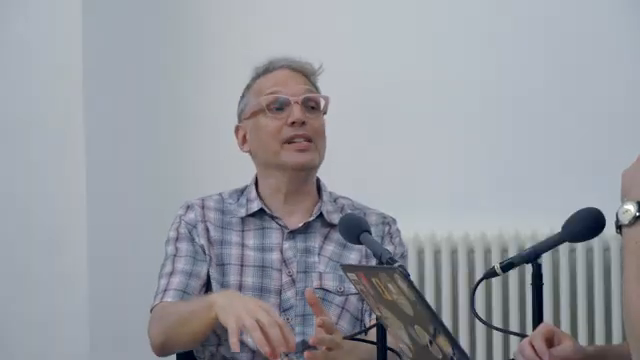
"This is not just about composing music, it's about composing systems that produce music."
© Screenshot/Quote: Fraptools (YouTube)
Inside the Rig: Kunis, Usta, and a Modular Patch for Dance
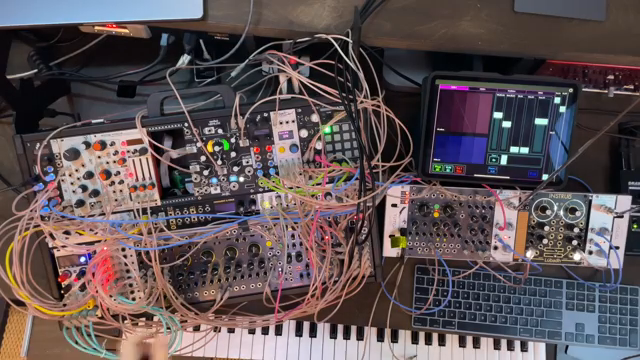
"When I press one button it reroutes 12 cables for me, which is really fantastic because the more repatching I have to do during a show the more room for error."
© Screenshot/Quote: Fraptools (YouTube)
Begin’s modular setup for the Douglas Dunn dance piece is a study in both restraint and versatility. Rather than an endless sprawl of modules, he structures each section of the hour-long performance around specific tools, minimising repatching and maximising musical intent. The Kunis filter takes centre stage in the opening, where it’s rung via regular inputs to produce resonant, evolving tones—deliberately avoiding the bandpass output for a less overtly tonal character. Random triggers from Ableton, modulated in density via a clever LFO chain, bring the filter to life, while resonance sweeps introduce pitch-bending textures that interact with live violin.
The Usta sequencer, though a staple in Begin’s rack, is set aside for this project in favour of Ableton’s sequencing and effects, allowing for precise scene changes and automation that would be impractical by hand. Matrix mixers and Doepfer’s octal switch provide the routing flexibility needed to move between sections without a tangle of cables in the dark. Later, the modular patch expands to include the Morphagene for live violin sampling, Brenso for pitch-tracked synthesis, and a host of modulation sources—Pam’s Pro Workout, FALISTRI, and more—each mapped to specific musical gestures. Antenna controllers and attenuators allow real-time timbral shifts, while the modular voices are panned and layered for a dynamic, spatial soundscape that evolves with the choreography.
What’s striking is Begin’s focus on the modular as an instrument in itself. He describes building muscle memory for the patch, learning which attenuators to reach for and how to balance the interplay between hands-on control and automated processes. The modular isn’t just a source of sound but a responsive partner in the performance, capable of everything from subtle filter pings to frenetic arpeggios, all woven into the fabric of the dance.
Electronics Meet Strings: Expressive Hybrids
Central to Begin’s compositional approach is the seamless interaction between electronic and acoustic elements. In the Douglas Dunn piece, live violinists don’t merely play along with the electronics—they actively shape the modular patch via pitch and amplitude tracking. The Morphagene captures pizzicato loops in real time, while Brenso’s oscillators are modulated by the violin’s envelope and pitch, resulting in a hybrid sound that blurs the line between performer and machine.
This interplay isn’t just technical; it’s expressive. Begin emphasises the importance of designing systems where electronics can respond to the nuances of live musicianship, allowing for spontaneous dialogue and mutual influence. By routing violin audio through pitch trackers and using modular tools to process and recontextualise the acoustic sound, he creates a performance environment where electronics and strings are in constant conversation—each shaping the other’s role in the evolving soundscape.
Live Patchwork: Spontaneity and Structure in Modular Performance
Begin’s workflow is a balancing act between replicability and improvisation. For an hour-long dance score, he needs enough structure to ensure the piece can be performed consistently, but also enough flexibility to allow for real-time interaction and adaptation. Ableton acts as the backbone for scene changes and effect routing, but the modular system is where the expressive action happens—filter sweeps, modulation depths, and voice assignments are all under live control.
He describes the importance of limiting himself to a specific set of modules for each section, treating the modular as a bespoke instrument designed for the piece at hand. This constraint not only aids in performance reliability but also fosters creativity, as Begin is forced to explore the full expressive range of each module. The result is a performance that feels both composed and alive, with the modular rig acting as a responsive, ever-evolving partner to the dancers and musicians on stage.
The Future of Control: Expressiveness and CV Innovation
The conversation closes with a look toward the future of modular synthesis, particularly the need for more expressive control interfaces and advanced CV generation. Begin praises Frap Tools’ philosophy of adding extra layers of functionality to even the simplest utilities, but notes that the next frontier lies in developing new ways to generate and morph control voltages in real time.
He envisions interfaces that go beyond proximity sensors or traditional controllers—tools that allow for multi-dimensional, gestural input and meta-control over the behaviour of other controllers. The challenge, as he sees it, is to create systems that are as responsive and nuanced as acoustic instruments, enabling performers to shape sound with the same immediacy and subtlety as a violinist or pianist. For modular musicians and manufacturers alike, the quest for new forms of expressiveness and interaction remains an open patch point, ripe for exploration.
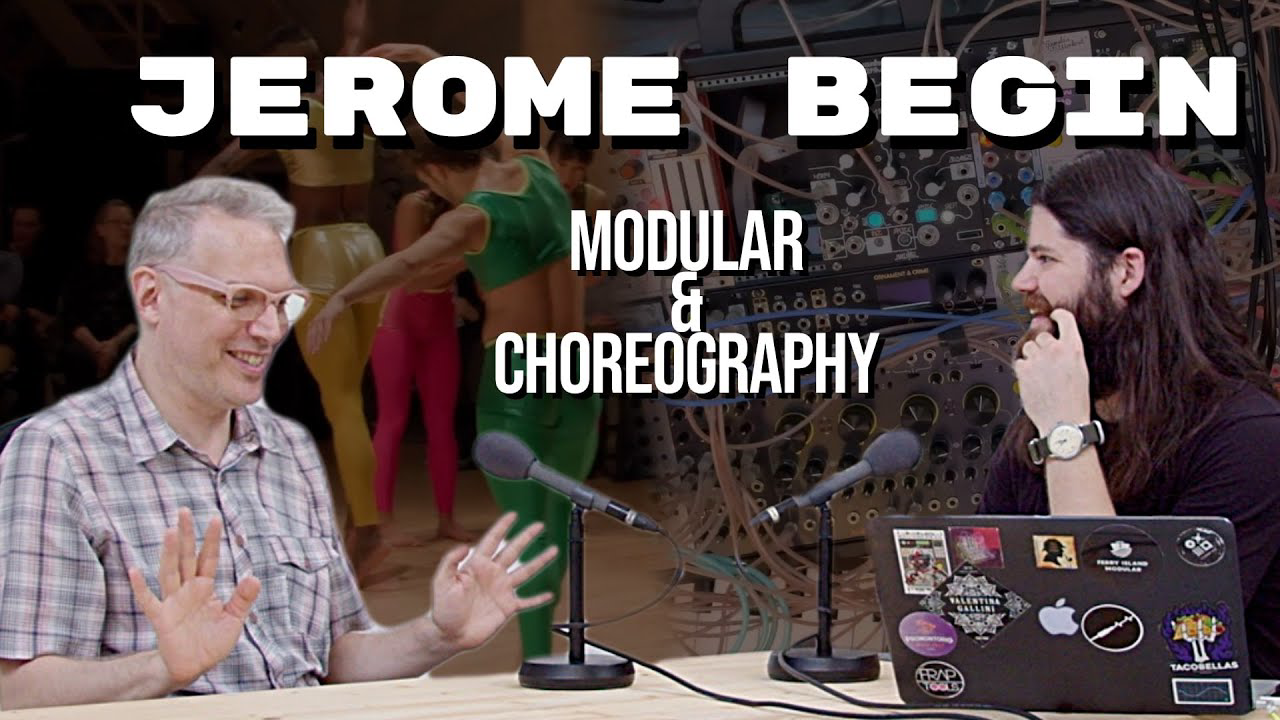
"What's missing in Eurorack is some other way of live instrument control."
© Screenshot/Quote: Fraptools (YouTube)
This article is also available in German. Read it here: https://synthmagazin.at/frap-tools-modulare-choreografie-mit-jerome-begin-ein-komponist-verknuepft-patchwork-fuer-den-tanz/
Watch on YouTube:
Latest articles
Watch on YouTube:
Visit the channel:
https://www.youtube.com/FrapTools
https://www.youtube.com/FrapTools
Links from FrapTools:
website: https://frap.tools
instagram: https://instagram.com/fraptools
facebook: https://www.facebook.com/fraptools
twitter: https://twitter.com/fraptools
soundcloud: https://soundcloud.com/fraptools
Sponsored links:
If you purchase via these links, we may earn a small commission – at no extra cost to you. The link opens an Amazon keyword search, and results may vary depending on availability.
Frap Tools 321
🔗 Check price on Amazon
🔗 Check price on Amazon
Frap Tools 333
🔗 Check price on Amazon
🔗 Check price on Amazon
Frap Tools Brenso
🔗 Check price on Amazon
🔗 Check price on Amazon
Frap Tools CGM
🔗 Check price on Amazon
🔗 Check price on Amazon
Frap Tools Cunsa
🔗 Check price on Amazon
🔗 Check price on Amazon
Frap Tools Falistri
🔗 Check price on Amazon
🔗 Check price on Amazon
Frap Tools Kunis
🔗 Check price on Amazon
🔗 Check price on Amazon
Frap Tools Morphagene
🔗 Check price on Amazon
🔗 Check price on Amazon
Frap Tools USTA
🔗 Check price on Amazon
🔗 Check price on Amazon