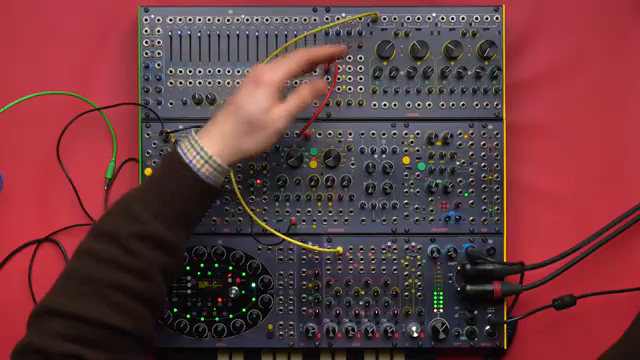
Frap Tools, the Italian maestros of modular, dive headfirst into the murky waters of ‘liquid filter’ territory with their CUNSA module. In this detailed video, they dissect what makes a filter ‘liquid’—a term as slippery as it is subjective—and demonstrate how CUNSA’s flexible architecture can be coaxed into this coveted sonic zone. With a focus on amplitude, character shaping, and modulation, the presentation is a patcher’s delight, brimming with practical tips and hands-on examples. If you’ve ever wondered how to wring Roland-esque sizzle or syrupy sweeps from a modern Eurorack filter, this is essential viewing.
10. July 2024
MILES
Frap Tools CUNSA: Chasing the ‘Liquid Filter’ Grail
Beyond One-Trick Filtering: CUNSA’s Chameleon Nature
The video opens with a clear statement: the Frap Tools CUNSA isn’t a filter with a single, signature sound. Instead, it’s designed as a shape-shifter, offering a broad palette of tonal characters. This flexibility is central to the module’s appeal, allowing users to sculpt everything from aggressive resonance to subtler, more nuanced textures.
Rather than chasing a fixed idea of ‘classic’ filtering, the CUNSA invites exploration. The presenter notes that, while a stereotypical ‘liquid’ filter sound might not leap out immediately, it’s well within reach for those willing to dig into the module’s parameters. The emphasis is on adaptability—CUNSA can be tamed or unleashed, depending on how you approach its controls and signal flow.

"KUNSA is not a filter with a single unique character but instead it has a wide variety, a wide spectrum of characters."
© Screenshot/Quote: Fraptools (YouTube)
Character and Amplitude: The Secret Ingredients
"If we want to have a liquid sound my advice here is again using the amplitude and reducing the amplitude of the sound going into the filter, reducing the character knob, setting it to maximum soft clipping so almost no filter saturation at all and crank the Q all the way up."
© Screenshot/Quote: Fraptools (YouTube)
Central to CUNSA’s versatility are two controls: the character knob and the amplitude parameter. The character knob determines how the filter responds to overload, shaping everything from soft clipping to more saturated, aggressive behaviour. This isn’t just a cosmetic tweak; it fundamentally alters the filter’s response, especially when resonance is in play.
Amplitude, meanwhile, governs the level of the signal hitting the filter’s input VCA. The presenter stresses that even small adjustments here can yield dramatically different results. In fact, they claim that in most cases, tweaking amplitude has a more profound effect on the filter’s personality than any other parameter.
Together, these controls allow for deep sound exploration. By reducing amplitude and dialling back the character knob for maximum soft clipping, the CUNSA can be coaxed into a much more ‘liquid’ territory—smooth, resonant, and free from harsh saturation. The interplay between these two parameters is at the heart of the module’s ability to morph its sonic identity.
Patching for Liquid: Techniques in Action
The video moves from theory to practice with a series of patch demonstrations. Starting with a simple sawtooth wave into the filter, the presenter shows how adjusting amplitude and character transforms the sweep from aggressive to fluid. Switching between 12 dB and 24 dB per octave slopes further refines the effect, with steeper slopes lending extra focus to the cutoff movement.
To mimic the classic ADSR envelope—often key to those syrupy, expressive filter sweeps—the presenter uses a clever trick with the Frap Tools Falistri. By duplicating a gate signal and patching it into two Falistri channels (one transient, one hold), they construct a composite envelope that approximates ADSR behaviour. This approach allows for precise control over attack, decay, sustain, and release, even without a dedicated ADSR module in the rack.
The demonstration continues with envelope modulation routed to both filter cutoff and amplitude, showing how careful envelope shaping and modulation depth can push the CUNSA into unmistakably liquid territory. The result is a sound that’s both dynamic and unmistakably ‘wet’, with resonance and movement reminiscent of classic Roland filters but with a distinctly modern twist.

"For this kind of analog sounds I think that an ADSR envelope works the best and we don't have it here we don't have an ADSR dedicated envelope but we can fake it."
© Screenshot/Quote: Fraptools (YouTube)
Slopes, Modulation, and the Art of Restraint

"KUNSA is a filter that has plenty of range both in terms of cut-to-frequency amplitude saturation modulation amount and my advice here is to take it very gently you don't have to go all the way up with the input VCA all the way up with the modulation but just listen to the filter and try to find the best spot even in a more conservative setting."
© Screenshot/Quote: Fraptools (YouTube)
The presenter wraps up with some practical advice for getting the most out of the CUNSA. One key tip: resist the urge to max out every parameter. Sometimes, the most musical results come from subtlety—modest input levels, restrained modulation, and careful listening. This approach helps maintain clarity and avoids overwhelming the filter’s character.
For those seeking extreme stereo or quad-filter effects, the video suggests setting all filters to 24 dB per octave, engaging combo mode, and patching identical signals through each channel. With envelopes dialled in just so, the CUNSA delivers a lush, liquid stereo field that’s both immersive and highly controllable. The takeaway is clear: with the right patching and a bit of finesse, CUNSA can deliver everything from polite ripples to full-on liquid cascades.
This article is also available in German. Read it here: https://synthmagazin.at/frap-tools-cunsa-auf-der-jagd-nach-dem-liquid-filter-heiligen-gral/
Watch on YouTube:
Latest articles
Watch on YouTube:
Visit the channel:
https://www.youtube.com/FrapTools
https://www.youtube.com/FrapTools
Links from FrapTools:
website: https://frap.tools
instagram: https://instagram.com/fraptools
facebook: https://www.facebook.com/fraptools
twitter: https://twitter.com/fraptools
soundcloud: https://soundcloud.com/fraptools
Sponsored links:
If you purchase via these links, we may earn a small commission – at no extra cost to you. The link opens an Amazon keyword search, and results may vary depending on availability.
Frap Tools CGM
🔗 Check price on Amazon
🔗 Check price on Amazon
Frap Tools Cunsa
🔗 Check price on Amazon
🔗 Check price on Amazon
Frap Tools Falistri
🔗 Check price on Amazon
🔗 Check price on Amazon